 Bug FAQ
Plum-thistle Aphid
Brachycaudus cardui · Order: Hemiptera · Family: Aphididae
Also called: Thistle aphid
Source: Wikipedia
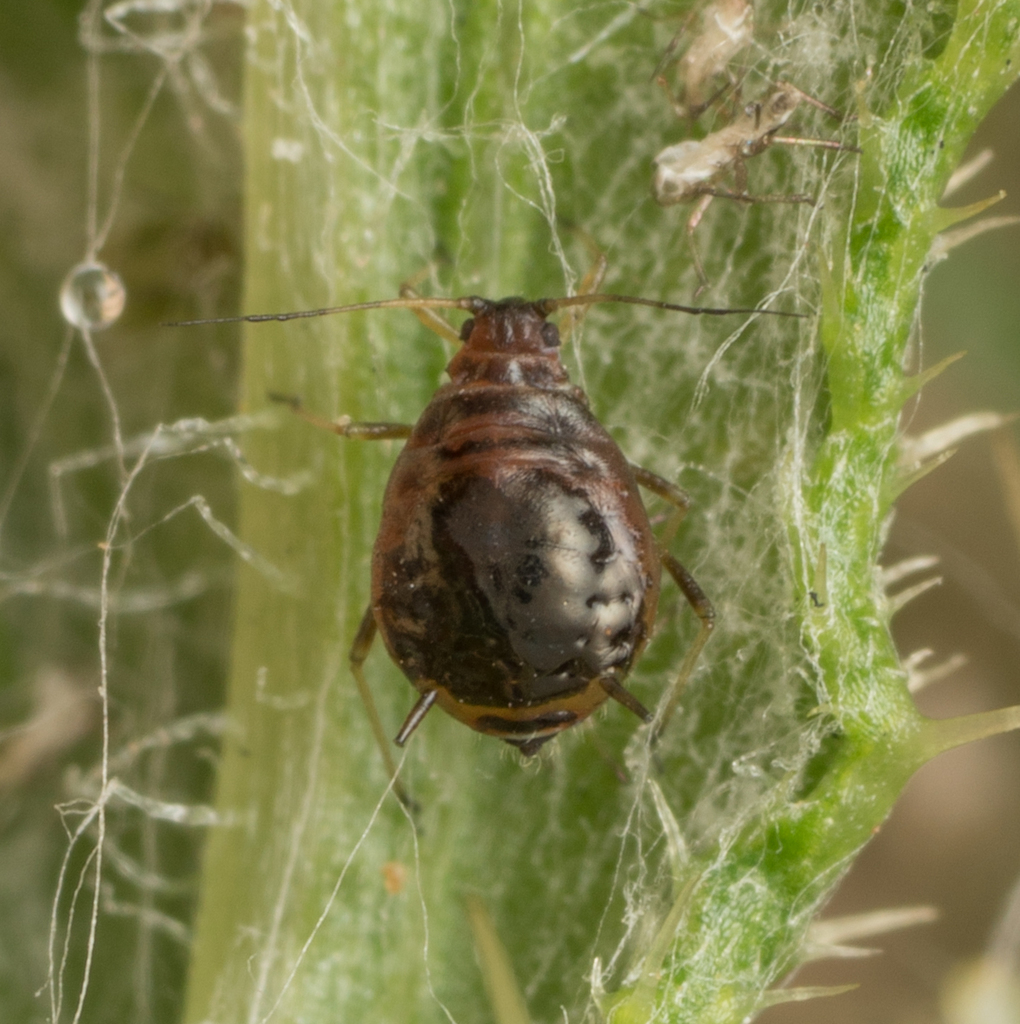
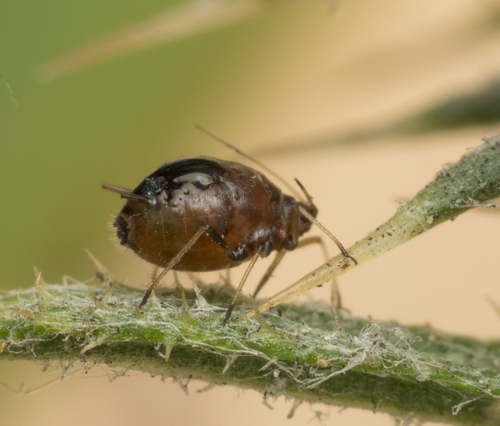
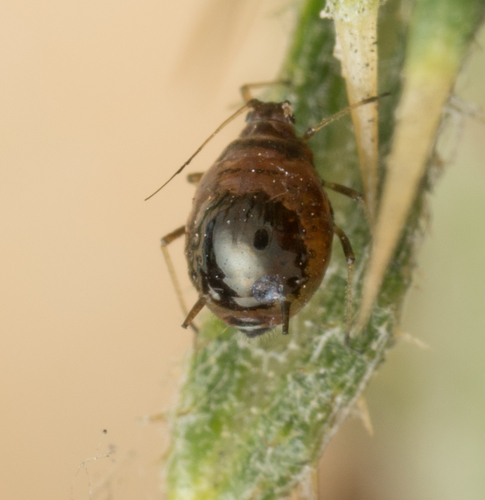
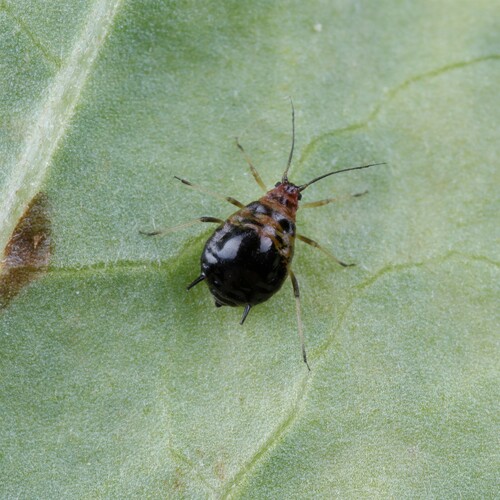
Wingless females are oval, 1.8 to 2.5 mm long and can be green, yellowish, reddish or brown, with a dark shiny patch on the abdomen’s back. They live on plum-family trees in spring and autumn and move to thistles or other aster-family plants in summer, feeding on leaves and causing them to roll. The aphid can carry plum pox virus, which damages plums, cherries, apricots, peaches and damsons.
Source: Wikipedia
How to recognize it
The abdomen has a dark, shiny dorsal patch that separates it from the similar plum leaf curl aphid. Body colour varies among green, yellowish, reddish or brown shades.
Source: Wikipedia
Size
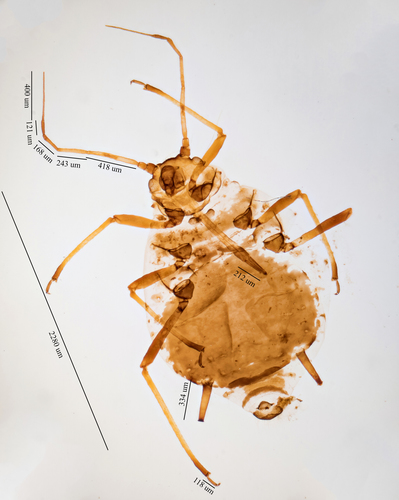
Wingless females are oval or pear-shaped and measure 1.8 to 2.5 mm in length.
Source: Wikipedia
Is it a pest in the house?
Infested leaves develop rolled margins. The aphid transmits plum pox virus, a serious disease of stone fruits.
Source: Wikipedia
How to get rid of it
- Ant attendance protects colonies, so reducing ant activity can help control them.
- In damp meadows without ants, winged aphids failed to establish colonies even when host plants were abundant.
Source: Wikipedia
Where it lives
In spring and autumn it infests Prunus trees, while in summer it prefers thistles such as Carduus or Cirsium.
Source: Wikipedia
What it eats
Primary hosts are plum, cherry, apricot, peach or damson; secondary hosts include other aster-family or borage-family plants.
Source: Wikipedia
Life cycle
Winged aphids migrate back to the primary Prunus hosts in autumn. Ants tend the colonies, feeding on honeydew and protecting the aphids from predators.
Source: Wikipedia
When you see it
Infestation occurs on Prunus trees in spring and autumn and on aster plants in summer.
Source: Wikipedia
Where it comes from
It is widely distributed across Europe, Asia, North Africa and North America.
Source: Wikipedia
Lookalikes
It can be confused with the plum leaf curl aphid, but the dark dorsal abdominal patch distinguishes it.
Source: Wikipedia
Where it is found in the US
Recorded in 19 of 51 states and DC. Most records: California, Oregon, Washington, Idaho, Utah, Michigan, Illinois, Maine.
Darker = more records. Counts are museum and citizen-science records, not population size.
Source: GBIF
Status: introduced in Canada. Source: iNaturalist
Months it is reported in the US
Source: GBIF
More photos
Questions people ask
How do I get rid of plum-thistle aphids?
Limit ant presence around the plants, because ants protect the aphids; without ants, colonies are less likely to establish.
Source: Wikipedia
What plants do they attack?
They feed on plum, cherry, apricot, peach or damson trees in spring and autumn, and on thistles and other aster-family plants in summer.
Source: Wikipedia
Can they damage my garden?
Infested leaves roll up, and the aphid can spread plum pox virus, which harms stone-fruit trees.
Source: Wikipedia
Do they look like any other aphids?
They resemble the plum leaf curl aphid, but a dark shiny patch on the back of the abdomen sets them apart.
Source: Wikipedia
Same family (Aphididae)
 Melon AphidAphis gossypiiDamages trees, gardens or crops
 Oleander AphidAphis neriiDamages trees, gardens or crops
 Witch-hazel Cone Gall AphidHormaphis hamamelidis
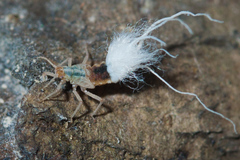 Beech Blight AphidGrylloprociphilus imbricatorDamages trees, gardens or crops
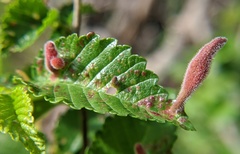 Rice Root AphidTetraneura nigriabdominalis
 Rose AphidMacrosiphum rosaeDamages trees, gardens or crops
Sources
- Wikipedia: https://en.wikipedia.org/wiki/Brachycaudus_cardui
Look it up elsewhere: GBIF · iNaturalist · BugGuide · Wikipedia
Text written 2026-10-26 from the sources above and checked sentence by sentence against them. Data fetched 2026-10-26.