 Bug FAQ
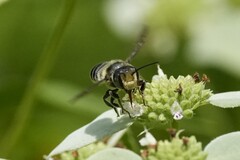
Osmia latreillei
Osmia latreillei · Order: Hymenoptera · Family: Megachilidae

Osmia latreillei is a mason bee in the Megachilidae family. Females dig underground tunnels and make brood cells at the ends. They are found in central and southern Europe, including France, Germany, Switzerland, Italy, Greece and Spain.
Source: Wikipedia
How to recognize it
This bee belongs to the Megachilidae family, subfamily Megachilinae.
Source: Wikipedia
Where it lives
Females excavate ground tunnels and create cells at the tunnel ends for their offspring.
Source: Wikipedia
What it eats
Adults collect pollen almost exclusively from plants in the Asteraceae family, though they also feed on nectar from many other plants.
Source: Wikipedia
Life cycle
Larvae eat the stored pollen for about a month, then become prepupae that overwinter. In spring they pupate and adults emerge by late March.
Source: Wikipedia
When you see it
Adults are active from April through July.
Source: Wikipedia
More photos


Same family (Megachilidae)



Sources
- Wikipedia: https://en.wikipedia.org/wiki/Osmia_latreillei
Look it up elsewhere: GBIF · iNaturalist · BugGuide · ITIS · Wikipedia
Text written 2026-10-23 from the sources above and checked sentence by sentence against them. Data fetched 2026-10-23.