 Bug FAQ
Field digger wasp
Mellinus arvensis · Order: Hymenoptera · Family: Crabronidae
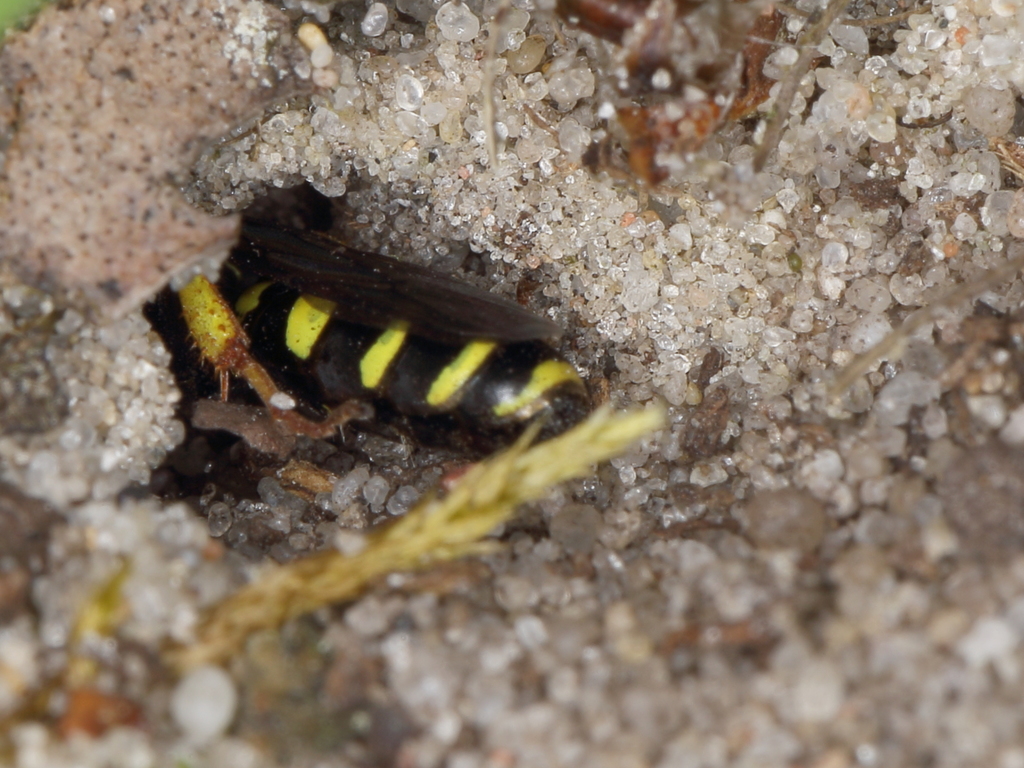
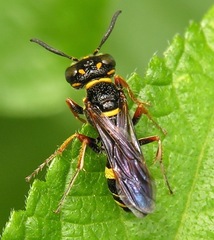
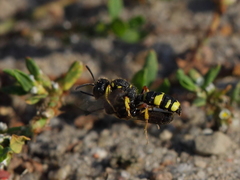
The field digger wasp is yellow and black with a notably narrow waist. Females are larger than males and dig underground nests in sandy soil, provisioning them with flies for their larvae. They appear from July through late September or October, especially in sandy areas and are common after forest fires.
Source: Wikipedia
How to recognize it
They are yellow and black like many wasps but have a slimmer waist.
Source: Wikipedia
Size
Females are larger than the males.
Source: Wikipedia
Where it lives
They build their nests underground in sandy burrows.
Source: Wikipedia
What it eats
The females stock their underground cells with flies for the developing larvae to eat.
Source: Wikipedia
Life cycle
Although each female hunts alone, they live close to other members of the species. Females dig multi-cell nests in sand or soil and fill each cell with captured flies before laying an egg.
Source: Wikipedia
When you see it
Adults are active from July through late September or October.
Source: Wikipedia
Where it comes from
They become the most common wasp species right after a forest fire.
Source: Wikipedia
Lookalikes
They look like other yellow-and-black wasps but have a narrower waist.
Source: Wikipedia
Questions people ask
When are field digger wasps active?
Adults are seen from July until late September or October.
Source: Wikipedia
Where do field digger wasps build their nests?
They dig underground burrows in sandy soil to make their nests.
Source: Wikipedia
Same family (Crabronidae)

Sources
- Wikipedia: https://en.wikipedia.org/wiki/Mellinus_arvensis
Look it up elsewhere: GBIF · iNaturalist · BugGuide · ITIS · Wikipedia
Text written 2026-10-22 from the sources above and checked sentence by sentence against them. Data fetched 2026-10-22.