 Bug FAQ
New Zealand Mason wasp
Pison spinolae · Order: Hymenoptera · Family: Crabronidae
Also called: mason wasp
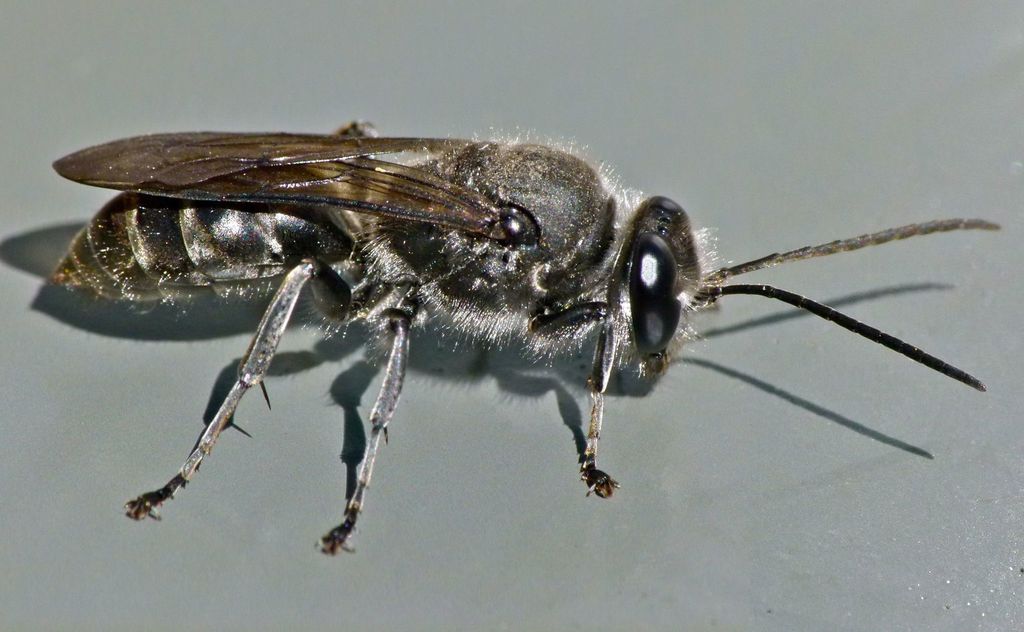
The New Zealand mason wasp is about 16 mm long and entirely black, with the thin waist typical of wasps. It nests in tiny cracks and keyholes of buildings and the females hunt spiders to feed their larvae.
Source: Wikipedia
How to recognize it
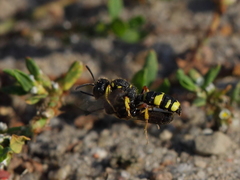
Adults are completely black, not the usual black-and-yellow pattern of many wasps. They have a narrow waist between the thorax and abdomen, a common wasp feature.
Source: Wikipedia
Size
The adult body measures roughly 16 mm (0.63 in) in length.
Source: Wikipedia
Does it bite or sting?
Mason wasps can sting repeatedly, unlike bees. They use their sting to inject venom into spiders, paralyzing them for transport to the nest.
Source: Wikipedia
Where it lives
They are common in building cracks, keyholes and similar small openings.
Source: Wikipedia
What it eats
Adults rarely feed on live insects such as mosquitoes, but this is uncommon. Females hunt spiders, capture them, and bring them back to the nest for their young.
Source: Wikipedia
Life cycle
The species has two generations per year: a summer generation without diapause and a winter generation that overwinters in diapause. Pupal development lasts about 14 days before the adult emerges.
Source: Wikipedia
When you see it
In spring, after diapause, the prepupa molts into an exarate pupa, a stage with movable appendages.
Source: Wikipedia
Where it comes from
Originally from Australia, they were introduced to New Zealand around 1880.
Source: Wikipedia
Lookalikes
P. spinolae resembles the smaller Pison morosum, and both compete for spider prey.
Source: Wikipedia
More photos
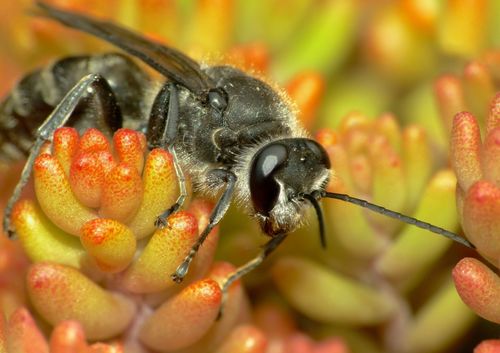
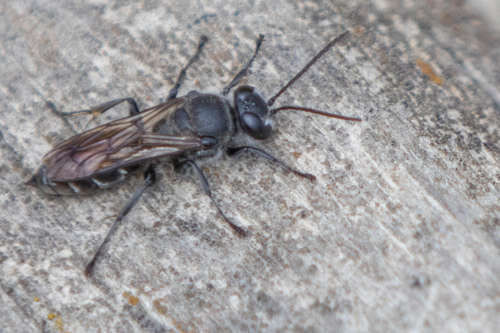
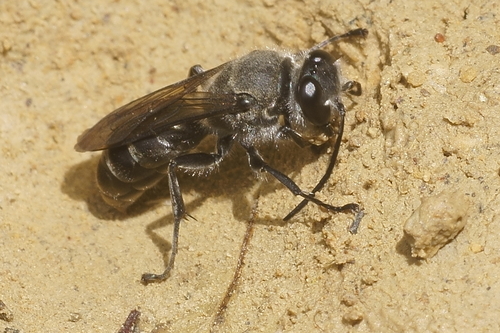

Questions people ask
Where does this wasp usually live?
It is often found in cracks of buildings and keyholes.
Source: Wikipedia
What does the female mason wasp feed its larvae with?
She captures spiders and brings them back to the nest for the young.
Source: Wikipedia
Same family (Crabronidae)

Sources
- Wikipedia: https://en.wikipedia.org/wiki/Pison_spinolae
Look it up elsewhere: GBIF · iNaturalist · BugGuide · ITIS · Wikipedia
Text written 2026-10-23 from the sources above and checked sentence by sentence against them. Data fetched 2026-10-23.