 Bug FAQ
Mealy Plum Aphid
Hyalopterus pruni · Order: Hemiptera · Family: Aphididae
Also called: Reed aphid
Source: Wikipedia
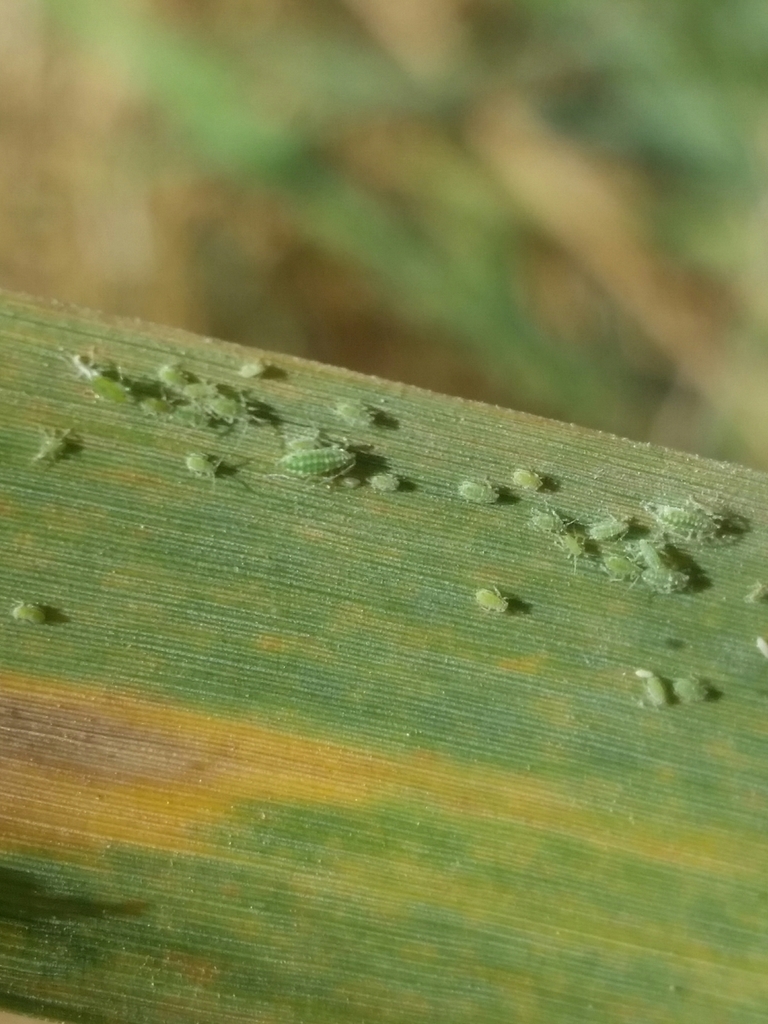
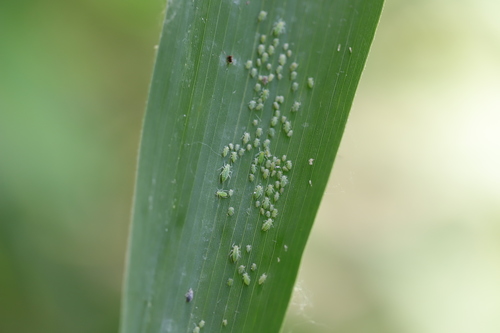
Adult Mealy Plum Aphids are tiny, about 1.5 to 2.6 mm long, and are pale bluish-green with red eyes, sometimes appearing pinkish, and they are covered in a white, mealy wax that can look gray or light green. They live on host plants from spring through fall, staying wingless for many generations, while winged adults appear in early summer and move to reeds or cattails to lay overwintering eggs near flower buds.
Source: Wikipedia
How to recognize it
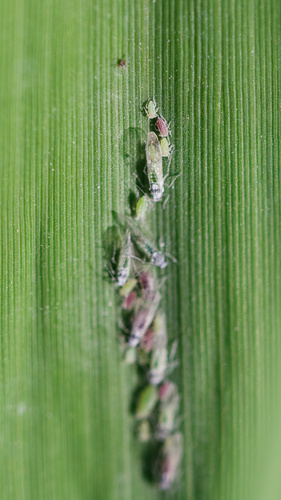
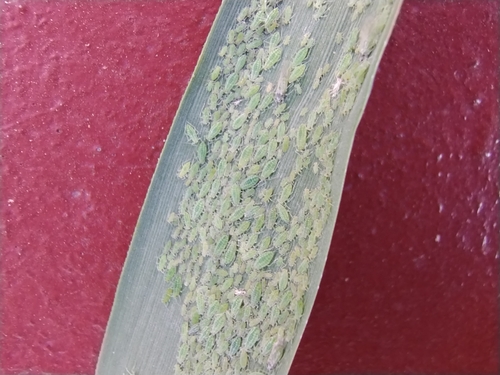
They are pale bluish-green with red eyes, though some individuals may look pinkish, and they are coated in a white, mealy wax that can give a gray or light-green appearance.
Source: Wikipedia
Size
Adults measure about 1.5 to 2.6 mm in length (roughly 0.06 to 0.10 in).
Source: Wikipedia
Is it a pest in the house?
Their feeding produces honeydew that coats the host plant and attracts other insects.
Source: Wikipedia
Where it lives
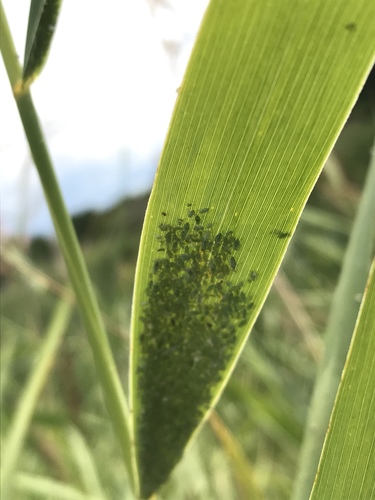
Wingless adults stay on their host plants from spring to fall, while winged forms appear in June-July and migrate to reed grasses or cattails.
Source: Wikipedia
What it eats
It feeds by sucking sap from Prunus species (plum, peach, apricot, almond) as well as from reed grasses and cattails.
Source: Wikipedia
When you see it
You can find them from spring through fall.
Source: Wikipedia
Where it comes from
The species has a worldwide (cosmopolitan) distribution.
Source: Wikipedia
Where it is found in the US
Recorded in 36 of 51 states and DC. Most records: California, Washington, Oregon, Illinois, New York, Idaho, Hawaii, Utah.
Darker = more records. Counts are museum and citizen-science records, not population size.
Source: GBIF
Status: native in North America; native in Canada; native in United States. Source: iNaturalist
Months it is reported in the US
Source: GBIF
More photos
Questions people ask
What plants does the Mealy Plum Aphid damage?
It feeds on the sap of plum, peach, apricot, almond and other Prunus trees, as well as on reed grasses and cattails, which can weaken those plants.
Source: Wikipedia
When do winged adults appear?
Winged adults usually show up in June or July and then move to reeds or cattails.
Source: Wikipedia
Why is there sticky honeydew on my plants?
The aphids excrete honeydew while feeding, and this sugary coating attracts other insects.
Source: Wikipedia
Same family (Aphididae)
 Melon AphidAphis gossypiiDamages trees, gardens or crops
 Oleander AphidAphis neriiDamages trees, gardens or crops
 Witch-hazel Cone Gall AphidHormaphis hamamelidis
 Beech Blight AphidGrylloprociphilus imbricatorDamages trees, gardens or crops
 Rice Root AphidTetraneura akinire
 Manzanita Leafgall AphidTamalia coweni
Sources
- Wikipedia: https://en.wikipedia.org/wiki/Hyalopterus_pruni
Look it up elsewhere: GBIF · iNaturalist · BugGuide · Wikipedia
Text written 2026-10-23 from the sources above and checked sentence by sentence against them. Data fetched 2026-10-23.