 Bug FAQ
Marbled Scorpion
Lychas variatus · Order: Scorpiones · Family: Buthidae
Source: Wikipedia
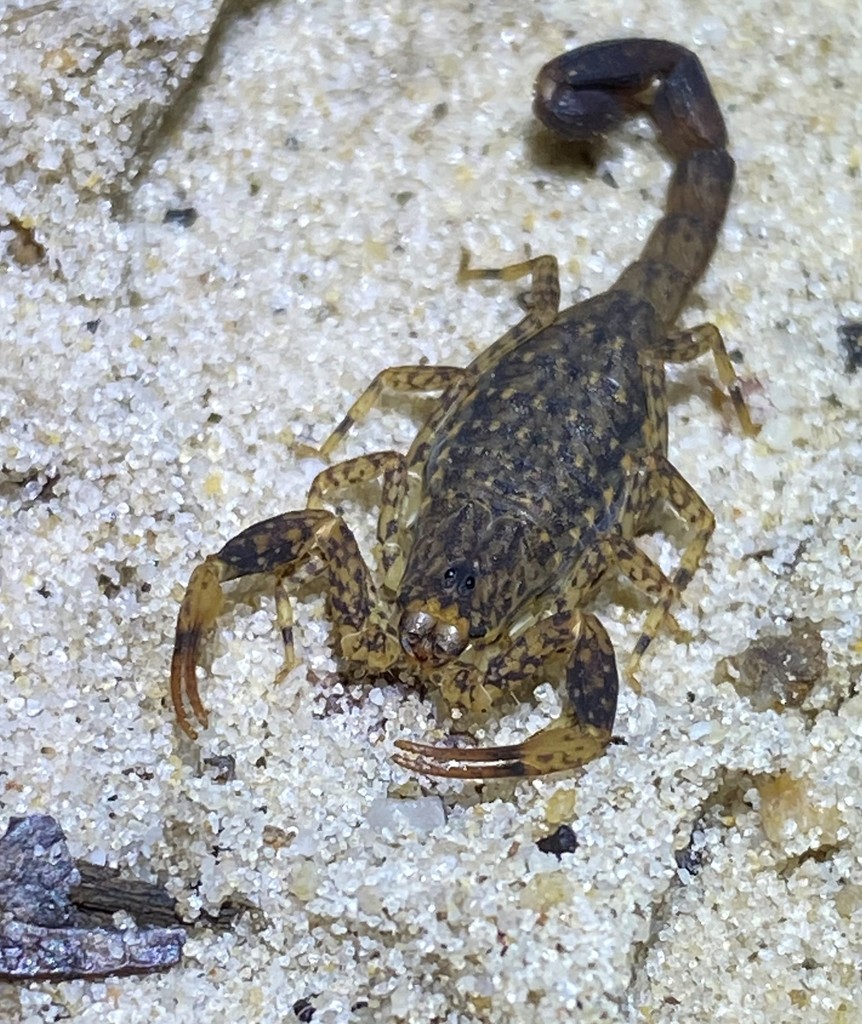
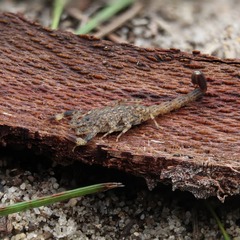
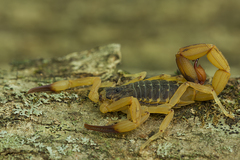
The marbled scorpion grows to about 4 cm long, with a tail that makes up half its body length and ends in a stinger. It is yellow-brown mottled with lighter patches and lives in warm, moist places under rocks, bark or leaf litter.
Source: Wikipedia
How to recognize it
Its colour is a yellowish-brown marbled pattern with light brown patches.
Source: Wikipedia
Size
Adults reach roughly 40 mm (4 cm) in length.
Source: Wikipedia
Where it lives
It prefers warm, moist habitats and hides beneath rocks, bark and plant litter.
Source: Wikipedia
What it eats
It is a terrestrial predator that feeds on other invertebrates.
Source: Wikipedia
Lookalikes
Lychas variatus, called the marbled or splendid marbled scorpion, belongs to the Buthidae family.
Source: Wikipedia
More photos

Questions people ask
What does the marbled scorpion look like?
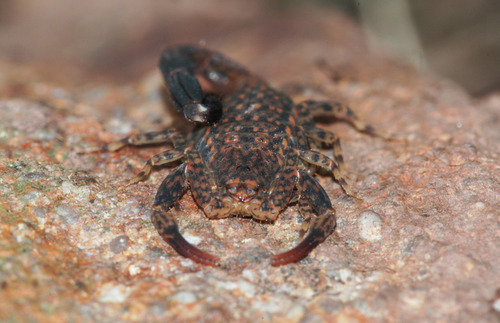
It has a yellow-brown marbled colour with light brown patches and a tail that is half its body length ending in a stinger.
Source: Wikipedia
Is the sting of this scorpion dangerous?
The sting is painful to people but is not considered to be dangerous.
Source: Wikipedia
Same family (Buthidae)


Sources
- Wikipedia: https://en.wikipedia.org/wiki/Lychas_variatus
Look it up elsewhere: GBIF · iNaturalist · BugGuide · Wikipedia
Text written 2026-10-23 from the sources above and checked sentence by sentence against them. Data fetched 2026-10-23.