 Bug FAQ
Lilac Borer Moth
Podosesia syringae · Order: Lepidoptera · Family: Sesiidae
Also called: Ash Borer Moth, Ash Clearwing Borer, Lilac Borer, Lilac Clearwing Borer
Source: Wikipedia
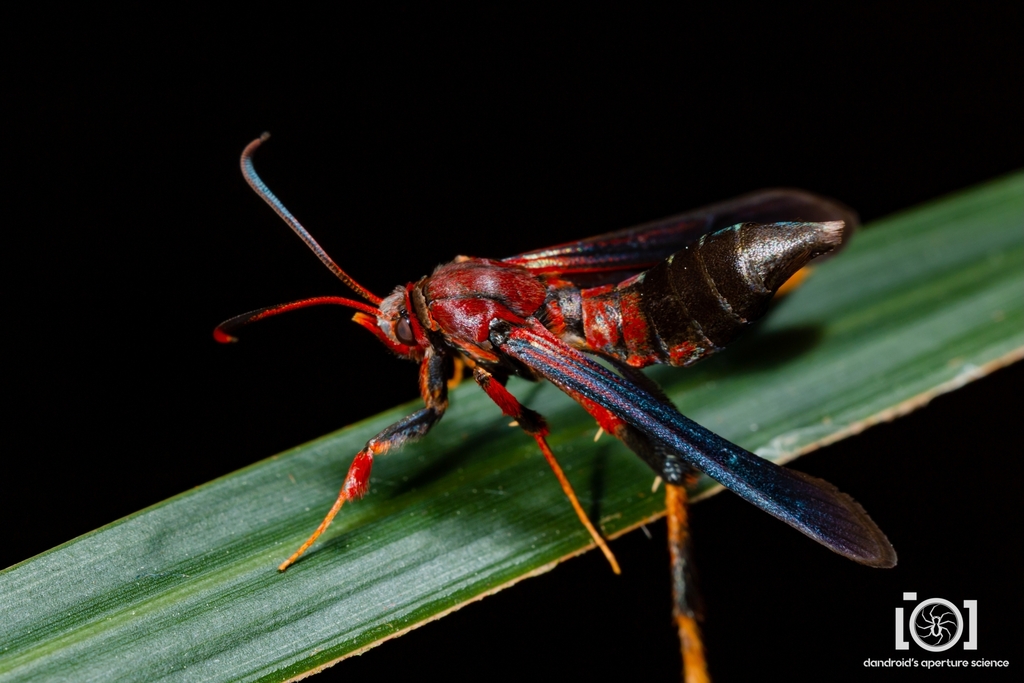
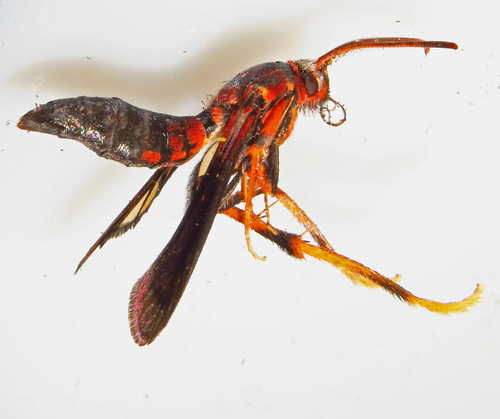
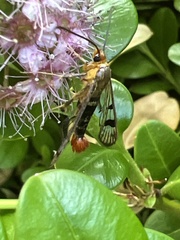
The lilac borer is a clearwing moth with transparent wings and a brown body marked with yellow stripes, often resembling a paper wasp. Adults feed on nectar and emerge from April to July, while larvae live under bark, feeding on sapwood and can damage or kill trees.
Source: Wikipedia
How to recognize it
Its wings are partly see-through because they lack colored scales. The body is brown with yellow striping on the legs and abdomen, giving it a wasp-like look.
Source: Wikipedia
Is it a pest in the house?
Larval feeding destroys the tree’s phloem, weakening or killing stressed or very young trees.
Source: Wikipedia
How to get rid of it
Pheromone traps can be set to monitor the presence of ash borer. If damage is occurring, insecticides applied to trunks and branches before larvae enter the bark can help, but they do not work once larvae are inside.
Source: Wikipedia
Where it lives
It occurs across North America and can become a pest of ash and lilac trees.
Source: Wikipedia
What it eats
Adult moths sip nectar from flowers. Larvae feed beneath the bark, chewing into the sapwood.
Source: Wikipedia
Life cycle
Adults appear from April through July, roughly a week after lilac blooms or after 300-500 growing-degree days above 50 °F.
Source: Wikipedia
When you see it
Adult emergence occurs between April and July.
Source: Wikipedia
Where it comes from
The species is native to North America.
Source: Wikipedia
Lookalikes
Like other clearwing moths, its partially transparent wings can cause it to be mistaken for a wasp.
Source: Wikipedia
Where it is found in the US
Recorded in 40 of 51 states and DC. Most records: Minnesota, Michigan, Colorado, Missouri, Texas, Mississippi, New York, Alabama.
Darker = more records. Counts are museum and citizen-science records, not population size.
Source: GBIF
Status: native in North America; native in Canada; native in United States. Source: iNaturalist
Months it is reported in the US
Source: GBIF
More photos
Questions people ask
How can I monitor for lilac borer?
Use pheromone traps to detect adult moths in the area.
Source: Wikipedia
How do I control lilac borer infestations?
Apply insecticide to trunks and branches before larvae bore into the bark; it won’t work after they are inside.
Source: Wikipedia
Same family (Sesiidae)
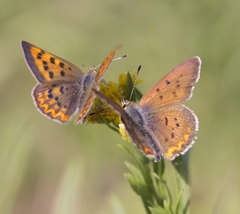 Purplish CopperLycaena helloides
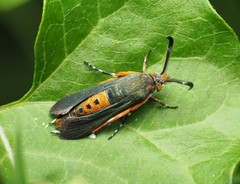 Squash Vine BorerEichlinia cucurbitaeDamages trees, gardens or crops
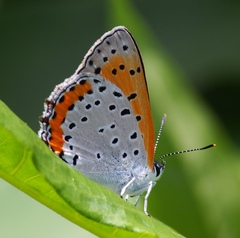 Bronze CopperLycaena hyllus
 Maple Callus Borer MothSynanthedon acerniDamages trees, gardens or crops
 Southern Red RimBiblis hyperia
 Peachtree Borer MothSynanthedon exitiosaDamages trees, gardens or crops
Sources
- Wikipedia: https://en.wikipedia.org/wiki/Ash_borer
Look it up elsewhere: GBIF · iNaturalist · BugGuide · Wikipedia
Text written 2026-10-24 from the sources above and checked sentence by sentence against them. Data fetched 2026-10-24.