 Bug FAQ
Lemon Tree Borer Parasitoid Wasp
Xanthocryptus novozealandicus · Order: Hymenoptera · Family: Ichneumonidae
Also called: Lemon Tree Borer Parasite Wasp, lemon tree borer parasite
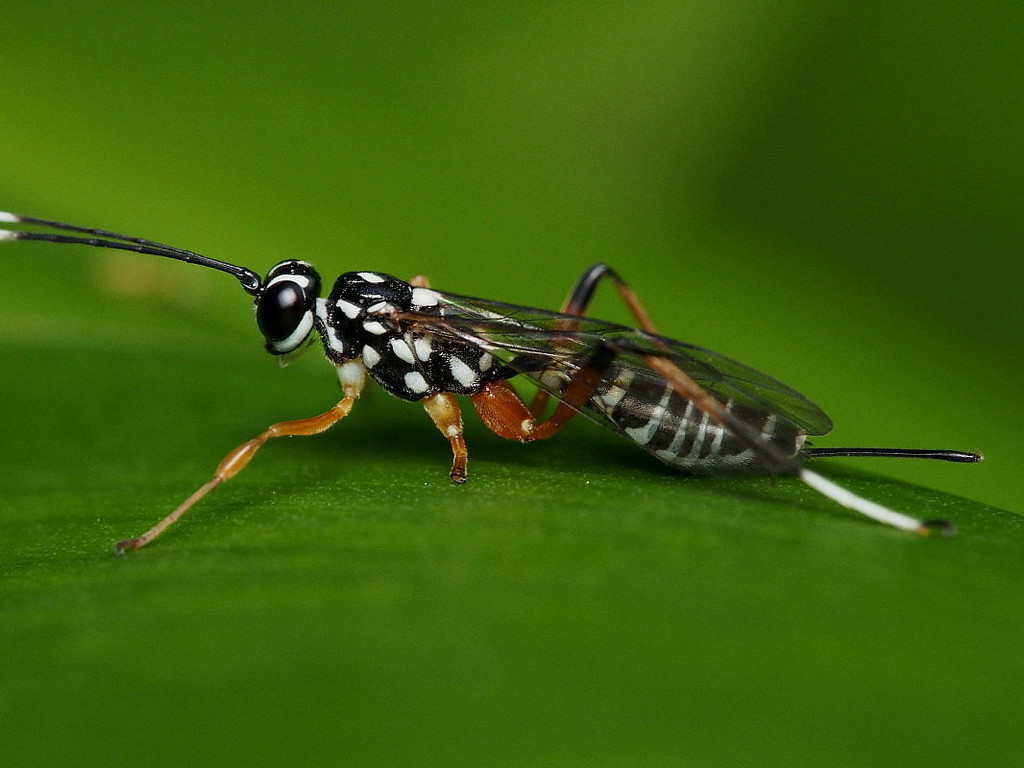
Females are larger than males, reaching up to 15 mm, while males are up to 11 mm long. The wasp is black with white spots on the thorax and white stripes on the head and abdomen; its rear legs are long, reddish-brown with black tips.
Source: Wikipedia
How to recognize it
The body is mainly black with white spots on the thorax and white stripes along the head and abdomen. Front legs are short; the four rear legs are longer, reddish-brown with black tips.
Source: Wikipedia
Size
Females grow to 9 to 15 mm, while males are 5 to 11 mm long.
Source: Wikipedia
Is it a pest in the house?
The Lemon Tree Borer damages grape vines and citrus trees, and the wasp helps keep its populations in check.
Source: Wikipedia
Does it bite or sting?
No diseases are known to be associated with this wasp. It is beneficial to agriculture because it parasitises pest species.
Source: Wikipedia
Where it lives
It has been observed in natural forests and small clearings in New Zealand.
Source: Wikipedia
What it eats
Larvae feed on wood-boring beetle larvae. Adults feed on nectar, pollen and honeydew like most parasitic wasps.
Source: Wikipedia
Life cycle
Its life cycle includes egg, larva, pupa (cocoon) and adult stages. The total development time is currently unknown.
Source: Wikipedia
When you see it
Females search for wood-boring beetle larvae in March. During March they lay eggs in their hosts.
Source: Wikipedia
Lookalikes
The beetle Drototelus elegans mimics the wasp’s coloration as a defensive warning. That beetle also copies the wasp’s flight pattern.
Source: Wikipedia
More photos

Questions people ask
What do they look like?
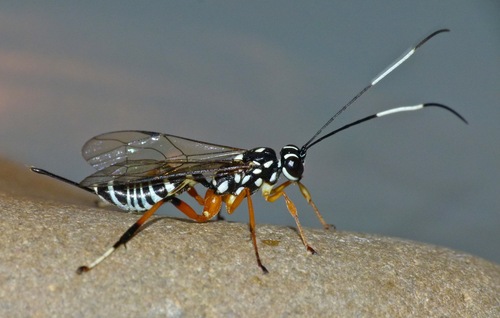
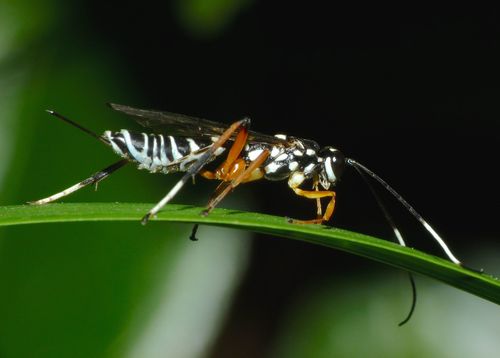
They are black with white spots on the thorax and white stripes on the head and abdomen, and have short front legs and long reddish-brown rear legs with black tips.
Source: Wikipedia
When are they active?
Females hunt for wood-boring beetle larvae and lay eggs in March.
Source: Wikipedia
Are they harmful to people?
There are no known diseases or harmful effects to people from this wasp.
Source: Wikipedia
Same family (Ichneumonidae)




Sources
- Wikipedia: https://en.wikipedia.org/wiki/Xanthocryptus_novozealandicus
Look it up elsewhere: GBIF · iNaturalist · BugGuide · Wikipedia
Text written 2026-10-23 from the sources above and checked sentence by sentence against them. Data fetched 2026-10-23.