 Bug FAQ
Cream-spotted Ichneumon
Echthromorpha intricatoria · Order: Hymenoptera · Family: Ichneumonidae
Source: Wikipedia
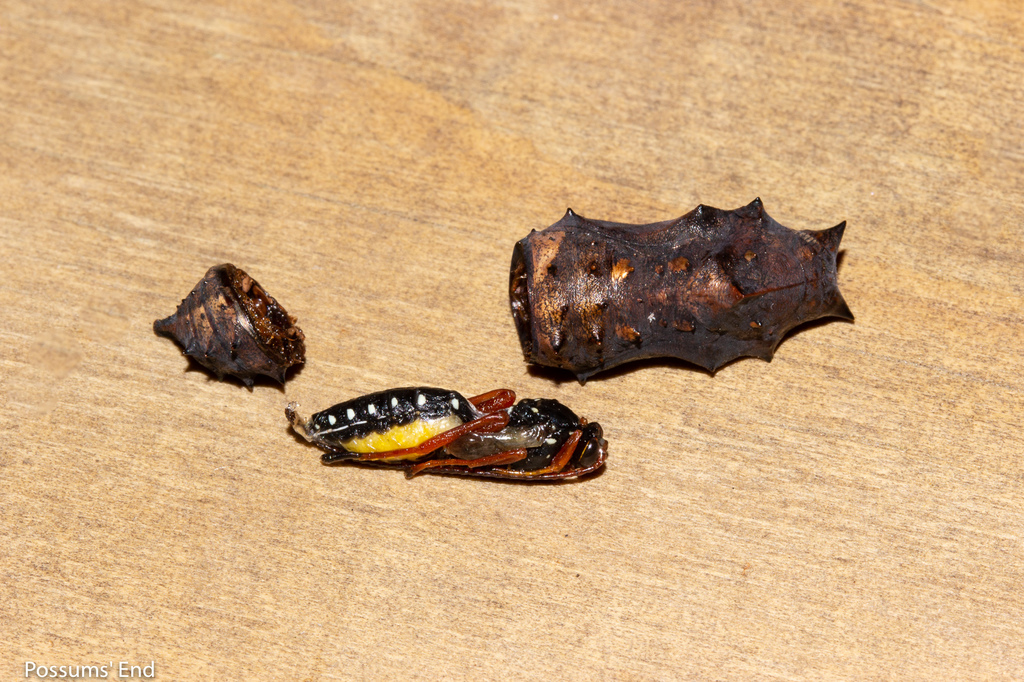
The cream-spotted ichneumon is a small wasp with clear wings about 3 cm across and a mostly black body marked with creamy plates on the abdomen sides; its antennae and legs are orange. It lives commonly in Australia and New Zealand and the females lay eggs inside the pupae of moths and butterflies, especially those of the Nymphalidae family. The insect cannot sting, does not build nests, and poses no harm to humans.
Source: Wikipedia
Size
Its clear wings span roughly 3 cm (about 1.2 in).
Source: Wikipedia
Does it bite or sting?
It cannot sting and is harmless to humans.
Source: Wikipedia
What it eats
Females inject eggs into the pupae of moths and butterflies, preferring members of the Nymphalidae family.
Source: Wikipedia
Life cycle
The female uses her ovipositor to lay eggs inside moth and butterfly pupae, especially Nymphalidae.
Source: Wikipedia
Where it comes from
Its native range includes Australia and New Zealand.
Source: Wikipedia
Questions people ask
What do they eat?
The females lay eggs in the pupae of moths and butterflies, especially those in the Nymphalidae family.
Source: Wikipedia
Same family (Ichneumonidae)




Sources
- Wikipedia: https://en.wikipedia.org/wiki/Echthromorpha_intricatoria
Look it up elsewhere: GBIF · iNaturalist · BugGuide · Wikipedia
Text written 2026-10-23 from the sources above and checked sentence by sentence against them. Data fetched 2026-10-22.