 Bug FAQ
Wasp (Larra bicolor)
Larra bicolor · Order: Hymenoptera · Family: Crabronidae
Source: Wikipedia
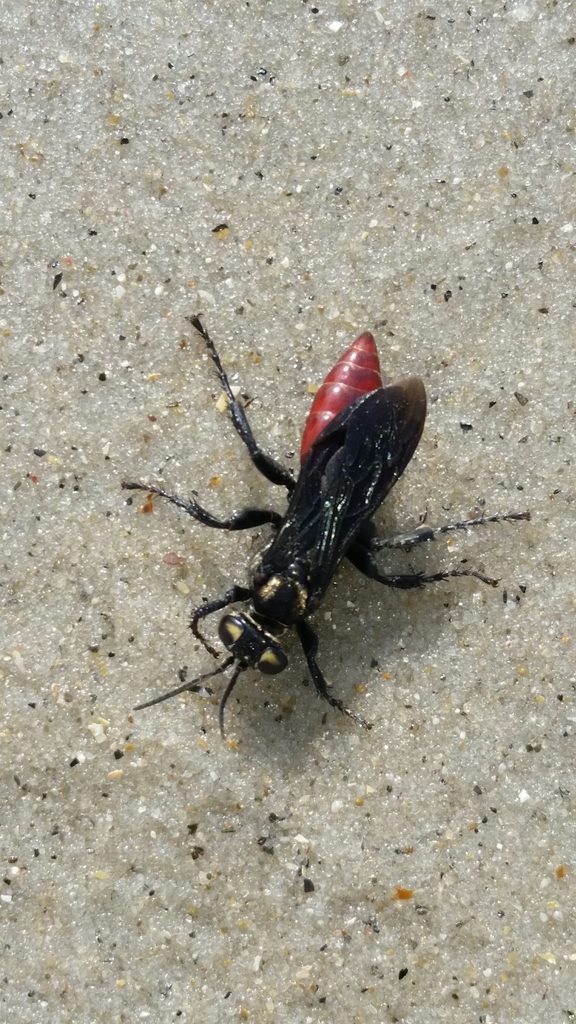
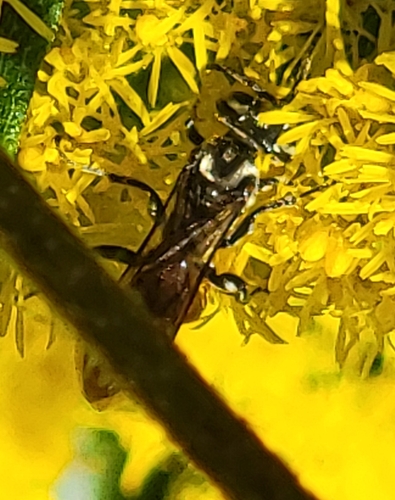
Larra bicolor is a South-American parasitoid wasp that hunts mole crickets and feeds on nectar from false buttonweed. Adults are about 22 mm long, black with silver head markings, a red abdomen and dusky wings; females are slightly larger than males. The larva develops inside a paralyzed cricket, kills it, then pupates for up to 50 days or longer if it overwinters, and the adult’s sting is only mildly painful.
Source: Wikipedia
How to recognize it
The wings are a dusky color that can vary.
Source: Wikipedia
Size
Adult females are about 22 mm long, while males are a bit smaller.
Source: Wikipedia
Is it a pest in the house?
These wasps have not adapted to attack native northern mole crickets and therefore are not a pest in homes.
Source: Wikipedia
How to get rid of it
Their use in biological control is limited by the need to provide suitable nectar plants for adults. Research shows they are insufficiently cold-tolerant, leading to trials with Bolivian populations.
Source: Wikipedia
Where it lives
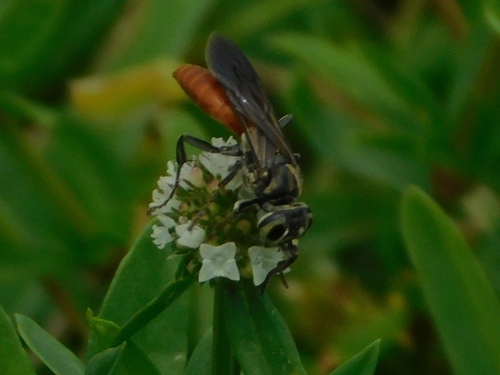
Adults feed on nectar, preferring the shrubby false buttonweed (Spermacoce verticillata).
Source: Wikipedia
Life cycle
After hatching, the larva feeds on its cricket host and eventually kills it.
Source: Wikipedia
When you see it
No seasonal pattern of adult activity is known aside from the winter diapause.
Source: Wikipedia
Where it comes from
Larra bicolor is native to South America.
Source: Wikipedia
Where it is found in the US
Recorded in 8 of 51 states and DC. Most records: Florida, Georgia, Louisiana, Alabama, Texas, South Carolina, Mississippi, North Carolina.
Darker = more records. Counts are museum and citizen-science records, not population size.
Source: GBIF
Status: introduced in United States. Source: iNaturalist
Months it is reported in the US
Source: GBIF
More photos
Questions people ask
Do they sting?
Yes, they can sting but the pain is mild compared with more familiar wasps.
Source: Wikipedia
What do they eat?
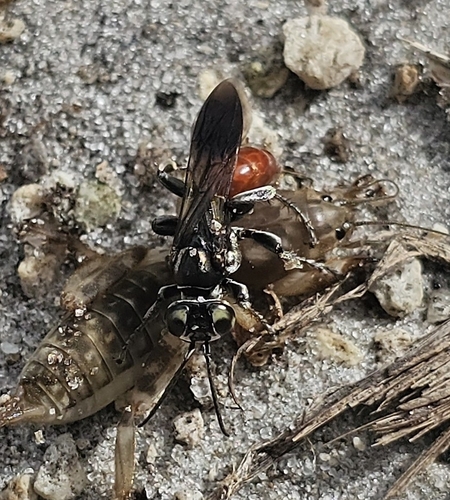
Adults sip nectar, especially from false buttonweed, while females hunt and paralyze mole crickets.
Source: Wikipedia
Same family (Crabronidae)

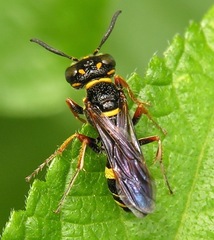
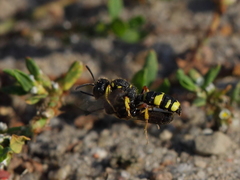
Sources
- Wikipedia: https://en.wikipedia.org/wiki/Larra_bicolor
Look it up elsewhere: GBIF · iNaturalist · BugGuide · ITIS · Wikipedia
Text written 2026-10-24 from the sources above and checked sentence by sentence against them. Data fetched 2026-10-24.