 Bug FAQ
Large Tolype Moth
Tolype velleda · Order: Lepidoptera · Family: Lasiocampidae
Also called: Large Tolype
Source: Wikipedia

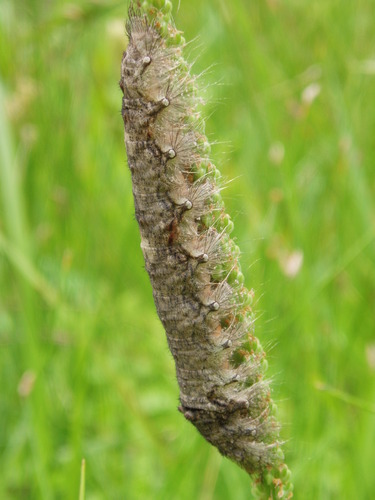
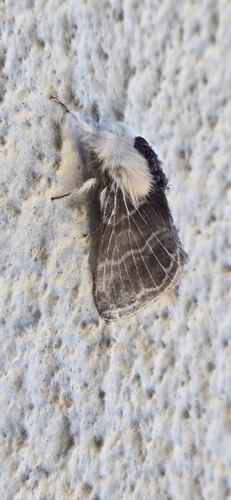
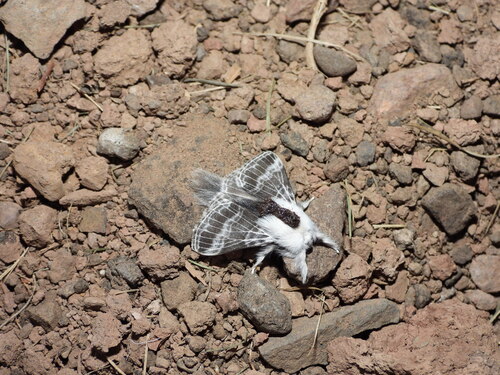
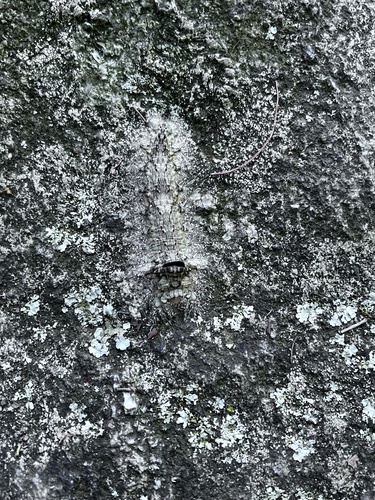
Adults have a wingspan of about 3 to 6 cm and females are larger than males. When the wings are open they look dark gray with wavy bands; the pattern stays visible when the wings are closed. Adults fly from June through November, while the caterpillars are present from June to August.
Source: Wikipedia
How to recognize it
Open wings appear dark gray with wavy crosswise bands, and the pattern remains visible when the wings are folded.
Source: Wikipedia
Size
The wingspan ranges from 32 to 58 mm. Females are larger than males.
Source: Wikipedia
Is it a pest in the house?
The larvae feed on many broadleaf trees and shrubs, and feeding is most active in the summer months.
Source: Wikipedia
Life cycle
Adults are on the wing from June to November, producing one generation each year. Caterpillars can be found from June through August.
Source: Wikipedia
When you see it
Adults are active from June to November, with one generation per year.
Source: Wikipedia
Where it is found in the US
Recorded in 42 of 51 states and DC. Most records: Massachusetts, Michigan, New York, Ohio, Pennsylvania, Connecticut, Vermont, Illinois.
Darker = more records. Counts are museum and citizen-science records, not population size.
Source: GBIF
Status: native in North America; native in United States; native in Canada. Source: iNaturalist
Months it is reported in the US
Source: GBIF
More photos
Questions people ask
When are the adult moths active?
Adult moths are on the wing from June through November.
Source: Wikipedia
How big are these moths?
Their wingspan ranges from about 32 to 58 mm, with females being larger than males.
Source: Wikipedia
Same family (Lasiocampidae)
 Eastern Tent Caterpillar MothMalacosoma americanaDamages trees, gardens or crops
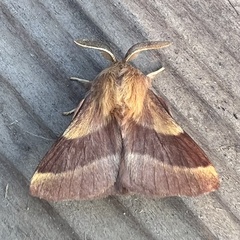 Forest Tent Caterpillar MothMalacosoma disstriaDamages trees, gardens or crops
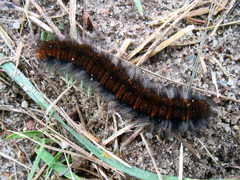 Fox MothMacrothylacia rubi
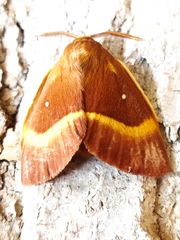 Oak EggarLasiocampa quercus
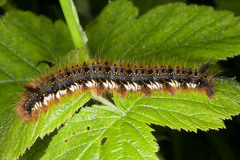 Drinker MothEuthrix potatoria
 Western Tent Caterpillar MothMalacosoma californicaDamages trees, gardens or crops
Sources
- Wikipedia: https://en.wikipedia.org/wiki/Tolype_velleda
Look it up elsewhere: GBIF · iNaturalist · BugGuide · Wikipedia
Text written 2026-10-23 from the sources above and checked sentence by sentence against them. Data fetched 2026-10-23.