 Bug FAQ
Lantana Plume Moth
Lantanophaga pusillidactylus · Order: Lepidoptera · Family: Pterophoridae
Also called: Moth, Lantana Plume
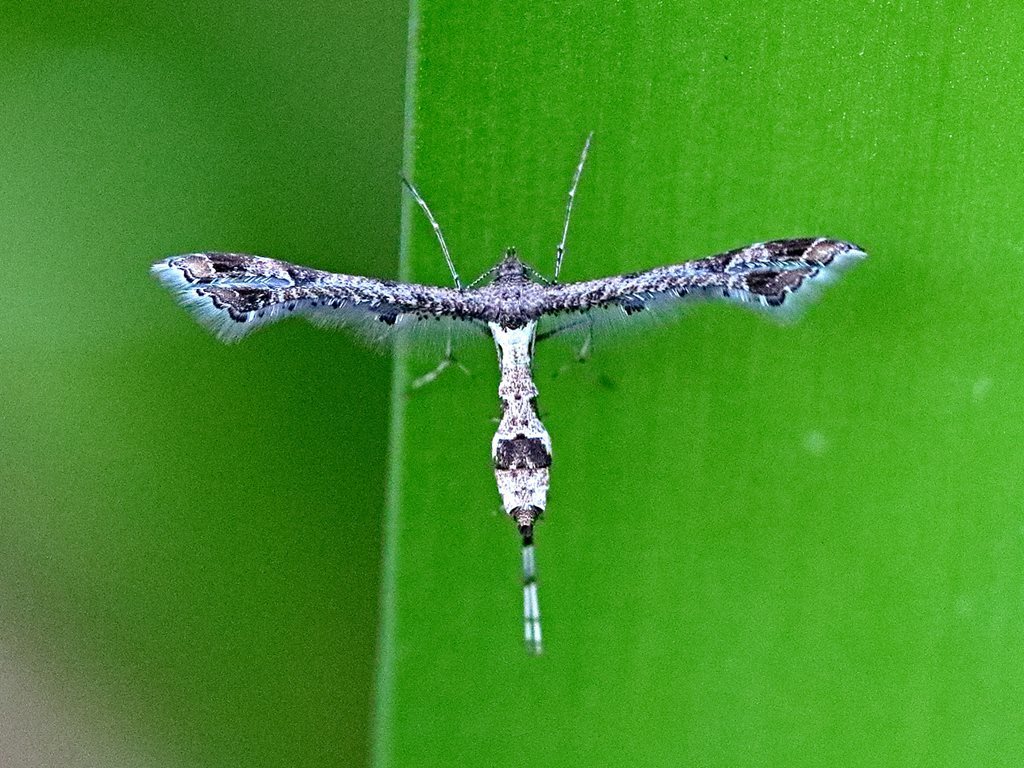
The lantana plume moth belongs to the family Pterophoridae. Its wingspan measures about 11 to 14 millimetres.
Source: Wikipedia
How to recognize it
Lantanophaga pusillidactyla is a moth in the plume moth family.
Source: Wikipedia
Size
The adult’s wingspan ranges from 11 to 14 mm.
Source: Wikipedia
What it eats
Adults sip nectar from flowers and lay eggs in flower heads. The caterpillars feed on several Lantana species as well as on plants such as Lippia alba, Phyla nodiflora, Mentha and Utricularia.
Source: Wikipedia
Where it is found in the US
Recorded in 13 of 51 states and DC. Most records: California, Florida, Texas, Arizona, Hawaii, Louisiana, Georgia, Alabama.
Darker = more records. Counts are museum and citizen-science records, not population size.
Source: GBIF
Months it is reported in the US
Source: GBIF
More photos

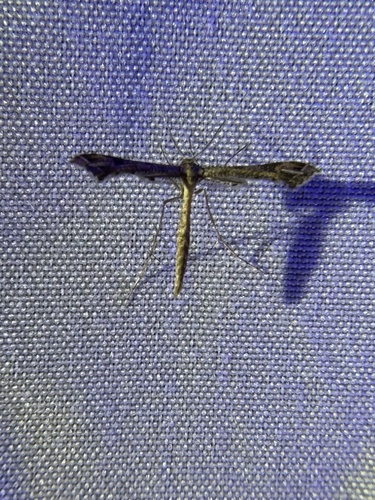
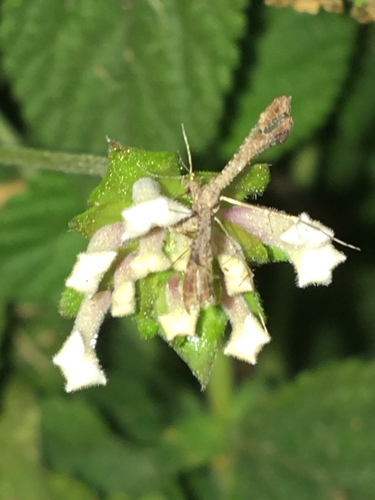
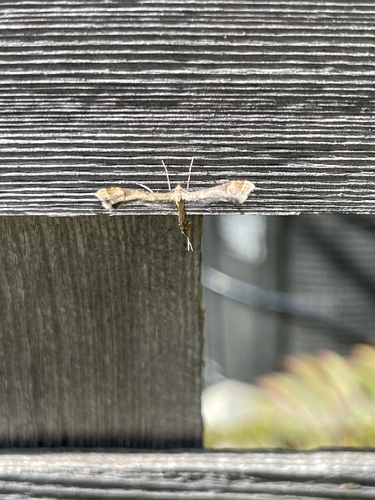
Questions people ask
What plants do the larvae eat?
The larvae feed on many Lantana species and also on plants like Lippia alba, Phyla nodiflora, Mentha and Utricularia.
Source: Wikipedia
Same family (Pterophoridae)
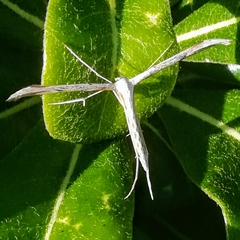 Morning-glory Plume MothEmmelina monodactyla
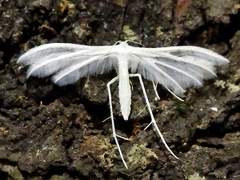 White Plume MothPterophorus pentadactylaDamages trees, gardens or crops
 Brown Silver-linePetrophora chlorosata
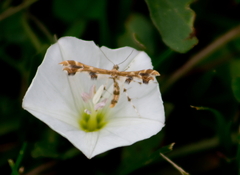 Grape and Sheppard's Plume MothsGeina periscelidactylusDamages trees, gardens or crops
 Yarrow Plume MothGillmeria pallidactylaDamages trees, gardens or crops
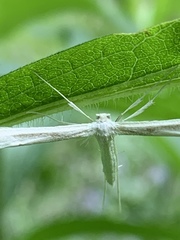 Plain, Elliott's, and Habeck's Plume MothsHellinsia homodactylus
Sources
- Wikipedia: https://en.wikipedia.org/wiki/Lantanophaga_pusillidactyla
Look it up elsewhere: GBIF · iNaturalist · BugGuide · Wikipedia
Text written 2026-10-26 from the sources above and checked sentence by sentence against them. Data fetched 2026-10-26.