 Bug FAQ
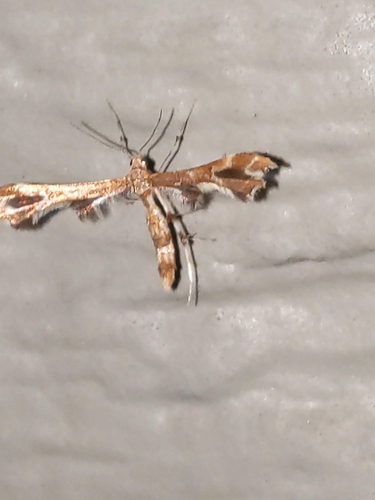
Grape and Sheppard's Plume Moths
Geina periscelidactylus · Order: Lepidoptera · Family: Pterophoridae
Also called: Grape Plume Moth
Source: Wikipedia
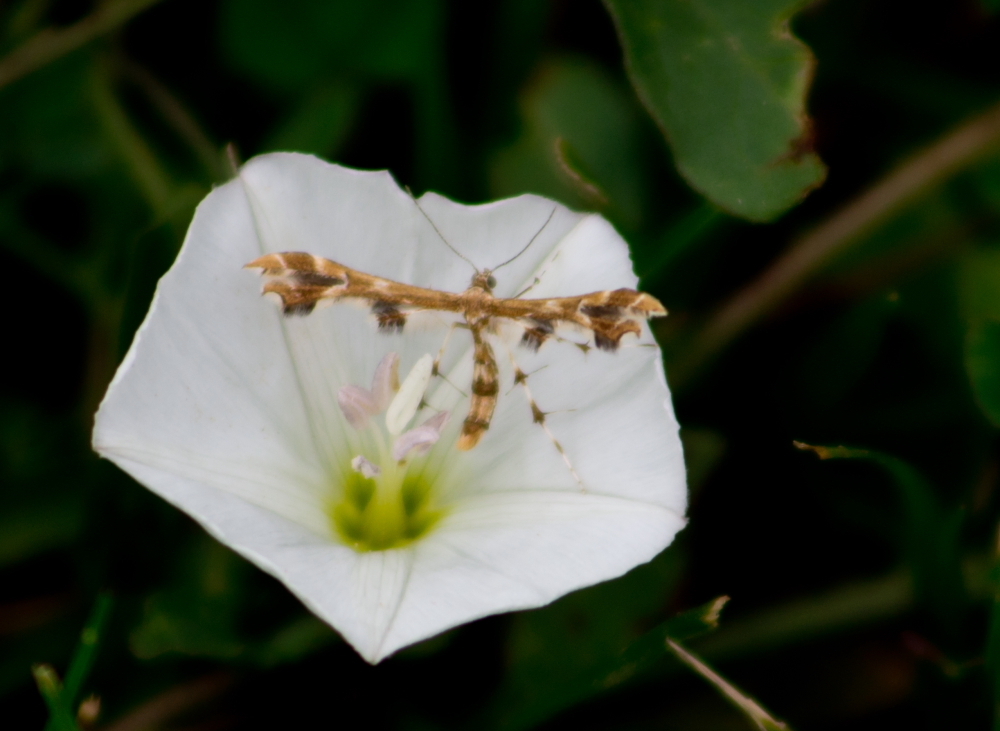
Grape and Sheppard's plume moths are small moths with a wingspan of about 16 mm and belong to the Pterophoroidea family. Their caterpillars feed on grape and Virginia creeper, and are considered a minor pest on cultivated grapes because they web together young leaves and shoots.
Source: Wikipedia
How to recognize it
The grape plume moth belongs to the Pterophoroidea family.
Source: Wikipedia
Size
Its wingspan measures about 16 mm (0.63 in).
Source: Wikipedia
Is it a pest in the house?
The larvae are considered a minor pest on cultivated grapes, webbing together young leaves and shoots.
Source: Wikipedia
Where it lives
You’ll find it in the eastern part of North America.
Source: Wikipedia
What it eats
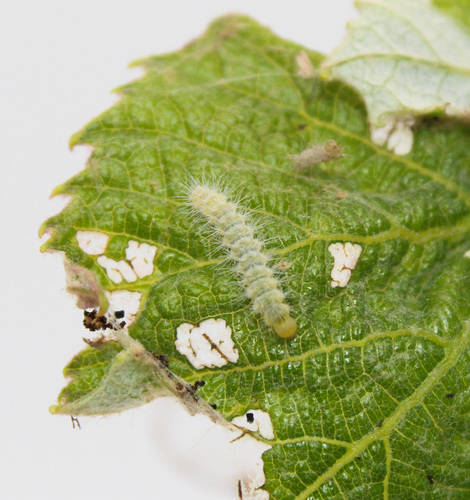
The caterpillars eat grape vines and Virginia creeper.
Source: Wikipedia
Life cycle
Adults are active and flying from June through July.
Source: Wikipedia
When you see it
They are on the wing during the early summer months.
Source: Wikipedia
Where it comes from
Its native range is eastern North America.
Source: Wikipedia
Where it is found in the US
Recorded in 28 of 51 states and DC. Most records: Michigan, Wisconsin, Ohio, Connecticut, Minnesota, Massachusetts, New York, Maryland.
Darker = more records. Counts are museum and citizen-science records, not population size.
Source: GBIF
Months it is reported in the US
Source: GBIF
More photos
Questions people ask
What plants are affected by the larvae?
The larvae feed on grape vines and Virginia creeper, and can damage cultivated grapes by webbing young foliage.
Source: Wikipedia
Same family (Pterophoridae)
 Morning-glory Plume MothEmmelina monodactyla
 White Plume MothPterophorus pentadactylaDamages trees, gardens or crops
 Brown Silver-linePetrophora chlorosata
 Yarrow Plume MothGillmeria pallidactylaDamages trees, gardens or crops
 Belfrage's Plume MothPselnophorus belfragei
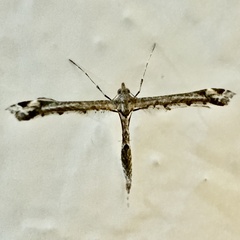 Sage Plume MothAnstenoptilia marmarodactyla
Sources
- Wikipedia: https://en.wikipedia.org/wiki/Geina_periscelidactylus
Look it up elsewhere: GBIF · iNaturalist · BugGuide · Wikipedia
Text written 2026-10-26 from the sources above and checked sentence by sentence against them. Data fetched 2026-10-26.