 Bug FAQ
Morning-glory Plume Moth
Emmelina monodactyla · Order: Lepidoptera · Family: Pterophoridae
Also called: Common Plume Moth, T Moth
Source: Wikipedia
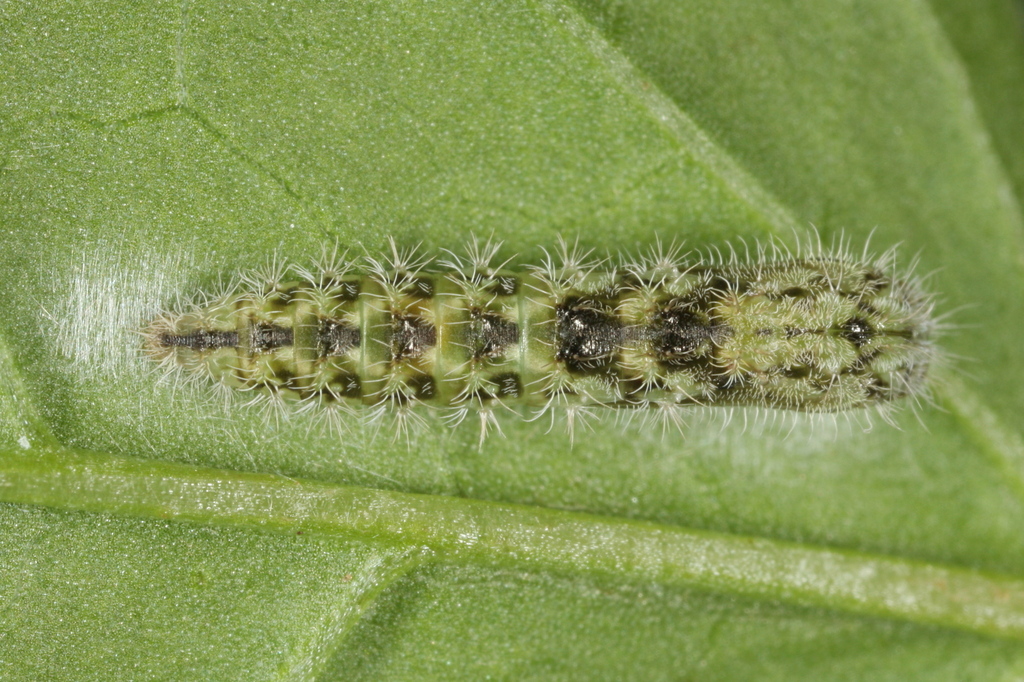
These moths have a pale russet colour that can range from off-white to deep rust brown and a wingspan of about 18 to 27 mm. The caterpillars feed from May to September on several bindweed and morning-glory species, including sweet potato.
Source: Wikipedia
How to recognize it
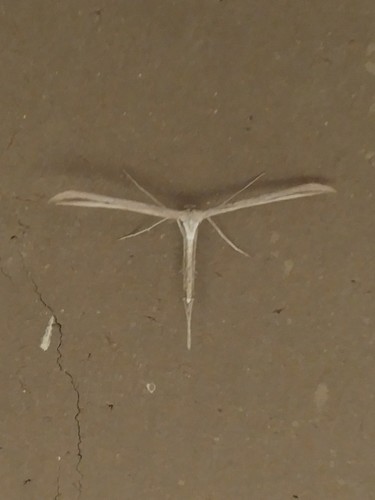
Their colour varies widely, from almost white with faint markings to a strong rust brown.
Source: Wikipedia
Size
Adults have a wingspan between 18 and 27 mm.
Source: Wikipedia
What it eats
Larvae feed on many Convolvulaceae plants such as hedge bindweed, field bindweed, sweet potato and common morning-glory.
Source: Wikipedia
Life cycle
Caterpillars are active from May through September, producing two overlapping generations.
Source: Wikipedia
When you see it
Adult moths can be seen flying almost throughout the whole year.
Source: Wikipedia
Where it is found in the US
Recorded in 49 of 51 states and DC. Most records: Maryland, California, New York, Pennsylvania, Ohio, Illinois, Texas, Massachusetts.
Darker = more records. Counts are museum and citizen-science records, not population size.
Source: GBIF
Months it is reported in the US
Source: GBIF
More photos


Questions people ask
What plants do the larvae eat?
They feed on bindweed species, various morning-glories and sweet potato.
Source: Wikipedia
When are the moths active?
Adults can be seen flying nearly year-round, while larvae are present from May to September.
Source: Wikipedia
Same family (Pterophoridae)
Sources
- Wikipedia: https://en.wikipedia.org/wiki/Emmelina_monodactyla
Look it up elsewhere: GBIF · iNaturalist · BugGuide · Wikipedia
Text written 2026-10-23 from the sources above and checked sentence by sentence against them. Data fetched 2026-10-23.