 Bug FAQ
Plain, Elliott's, and Habeck's Plume Moths
Hellinsia homodactylus · Order: Lepidoptera · Family: Pterophoridae
Also called: Plain Plume Moth
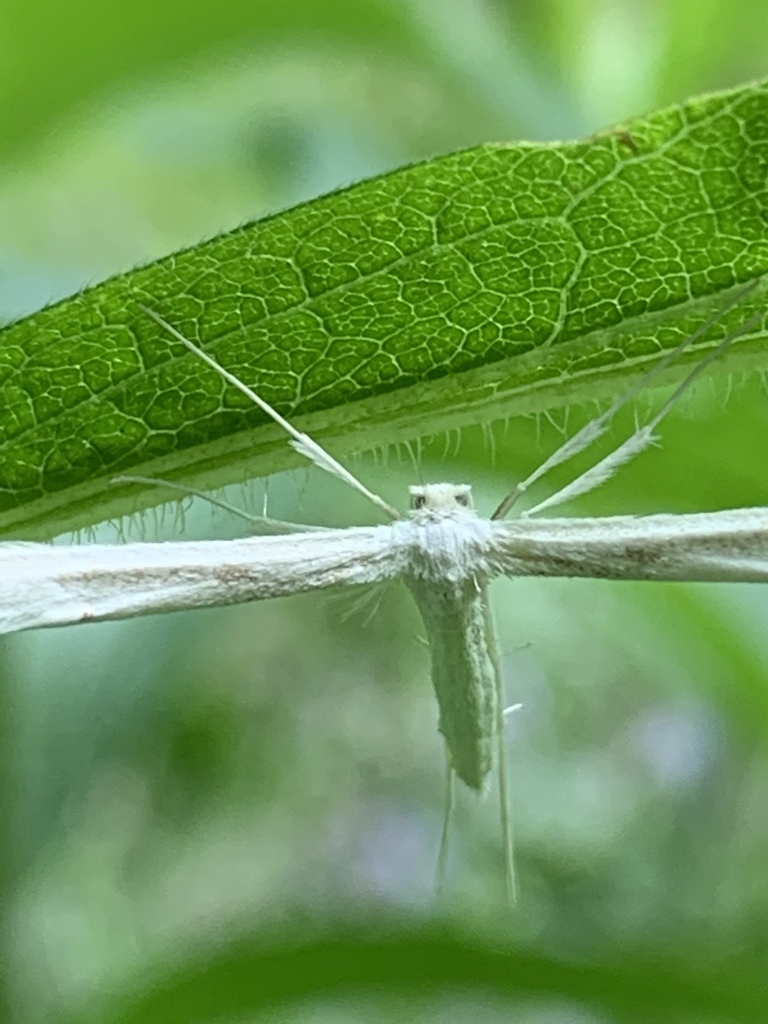
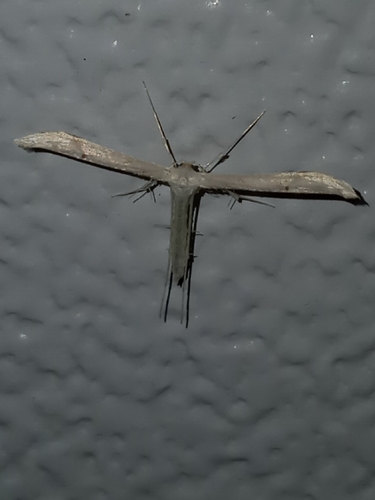
The plume moth has a wingspan of about 22 to 27 mm and a mostly white head, palpi and antennae. Its forewings are white with a faint dusting of brownish scales along the leading edge. It occurs across much of North America, from many U.S. states and Canadian provinces to Guerrero in Mexico.
Source: Wikipedia
How to recognize it
The forewings are white with a slight brownish dusting on the costa.
Source: Wikipedia
Size
The wingspan ranges from 22 to 27 mm.
Source: Wikipedia
Life cycle
Hellinsia homodactylus belongs to the moth family Pterophoridae.
Source: Wikipedia
Where it comes from
Its native range includes the United States and Canada. It also occurs in Guerrero, Mexico.
Source: Wikipedia
Where it is found in the US
Recorded in 24 of 51 states and DC. Most records: New York, Vermont, Maine, Michigan, Massachusetts, Ohio, Wisconsin, Pennsylvania.
Darker = more records. Counts are museum and citizen-science records, not population size.
Source: GBIF
Months it is reported in the US
Source: GBIF
More photos
Questions people ask
What does Hellinsia homodactylus look like?
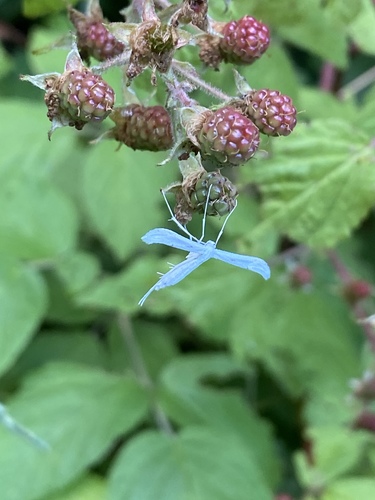
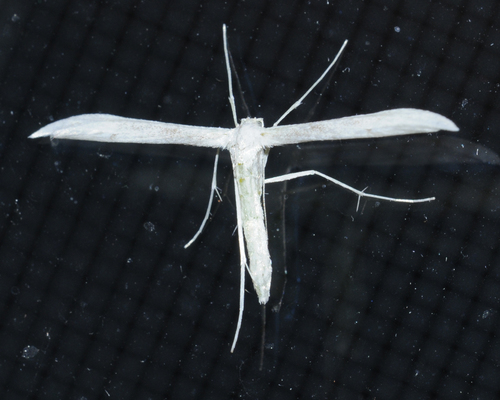
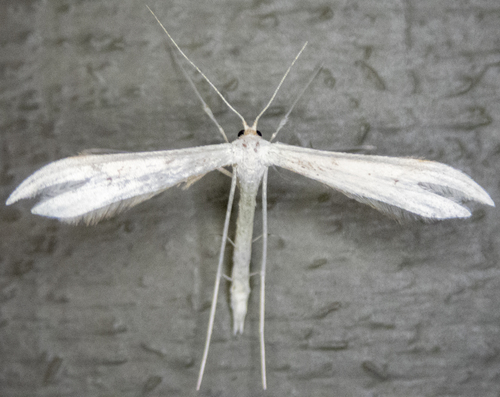
It has a white head with whitish palpi and antennae, and its forewings are white with a faint brown dusting along the leading edge; the wingspan is 22 to 27 mm.
Source: Wikipedia
Where is Hellinsia homodactylus found?
It occurs across much of North America, from many U.S. states and Canadian provinces to Guerrero in Mexico.
Source: Wikipedia
Same family (Pterophoridae)
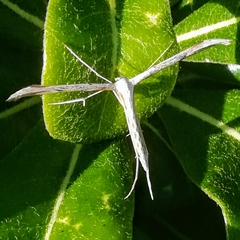 Morning-glory Plume MothEmmelina monodactyla
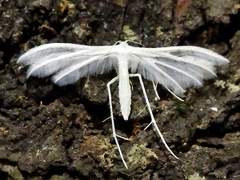 White Plume MothPterophorus pentadactylaDamages trees, gardens or crops
 Brown Silver-linePetrophora chlorosata
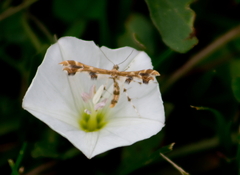 Grape and Sheppard's Plume MothsGeina periscelidactylusDamages trees, gardens or crops
 Yarrow Plume MothGillmeria pallidactylaDamages trees, gardens or crops
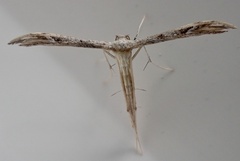 Belfrage's Plume MothPselnophorus belfragei
Sources
- Wikipedia: https://en.wikipedia.org/wiki/Hellinsia_homodactylus
Look it up elsewhere: GBIF · iNaturalist · BugGuide · Wikipedia
Text written 2026-10-26 from the sources above and checked sentence by sentence against them. Data fetched 2026-10-26.