 Bug FAQ
Yarrow Plume Moth
Gillmeria pallidactyla · Order: Lepidoptera · Family: Pterophoridae
Also called: Yarrow Plume
Source: Wikipedia

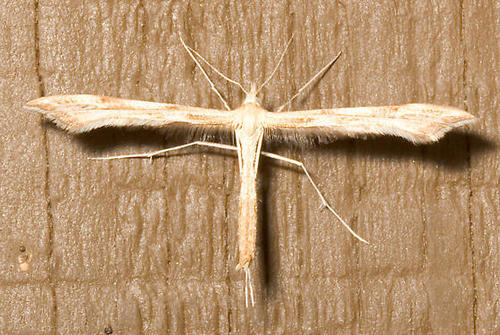
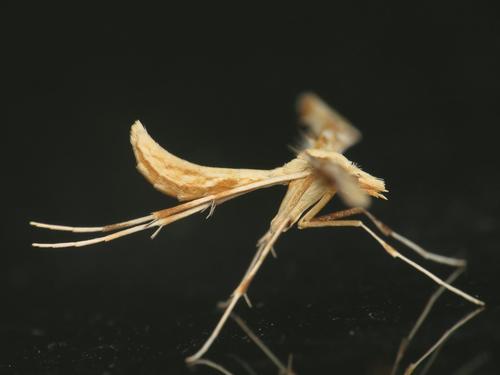
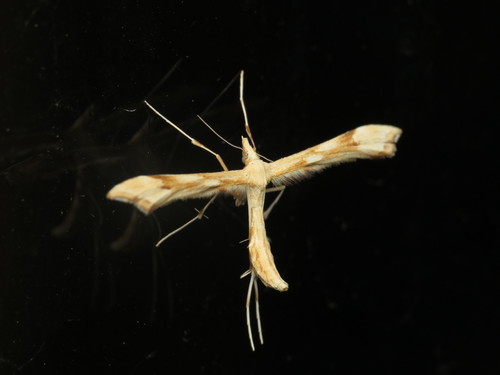
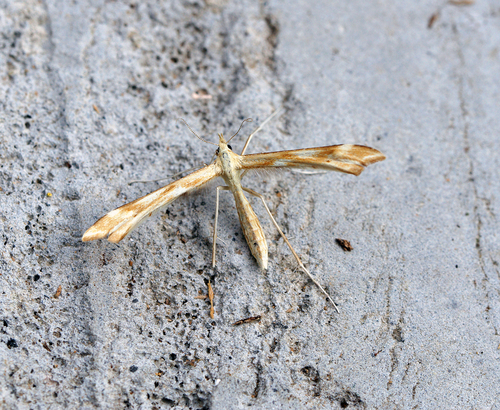
This moth has a wingspan of about 23 to 27 mm and shows long frontal tufts, very long palpi, and light-brown posterior tibiae below the middle spurs. It is found across the Holarctic region, common in North America and the Palearctic, and adults fly from June to August depending on location. The larvae bore into stems in autumn, overwinter in roots, and in spring feed on successive shoots, wilting the plants.
Source: Wikipedia
Size
Wingspan ranges from 23 to 27 mm (0.91 to 1.06 in).
Source: Wikipedia
Where it lives
During the day they hide among low foliage and become active from dusk onward.
Source: Wikipedia
What it eats
Adults feed on shoots, causing the shoots to wilt.
Source: Wikipedia
Life cycle
Larvae bore into stems in autumn and overwinter in the roots. In spring they feed on successive shoots, wilting them.
Source: Wikipedia
Where it comes from
It has a Holarctic distribution, widespread throughout North America and the Palearctic.
Source: Wikipedia
Lookalikes
It resembles Gillmeria ochrodactyla, but G. ochrodactyla has brown and white bands on the hindlegs below the middle spurs, while G. pallidactyla’s legs lack banding.
Source: Wikipedia
Where it is found in the US
Recorded in 34 of 51 states and DC. Most records: Michigan, Minnesota, New York, Wisconsin, New Hampshire, Vermont, Colorado, Montana.
Darker = more records. Counts are museum and citizen-science records, not population size.
Source: GBIF
Status: native in North America; native in Canada; native in United States. Source: iNaturalist
Months it is reported in the US
Source: GBIF
More photos
Questions people ask
What plants does the Yarrow Plume Moth damage?
The moth’s larvae feed on shoots, causing the shoots to wilt and harming garden and crop plants.
Source: Wikipedia
When are adult Yarrow Plume Moths active?
Adults fly from June through July in Europe and up to August in northern North America, becoming active at dusk.
Source: Wikipedia
How can I tell this moth apart from similar species?
Look for the absence of brown and white bands on the hindlegs below the middle spurs; this moth’s legs are unbanded, unlike Gillmeria ochrodactyla.
Source: Wikipedia
Where is the Yarrow Plume Moth found?
It is widespread across the Holarctic, including North America and the Palearctic region.
Source: Wikipedia
Same family (Pterophoridae)
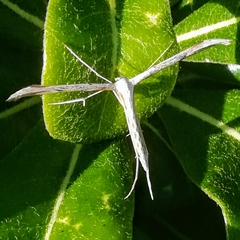 Morning-glory Plume MothEmmelina monodactyla
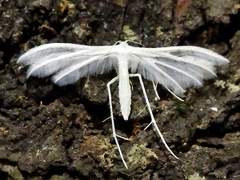 White Plume MothPterophorus pentadactylaDamages trees, gardens or crops
 Brown Silver-linePetrophora chlorosata
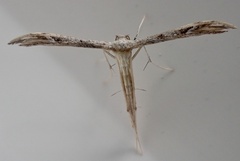 Belfrage's Plume MothPselnophorus belfragei
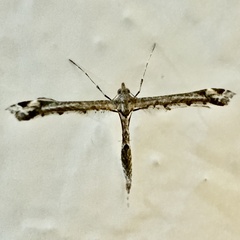 Sage Plume MothAnstenoptilia marmarodactyla
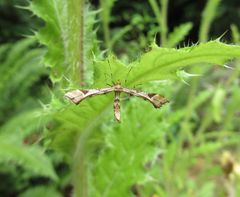 Artichoke Plume MothPlatyptilia carduidactylusDamages trees, gardens or crops
Sources
- Wikipedia: https://en.wikipedia.org/wiki/Gillmeria_pallidactyla
Look it up elsewhere: GBIF · iNaturalist · BugGuide · Wikipedia
Text written 2026-10-24 from the sources above and checked sentence by sentence against them. Data fetched 2026-10-24.