 Bug FAQ
Imported Currantworm
Nematus ribesii · Order: Hymenoptera · Family: Tenthredinidae
Source: Wikipedia
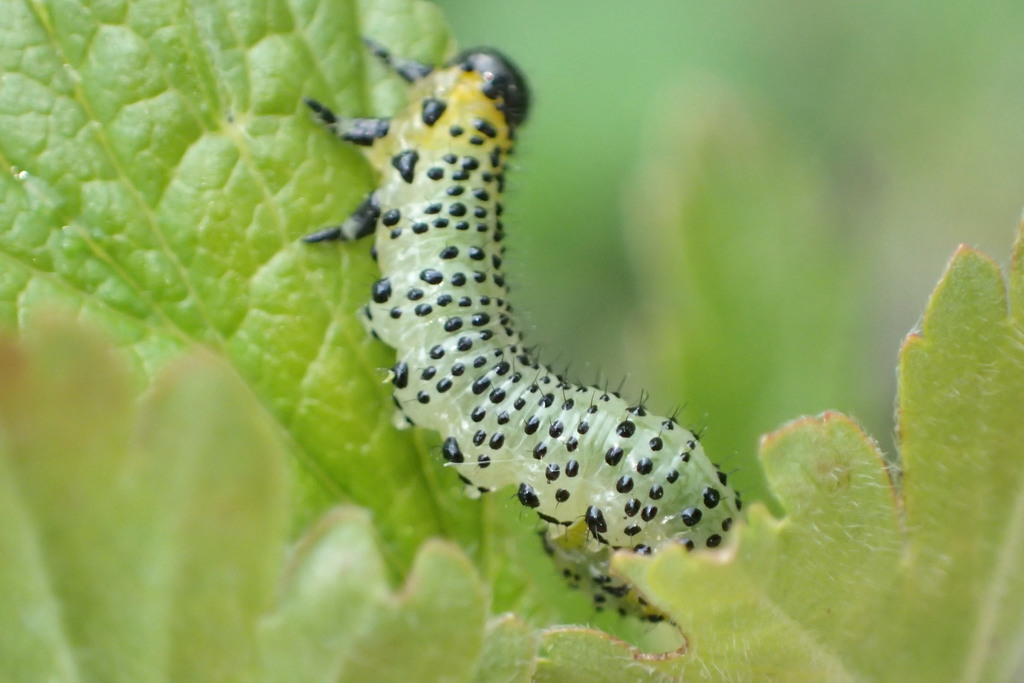
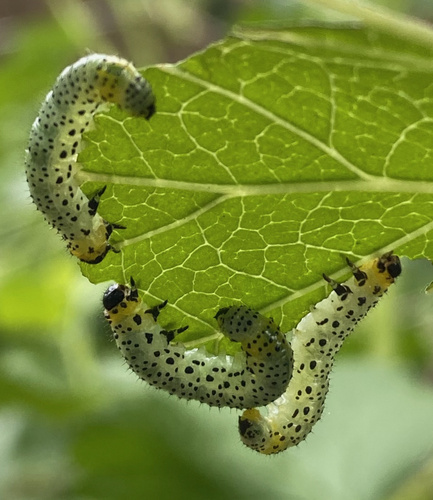
The larvae are green, about 2 cm long, with a black head and spots, while adults are yellowish with black markings and females are a bit larger than males. Three generations appear each year, with larvae showing up from April through September.
Source: Wikipedia
How to recognize it
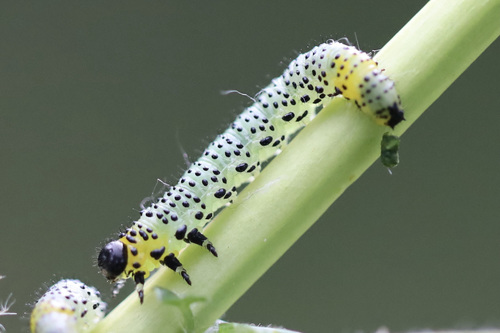
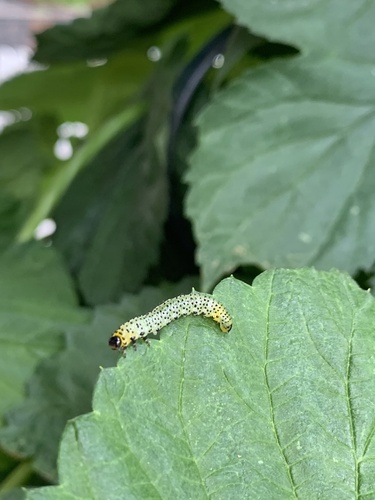
Larvae are green up to 2 cm long, have a black head and black spots along their bodies. Adults are yellowish with black markings; females are slightly larger than males.
Source: Wikipedia
Size
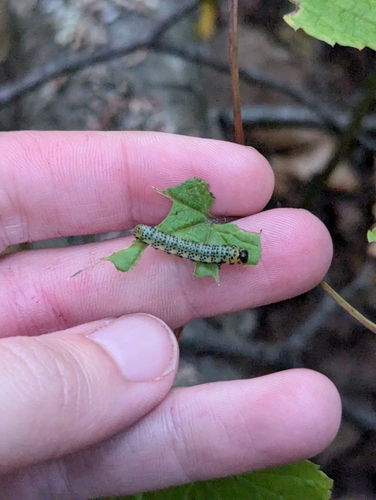
Larvae can reach about 2 cm in length. Adult females are a little larger than adult males.
Source: Wikipedia
Is it a pest in the house?
It is a known pest of gooseberries. Larvae feed on foliage and often strip the plant completely.
Source: Wikipedia
Where it lives
Females lay eggs on the undersides of leaves and the larvae move upward, stripping foliage.
Source: Wikipedia
What it eats
The larvae feed on the plant’s foliage and can completely defoliate it.
Source: Wikipedia
When you see it
Three generations appear from April through September.
Source: Wikipedia
Where it is found in the US
Recorded in 29 of 51 states and DC. Most records: Illinois, Washington, Oregon, Alaska, Ohio, Colorado, New Hampshire, New York.
Darker = more records. Counts are museum and citizen-science records, not population size.
Source: GBIF
Status: introduced in North America; introduced in United States; introduced in Canada. Source: iNaturalist
Months it is reported in the US
Source: GBIF
More photos
Questions people ask
How many generations does the imported currantworm have each year?
It can produce three generations annually, with larvae appearing from April to September.
Source: Wikipedia
What plants does it damage?
It primarily attacks gooseberry plants, defoliating them.
Source: Wikipedia
Same family (Tenthredinidae)


Sources
- Wikipedia: https://en.wikipedia.org/wiki/Nematus_ribesii
Look it up elsewhere: GBIF · iNaturalist · BugGuide · ITIS · Wikipedia
Text written 2026-10-25 from the sources above and checked sentence by sentence against them. Data fetched 2026-10-25.