 Bug FAQ
Ichneumon centrator
Ichneumon centrator · Order: Hymenoptera · Family: Ichneumonidae
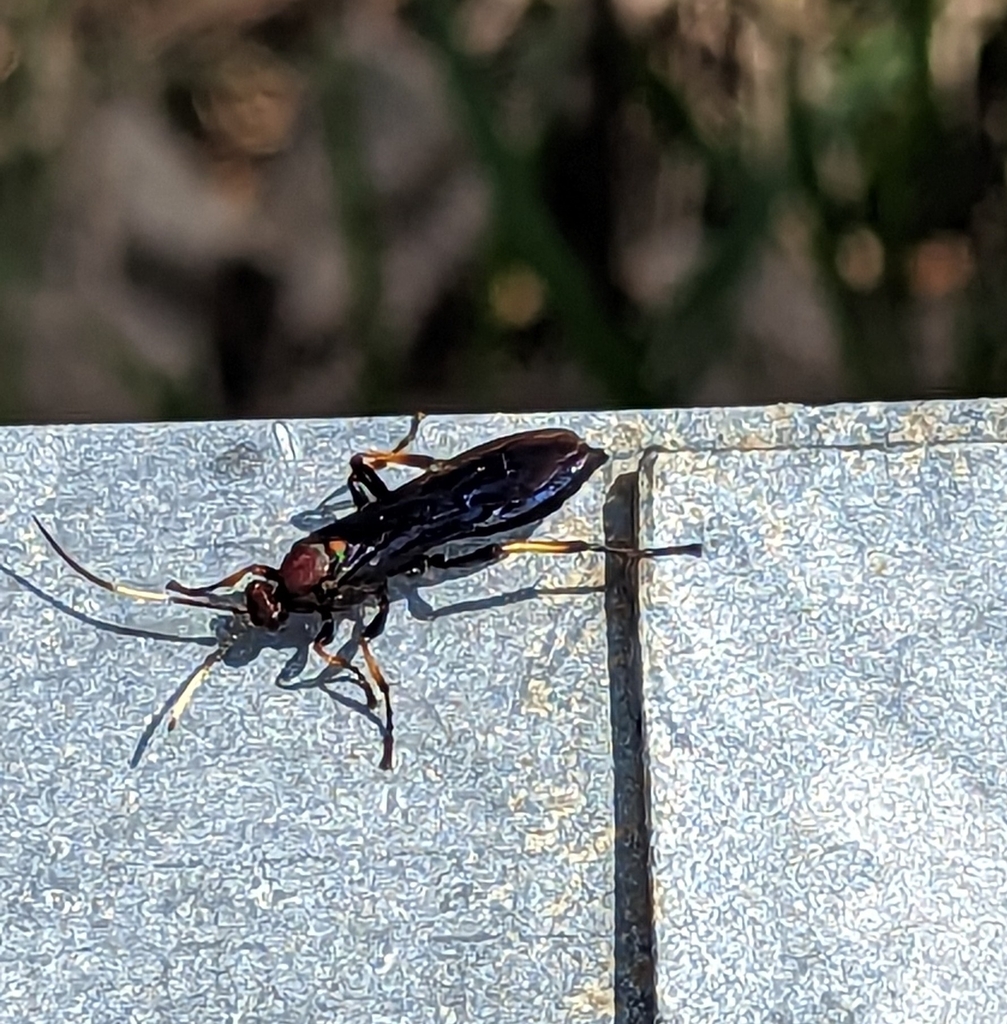
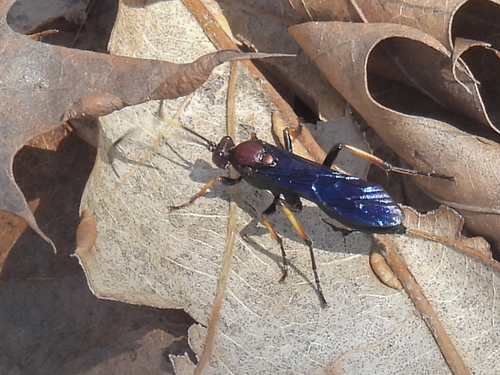
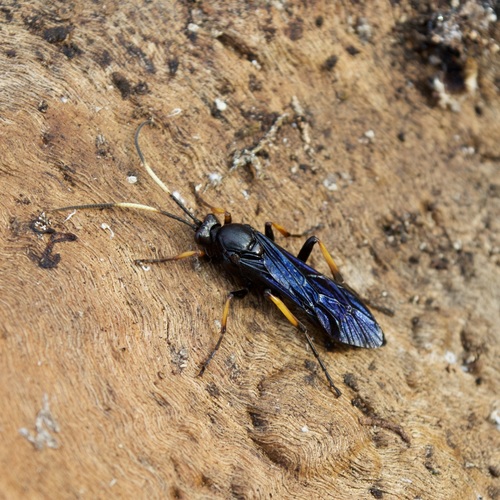
Ichneumon centrator is a small wasp about three-quarters of an inch long with violet-blue wings. Females are black with a rust-colored head and thorax, yellow-tinged antennae and dark-yellow tibiae, while males are all black with pale yellow antennae. The wasp lays its eggs inside woolly-bear caterpillars; the larvae develop inside the host and emerge as adults.
Source: Wikipedia
How to recognize it
Females have a black body, rust-colored head and thorax, mostly black antennae with white or pale yellow segments from joint 7 to 17, and black legs except dark-yellow tibiae. Males are completely black with pale yellow antennae, making them look like the larger Gnamptopelta obsidianator.
Source: Wikipedia
Size
Adults measure about 0.75 in (19 mm) in length.
Source: Wikipedia
Where it lives
Females spend the winter as adults, choosing humid, stable spots such as under bark on fallen trees. Males die in the fall and do not overwinter.
Source: Wikipedia
What it eats
The female uses her ovipositor to deposit eggs inside the larvae of the Isabella tiger moth (woolly-bear caterpillar). Developing larvae feed inside the living caterpillar and later emerge from the host’s pupae.
Source: Wikipedia
Life cycle
As a parasitoid, the wasp must lay eggs inside a host for its larvae to grow. Females overwinter as adults, while males die after the season.
Source: Wikipedia
When you see it
Adults are most commonly seen from March through August.
Source: Wikipedia
Where it comes from
It was first described in 1825 by Thomas Say and is native to North America.
Source: Wikipedia
Lookalikes
Male Ichneumon centrator can be confused with the larger Gnamptopelta obsidianator, but the latter is noticeably bigger.
Source: Wikipedia
Where it is found in the US
Recorded in 24 of 51 states and DC. Most records: Ohio, New York, Vermont, Pennsylvania, Massachusetts, Maine, Illinois, Michigan.
Darker = more records. Counts are museum and citizen-science records, not population size.
Source: GBIF
Months it is reported in the US
Source: GBIF
More photos
Questions people ask
When can I expect to see Ichichneumon centrator?
Adults are most often observed between March and August.
Source: Wikipedia
What does Ichneumon centrator look like?
Females are black with rust-colored head and thorax and have partly yellow antennae, while males are all black with pale yellow antennae.
Source: Wikipedia
Where does Ichneumon centrator spend the winter?
Only females survive the winter, hiding under bark in moist, stable environments.
Source: Wikipedia
What hosts does Ichneumon centrator use for its larvae?
It lays eggs inside woolly-bear caterpillars, and the larvae develop inside the living host.
Source: Wikipedia
Same family (Ichneumonidae)



Sources
- Wikipedia: https://en.wikipedia.org/wiki/Ichneumon_centrator
Look it up elsewhere: GBIF · iNaturalist · BugGuide · Wikipedia
Text written 2026-10-26 from the sources above and checked sentence by sentence against them. Data fetched 2026-10-26.