 Bug FAQ
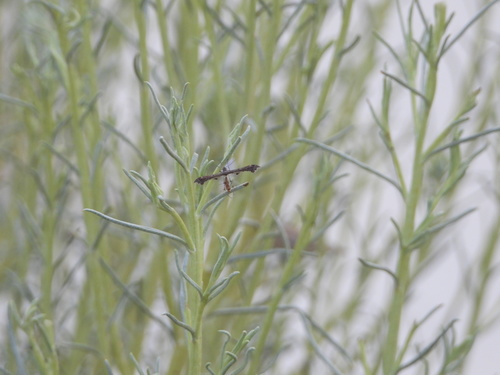
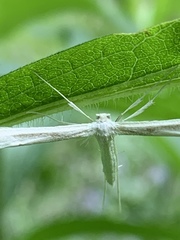
Hourglass Plume Moth
Michaelophorus indentatus · Order: Lepidoptera · Family: Pterophoridae
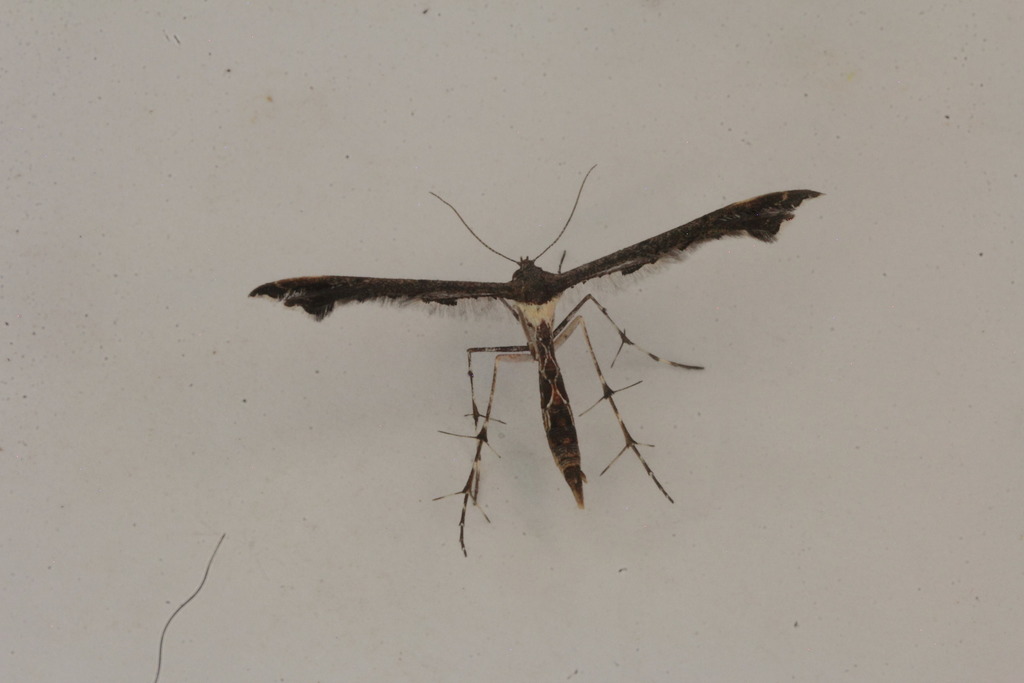
The hourglass plume moth has a wingspan of about 12 mm (0.47 in). It is found in Belize, Brazil, Mexico and Panama. Adults are on the wing in April and again from September through November.
Source: Wikipedia
Size
Wingspan is roughly 12 mm (0.47 in).
Source: Wikipedia
When you see it
Flies in April and September to November.
Source: Wikipedia
Where it comes from
Recorded from Belize, Brazil, Mexico and Panama.
Source: Wikipedia
Where it is found in the US
Recorded in 5 of 51 states and DC. Most records: Texas, Arizona, New Mexico, California, Oklahoma.
Darker = more records. Counts are museum and citizen-science records, not population size.
Source: GBIF
Months it is reported in the US
Source: GBIF
More photos
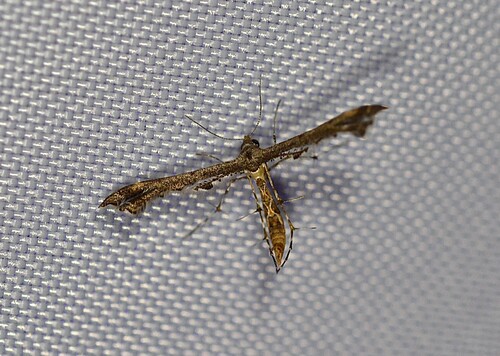
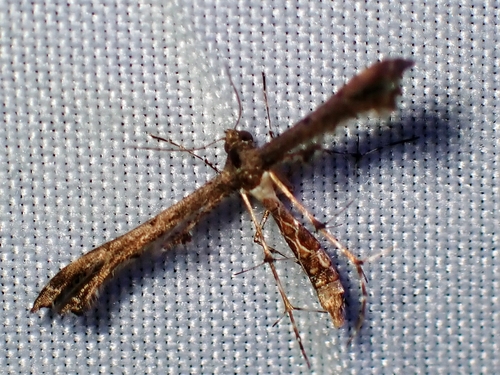
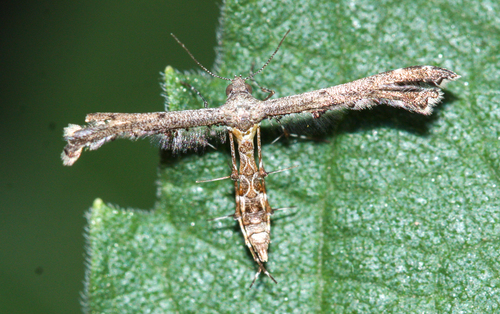
Questions people ask
When are hourglass plume moths active?
Adults are active in April and again from September through November.
Source: Wikipedia
Where does the hourglass plume moth live?
It occurs in Belize, Brazil, Mexico and Panama.
Source: Wikipedia
Same family (Pterophoridae)
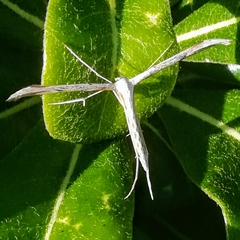 Morning-glory Plume MothEmmelina monodactyla
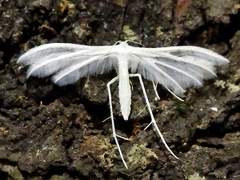 White Plume MothPterophorus pentadactylaDamages trees, gardens or crops
 Brown Silver-linePetrophora chlorosata
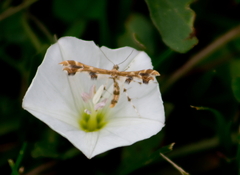 Grape and Sheppard's Plume MothsGeina periscelidactylusDamages trees, gardens or crops
 Yarrow Plume MothGillmeria pallidactylaDamages trees, gardens or crops
 Plain, Elliott's, and Habeck's Plume MothsHellinsia homodactylus
Sources
- Wikipedia: https://en.wikipedia.org/wiki/Michaelophorus_indentatus
Look it up elsewhere: GBIF · iNaturalist · BugGuide · Wikipedia
Text written 2026-10-26 from the sources above and checked sentence by sentence against them. Data fetched 2026-10-26.