 Bug FAQ
Horn Fly
Haematobia irritans · Order: Diptera · Family: Muscidae
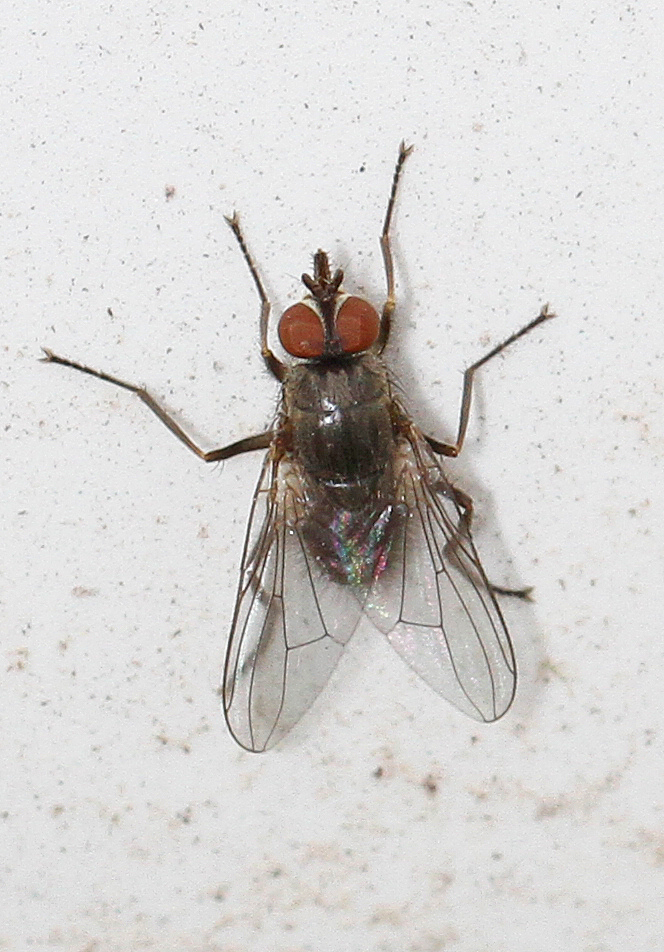
Horn flies are tiny gray insects about 4 mm long, the smallest of the biting muscids. Females lay eggs in fresh cow manure and the larvae develop there, feeding on bacteria and decomposition products.
Source: Wikipedia
How to recognize it
The horn fly is the smallest biting muscid, gray in color and about 4 mm long.
Source: Wikipedia
Size
It measures roughly 3⁄16 in (4 mm) in length.
Source: Wikipedia
Is it a pest in the house?
Horn flies are an irritant to livestock.
Source: Wikipedia
Can it bite, sting or make you sick?
They pierce the hide of animals to suck blood, which can make them a potential intermediate host for the cattle parasite Stephanofilaria stilesi.
Source: Wikipedia
How to get rid of it
- Control programs are shifting away from heavy pesticide use because of resistance and environmental concerns.
- Rotating hens three days behind cattle helps reduce horn-fly numbers by disrupting larval habitats.
Source: Wikipedia
Where it lives
Females deposit eggs in fresh cow dung, often before the cow finishes defecating. Adults move around the host animal to regulate temperature and avoid wind.
Source: Wikipedia
What it eats
Both males and females feed solely on blood, piercing the animal’s hide with sharp mouthparts. Larvae live in fresh dung and consume bacteria and their decomposition products.
Source: Wikipedia
Life cycle
Eggs hatch in one to two days after being laid.
Source: Wikipedia
When you see it
In the United States they are active from April through October and sometimes into mid-November. Population peaks occur from June to mid-July and again in late August.
Source: Wikipedia
Where it comes from
Horn flies are native to Europe and have been introduced to North America.
Source: Wikipedia
Where it is found in the US
Recorded in 16 of 51 states and DC. Most records: Hawaii, Michigan, California, New Mexico, Ohio, Kansas, Texas, Florida.
Darker = more records. Counts are museum and citizen-science records, not population size.
Source: GBIF
Status: introduced in Canada. Source: iNaturalist
Months it is reported in the US
Source: GBIF
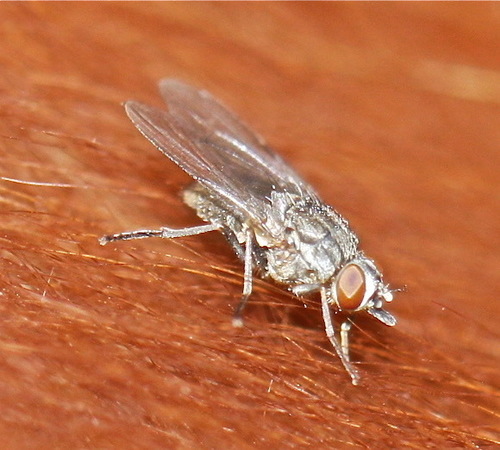
More photos
Questions people ask
How can I control horn flies on my cattle?
Use integrated methods that limit pesticide reliance and consider rotating hens a few days behind cattle to break the larval cycle.
Source: Wikipedia
Do horn flies bite livestock?
Yes, both male and female horn flies feed on blood by piercing the hide of cattle.
Source: Wikipedia
Where did horn flies originate?
They are native to Europe and have been introduced to North America.
Source: Wikipedia
Same family (Muscidae)




Sources
- Wikipedia: https://en.wikipedia.org/wiki/Haematobia_irritans
Look it up elsewhere: GBIF · iNaturalist · BugGuide · ITIS · Wikipedia
Text written 2026-10-28 from the sources above and checked sentence by sentence against them. Data fetched 2026-10-28.