 Bug FAQ
Face fly
Musca autumnalis · Order: Diptera · Family: Muscidae
Also called: Autumn House Fly, Muscoid fly
Source: Wikipedia
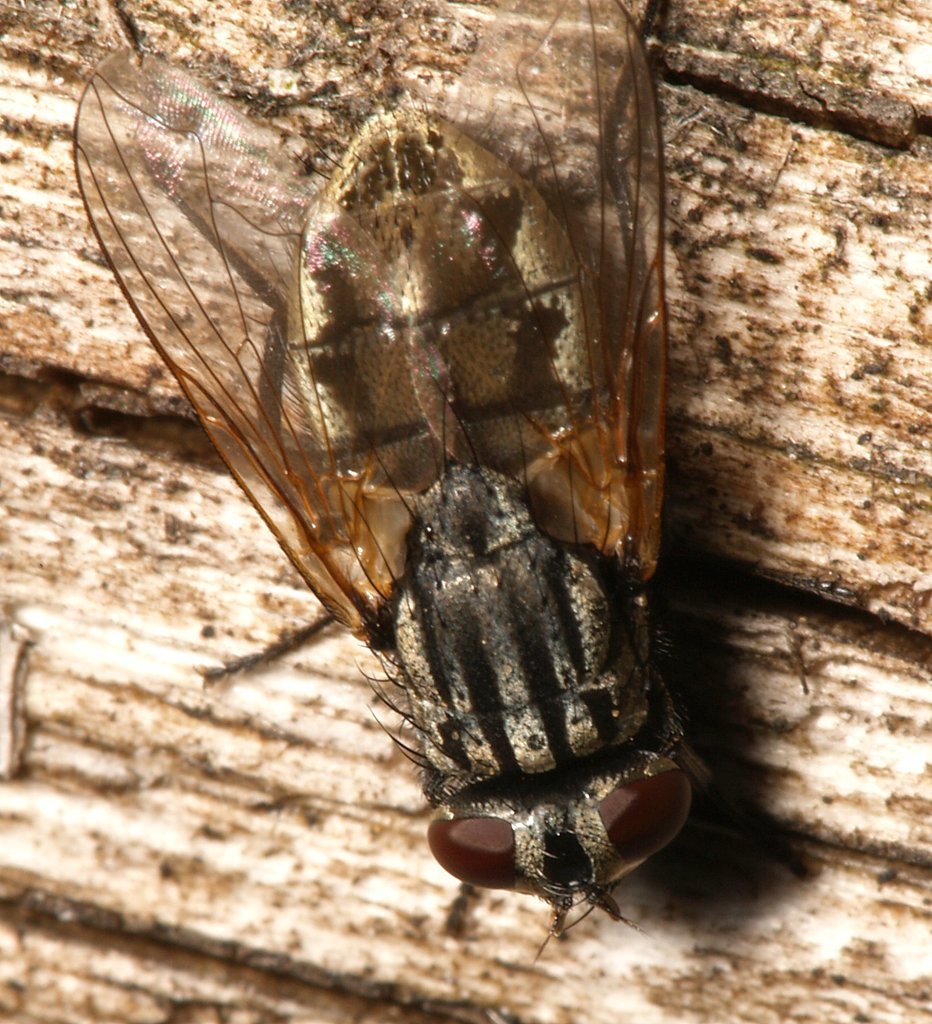
The face fly is a 7 to 8 mm grey fly with four dark thorax stripes and, in males, an orange-yellow abdomen. Females lay eggs on fresh cow manure; larvae develop in the manure and emerge as adults in 10 to 20 days, while many flies seek indoor shelter to hibernate over winter.
How to recognize it
The fly is grey with four dark stripes on the thorax and a patterned abdomen; males have an orange-yellow abdomen.
Size
It measures about 7 to 8 mm in length, a bit larger than a housefly.
Source: Wikipedia
Is it a pest in the house?
They are pests of cattle and horses and often enter buildings in late fall to hibernate, being attracted to light and windows.
Does it bite or sting?
They transmit the eyeworm Thelazia rhodesi to livestock and pinkeye, and have been linked to eyeworm infections in humans; they cannot bite because they have sponging mouthparts.
How to get rid of it
To control them indoors, locate and treat the places where they overwinter, inspecting structural voids if they persist through winter.
Source: UC IPM
Where it lives
Adults appear from March to early April, feed on manure juices, plant sugars, and the eye, mouth and nostril secretions of cattle and horses.
Source: Wikipedia
What it eats
Daytime feeding includes manure juices, plant sugars, and the secretions around the eyes, mouth and nostrils of livestock; they may also feed on blood from wounds.
Source: Wikipedia
Life cycle
Females lay eggs on fresh cow manure; larvae hatch within hours, pass through three instars up to 12 mm, then pupate and emerge as adults in 10 to 20 days depending on temperature.
Source: Wikipedia
When you see it
Adults emerge from winter hibernation in March-April.
Source: Wikipedia
Lookalikes
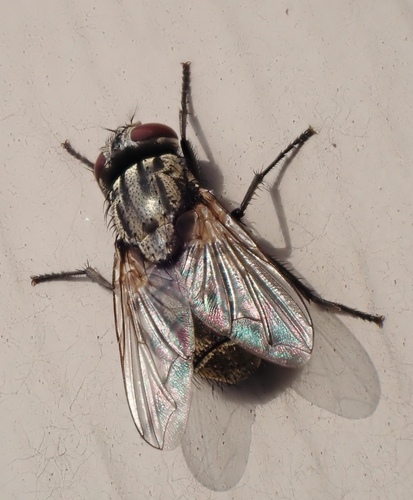
Females look almost identical to houseflies, while males can be distinguished by their orange-yellow abdomen.
Where it is found in the US
Recorded in 36 of 51 states and DC. Most records: California, Wyoming, Pennsylvania, Minnesota, New York, Virginia, Tennessee, Utah.
Darker = more records. Counts are museum and citizen-science records, not population size.
Source: GBIF
Status: introduced in North America; introduced in Canada; introduced in United States. Source: iNaturalist
Months it is reported in the US
Source: GBIF
More photos

Questions people ask
Can face flies spread disease to humans?
Yes, they have been reported to transmit eyeworms to people’s eyes.
Source: Wikipedia
How can I keep face flies out of my house?
Find and seal the spots where they hibernate, checking cracks and voids in the structure.
Source: UC IPM
Same family (Muscidae)


Sources
- Wikipedia: https://en.wikipedia.org/wiki/Musca_autumnalis
- UC IPM: https://ipm.ucanr.edu/PMG/PESTNOTES/pn7457.html
Look it up elsewhere: GBIF · iNaturalist · BugGuide · ITIS · Wikipedia
Text written 2026-10-22 from the sources above and checked sentence by sentence against them. Data fetched 2026-10-22.