 Bug FAQ
Horn-faced Mason Bee
Osmia cornifrons · Order: Hymenoptera · Family: Megachilidae
Also called: Horn-faced Bee, Hornfaced Bee
Source: Wikipedia
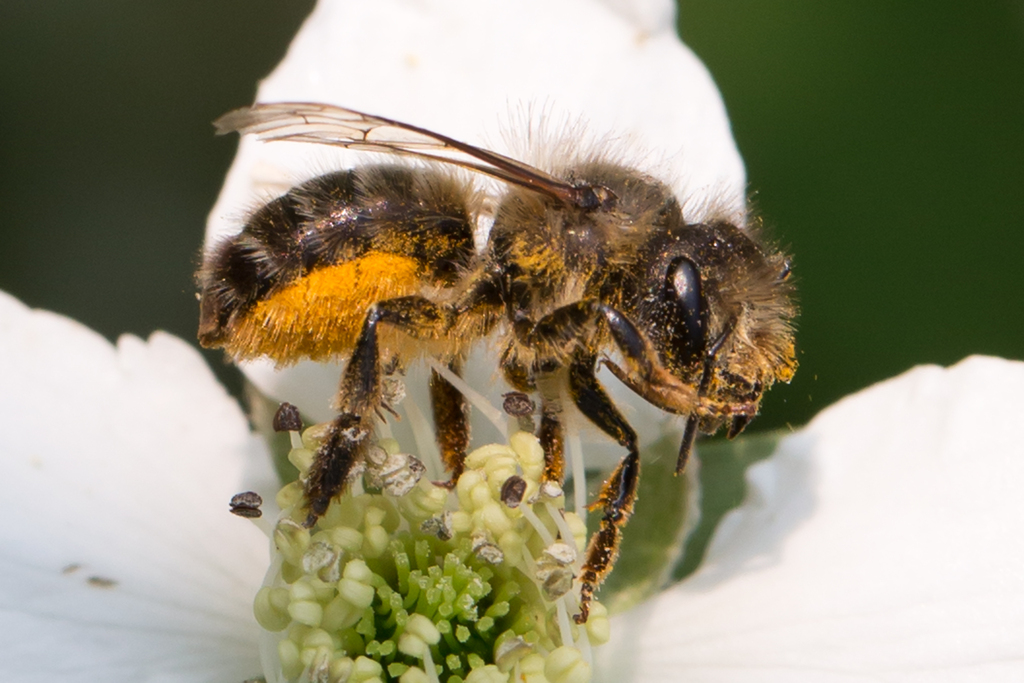
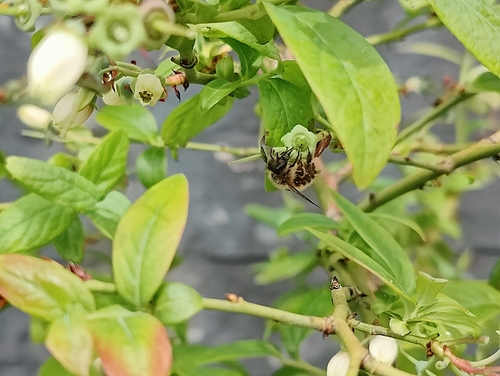
The horn-faced mason bee has distinctive horn-like extensions on its lower face. Males emerge in April just before apple trees bloom, and females appear a few days later.
Source: Wikipedia
How to recognize it
Look for horn-shaped protrusions on the bee’s lower face.
Source: Wikipedia
Does it bite or sting?
Compared with other bees, this species is more docile and less likely to sting when disturbed.
Source: Wikipedia
What it eats
Females collect pollen from nearby crops and form pollen balls for their nests.
Source: Wikipedia
Life cycle
The life cycle includes six stages: spring incubation, pre-nesting, nesting, development, pre-wintering, and wintering. A female can lay up to thirty eggs during her life.
Source: Wikipedia
When you see it
Males leave their nests around April, just before apple blossoms open. Females emerge two to three days after the males.
Source: Wikipedia
Where it comes from
It is native to northern Asia.
Source: Wikipedia
Where it is found in the US
Recorded in 34 of 51 states and DC. Most records: Maryland, Pennsylvania, New York, Oregon, Vermont, Virginia, Massachusetts, Michigan.
Darker = more records. Counts are museum and citizen-science records, not population size.
Source: GBIF
Status: introduced in North America; introduced in Canada; introduced in United States. Source: iNaturalist
Months it is reported in the US
Source: GBIF
More photos
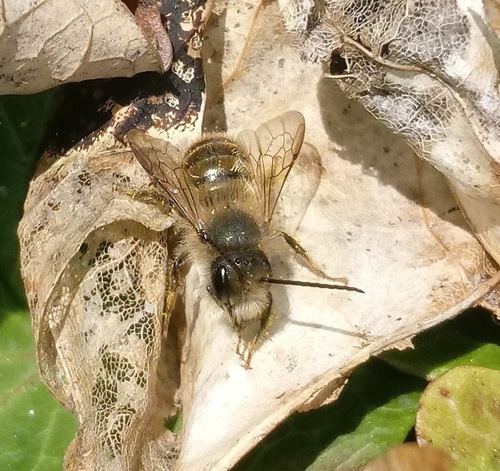
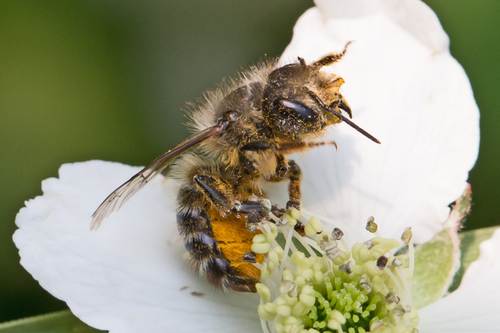
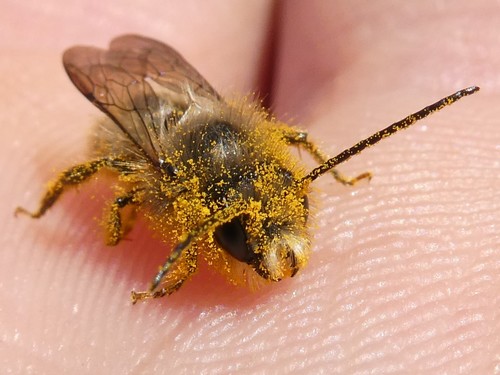
Questions people ask
When do horn-faced mason bees appear?
Males show up in April just before apple trees bloom, and females follow a few days later.
Source: Wikipedia
Do they sting people?
They can sting, but they are generally calm and only do so rarely.
Source: Wikipedia
Same family (Megachilidae)

Sources
- Wikipedia: https://en.wikipedia.org/wiki/Osmia_cornifrons
Look it up elsewhere: GBIF · iNaturalist · BugGuide · ITIS · Wikipedia
Text written 2026-10-23 from the sources above and checked sentence by sentence against them. Data fetched 2026-10-23.