 Bug FAQ
Horn-faced Leafcutter Bee
Megachile fidelis · Order: Hymenoptera · Family: Megachilidae
Also called: Horn-faced Leaf-cutter Bee
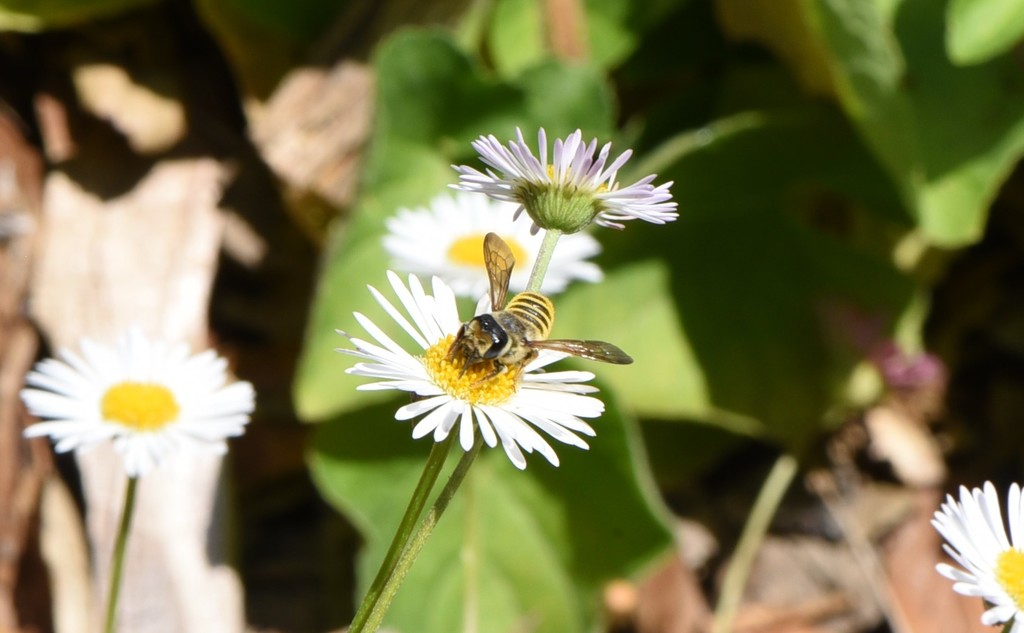
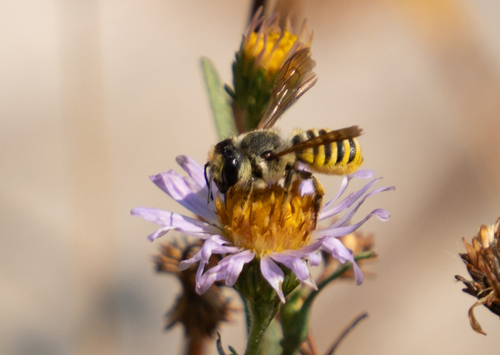
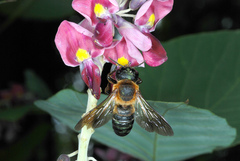
The horn-faced leafcutter bee is black with golden-yellow hair on its face, behind the eyes, on the thorax, under the wings and on the legs. It lives in western U.S. meadows and gardens, ranging from Montana and South Dakota down to New Mexico and west to California and Oregon, and it gathers nectar mainly from composite flowers.
Source: Wikipedia
How to recognize it
It is black but covered with golden-yellow hair on its face, behind the eyes, on the thorax, below the wings and on its legs. Its pollen basket is located under the abdomen.
Source: Wikipedia
Where it lives
It is commonly found in meadows and gardens across the western United States.
Source: Wikipedia
What it eats
Adults feed on flower nectar, especially from composite flowers.
Source: Wikipedia
Life cycle
Larvae develop quickly inside brood cells.
Source: Wikipedia
When you see it
Adults typically leave their nests in spring.
Source: Wikipedia
Lookalikes
Its nests are made in almost the same way as those of the western leafcutting bee, Megachile perihirta.
Source: Wikipedia
Where it is found in the US
Recorded in 12 of 51 states and DC. Most records: California, Utah, Oregon, Arizona, Washington, New Mexico, Colorado, Montana.
Darker = more records. Counts are museum and citizen-science records, not population size.
Source: GBIF
Status: native in North America; native in United States; native in Canada. Source: iNaturalist
Months it is reported in the US
Source: GBIF
More photos
Questions people ask
How can I tell a horn-faced leafcutter bee apart from similar bees?
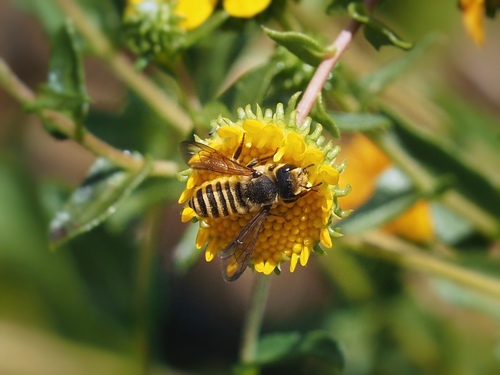
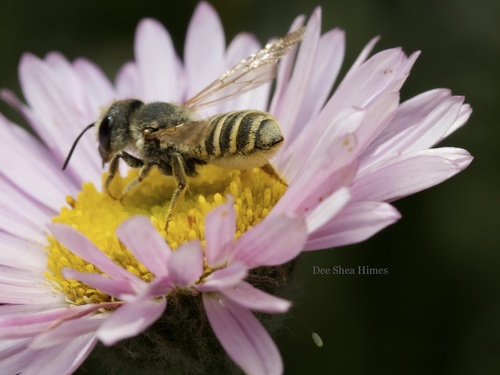
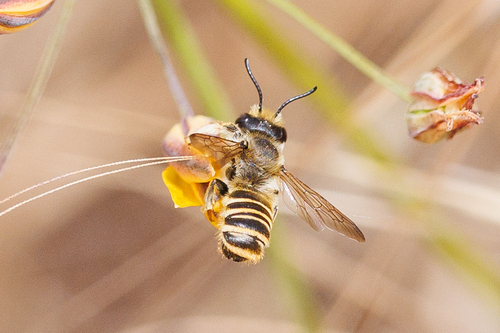
Look for the golden-yellow hair on its face, behind the eyes, on the thorax, under the wings and on the legs; other leafcutters lack this pattern.
Source: Wikipedia
When are horn-faced leafcutter bees active?
They usually emerge from their nests in the spring.
Source: Wikipedia
Where might I find this bee in my garden?
It frequents meadows and garden areas throughout the western United States, especially where composite flowers are present.
Source: Wikipedia
Same family (Megachilidae)

Sources
- Wikipedia: https://en.wikipedia.org/wiki/Megachile_fidelis
Look it up elsewhere: GBIF · iNaturalist · BugGuide · ITIS · Wikipedia
Text written 2026-10-23 from the sources above and checked sentence by sentence against them. Data fetched 2026-10-23.