 Bug FAQ
Hoary Leafcutter Bee
Megachile pruina · Order: Hymenoptera · Family: Megachilidae
Also called: Hoary Leaf-cutter Bee
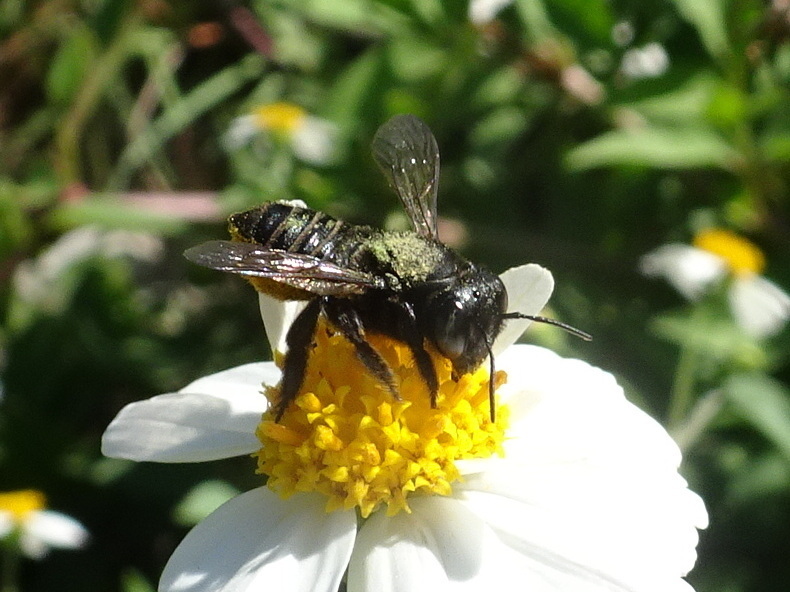
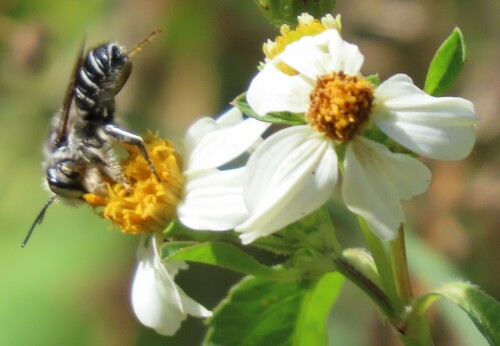
The hoary leafcutter bee is a medium-sized bee, about 11 to 13 mm long. Females can be very dark, showing a clear sexual color difference. It lives along coastal areas from Virginia to Florida and west to Texas, and is also native to Bermuda, especially the Castle Harbour Islands Nature Reserve.
Source: Wikipedia
How to recognize it
Females may appear very dark, while males are lighter, showing sexual dichromatism.
Source: Wikipedia
Size
Adults measure roughly 11 to 13 mm in length.
Source: Wikipedia
Where it lives
In Bermuda it is mainly found on Nonsuch Island, with records on Cooper's, Southampton, Horn Rock, and Castle Islands.
Source: Wikipedia
Where it comes from
In the United States it occurs from Virginia down the Atlantic coast to Florida and westward to Texas, mostly in coastal habitats. The species is also native to the islands of Bermuda.
Source: Wikipedia
Where it is found in the US
Recorded in 12 of 51 states and DC. Most records: Florida, Texas, Georgia, Louisiana, Kansas, North Carolina, Virginia, South Carolina.
Darker = more records. Counts are museum and citizen-science records, not population size.
Source: GBIF
Months it is reported in the US
Source: GBIF
More photos
Questions people ask
Where is the hoary leafcutter bee found?
It lives along the US Atlantic and Gulf coasts from Virginia to Texas and is also native to Bermuda’s Castle Harbour Islands Nature Reserve.
Source: Wikipedia
Can I tell males from females by color?
Yes, females are often very dark while males are lighter.
Source: Wikipedia
Same family (Megachilidae)

Sources
- Wikipedia: https://en.wikipedia.org/wiki/Megachile_pruina
Look it up elsewhere: GBIF · iNaturalist · BugGuide · ITIS · Wikipedia
Text written 2026-10-24 from the sources above and checked sentence by sentence against them. Data fetched 2026-10-24.