 Bug FAQ
Gumweed Plume Moth
Dejongia californicus · Order: Lepidoptera · Family: Pterophoridae
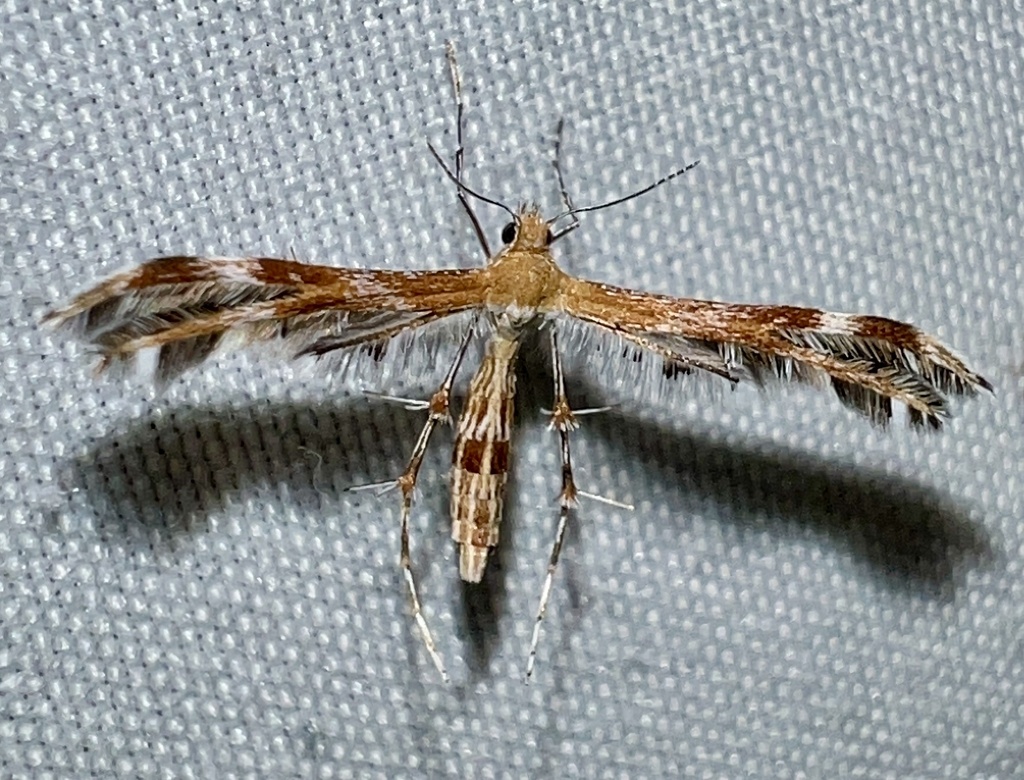
The gumweed plume moth has a wingspan between about 14 and 26 mm. It occurs in North America, including California and the southeastern United States. Its caterpillars feed on plants in the aster family such as Isocoma veneta and various Grindelia species.
Source: Wikipedia
Size
Adults measure 14 to 26 mm across the wings.
Source: Wikipedia
What it eats
Larvae eat Asteraceae plants, notably Isocoma veneta and Grindelia species.
Source: Wikipedia
Where it comes from
It is native to North America, with records from California and the southeastern United States.
Source: Wikipedia
Where it is found in the US
Recorded in 11 of 51 states and DC. Most records: Texas, California, Oklahoma, Florida, Alabama, New Mexico, Arizona, Utah.
Darker = more records. Counts are museum and citizen-science records, not population size.
Source: GBIF
Status: native in North America; native in United States. Source: iNaturalist
Months it is reported in the US
Source: GBIF
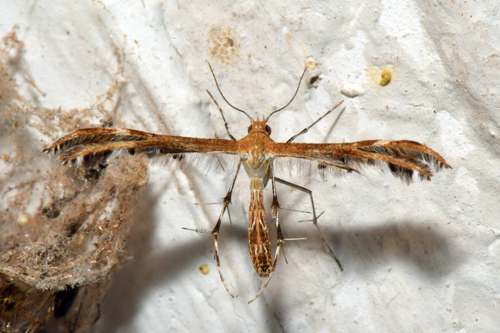
More photos
Questions people ask
Where is the gumweed plume moth found?
It lives in North America, including California and the southeastern United States.
Source: Wikipedia
What do the larvae of this moth eat?
The caterpillars feed on Asteraceae plants such as Isocoma veneta and Grindelia species.
Source: Wikipedia
Same family (Pterophoridae)
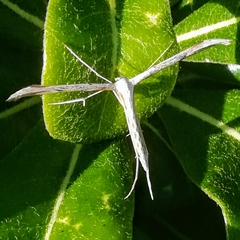 Morning-glory Plume MothEmmelina monodactyla
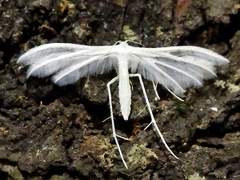 White Plume MothPterophorus pentadactylaDamages trees, gardens or crops
 Brown Silver-linePetrophora chlorosata
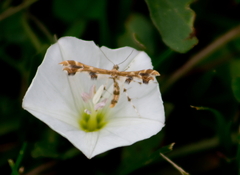 Grape and Sheppard's Plume MothsGeina periscelidactylusDamages trees, gardens or crops
 Yarrow Plume MothGillmeria pallidactylaDamages trees, gardens or crops
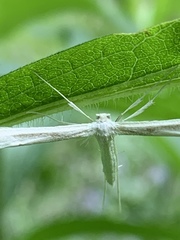 Plain, Elliott's, and Habeck's Plume MothsHellinsia homodactylus
Sources
- Wikipedia: https://en.wikipedia.org/wiki/Dejongia_californicus
Look it up elsewhere: GBIF · iNaturalist · BugGuide · Wikipedia
Text written 2026-10-26 from the sources above and checked sentence by sentence against them. Data fetched 2026-10-26.