 Bug FAQ
Fly
Synthesiomyia nudiseta · Order: Diptera · Family: Muscidae
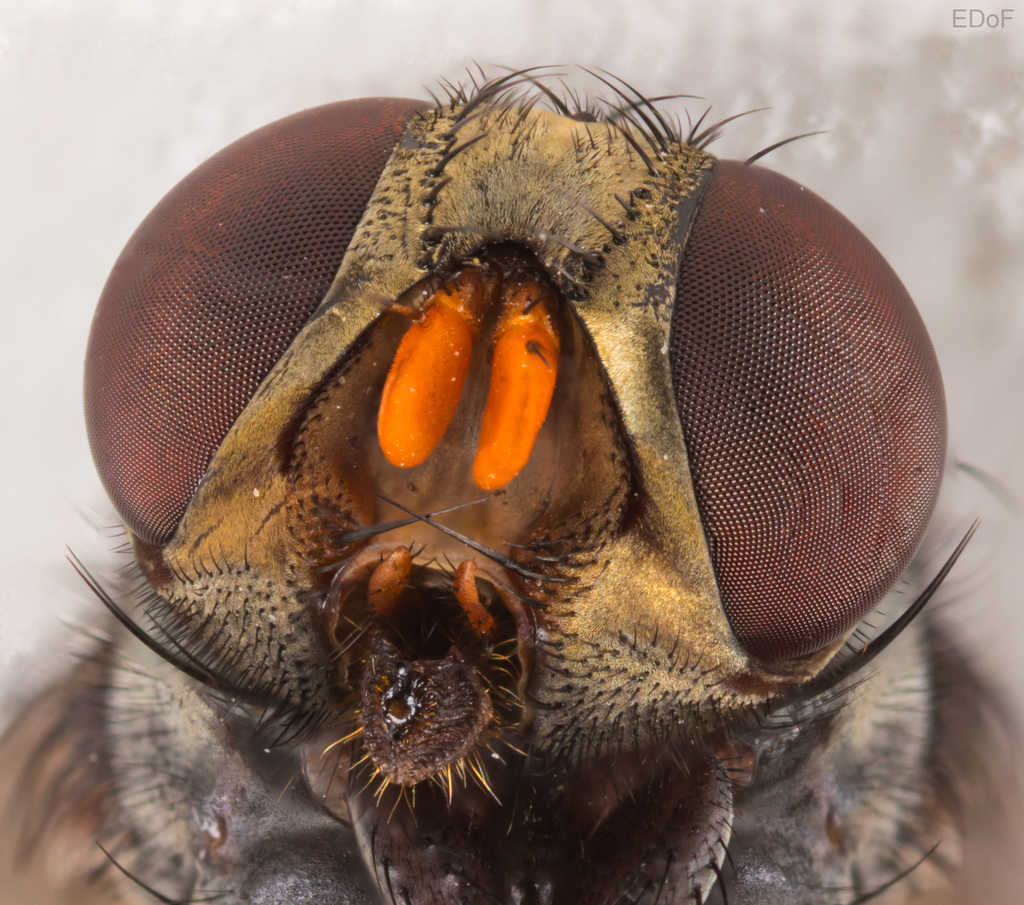
The adult Synthesiomyia nudiseta is a relatively large muscid fly, measuring about 7 to 10 mm long. Adults are attracted to direct sunlight and are usually seen outdoors. Larvae develop on carrion and can also be found in feces, rotting vegetables and garbage, where they are large and predacious.
Source: Wikipedia
How to recognize it
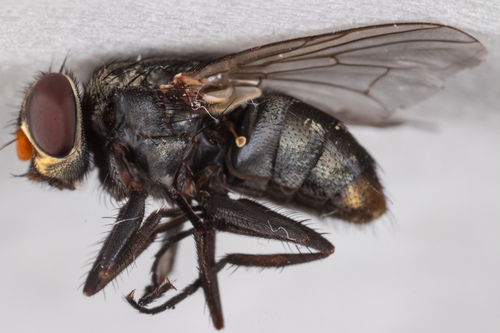
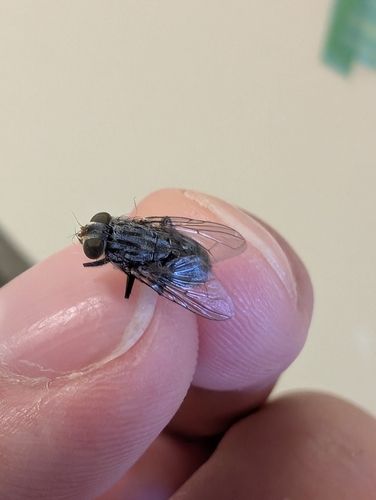
The abdomen is gray with a checkerboard-like pattern, and the antennae and palpi are orange or yellow.
Source: Wikipedia
Size
It is one of the largest muscid flies, about 7 to 10 mm in length.
Source: Wikipedia
Is it a pest in the house?
In Rio de Janeiro, Brazil, it is very common and highly synanthropic.
Source: Wikipedia
Where it lives
Adult flies prefer direct sunlight and are typically found outdoors.
Source: Wikipedia
What it eats
Larvae primarily feed on carrion but are also found in feces, rotting vegetable material and garbage. The larvae are large and predacious.
Source: Wikipedia
Life cycle
From egg to adult the development takes 22 to 30 days and includes three instars. The species can produce four to nine generations per year.
Source: Wikipedia
When you see it
Adults are most often seen in sunny outdoor conditions.
Source: Wikipedia
Where it comes from
The species occurs in tropical and subtropical regions.
Source: Wikipedia
Lookalikes
It may be confused with a small sarcophagid, but can be distinguished by four longitudinal stripes on the thorax and a yellow terminal abdominal segment instead of red.
Source: Wikipedia
Where it is found in the US
Recorded in 7 of 51 states and DC. Most records: California, Florida, Texas, Louisiana, Arizona, North Carolina, Oklahoma.
Darker = more records. Counts are museum and citizen-science records, not population size.
Source: GBIF
Months it is reported in the US
Source: GBIF
More photos
Questions people ask
What do the larvae of Synthesiomyia nudiseta eat?
The larvae mainly feed on carrion, but they are also found in feces, rotting vegetables and garbage, and they are large and predacious.
Source: Wikipedia
How can I tell this fly apart from similar species?
It can be mistaken for a small sarcophagid, but it has four longitudinal stripes on the thorax and a yellow terminal abdominal segment, unlike the red segment of sarcophagids.
Source: Wikipedia
Is this fly a problem inside homes?
In Rio de Janeiro it is very common and highly synanthropic, meaning it often lives close to human habitats.
Source: Wikipedia
Same family (Muscidae)




Sources
- Wikipedia: https://en.wikipedia.org/wiki/Synthesiomyia_nudiseta
Look it up elsewhere: GBIF · iNaturalist · BugGuide · ITIS · Wikipedia
Text written 2026-10-28 from the sources above and checked sentence by sentence against them. Data fetched 2026-10-28.