 Bug FAQ
Elm Sack Gall Aphid
Tetraneura ulmi · Order: Hemiptera · Family: Aphididae
Also called: Aphid, Elm-grass Root Aphid
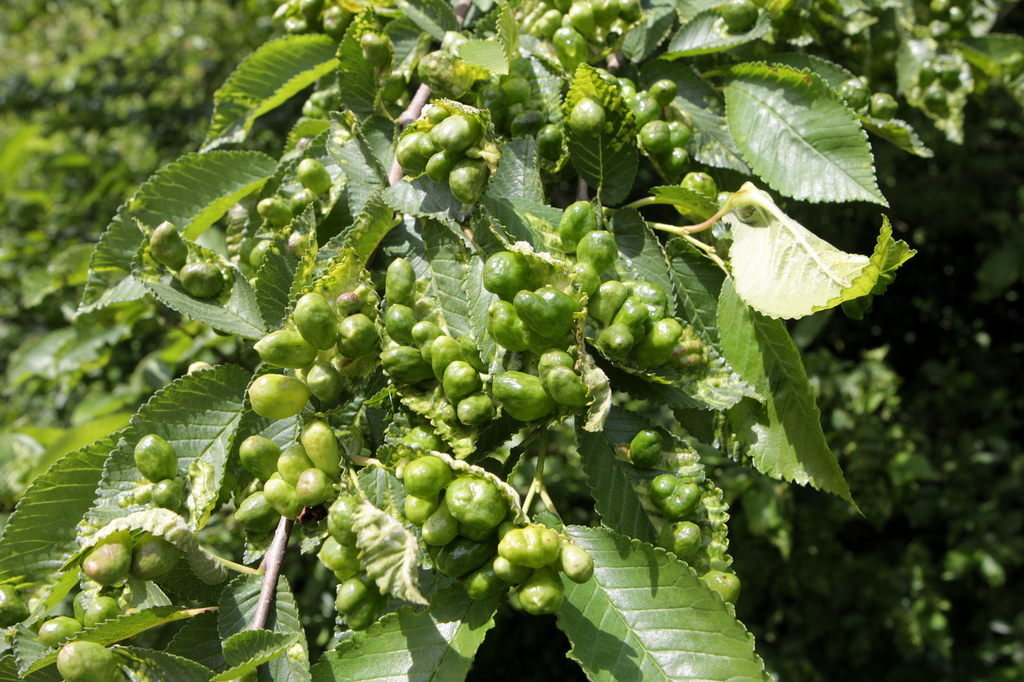
Elm sack gall aphids are tiny (2 to 3 mm) pink-to-purple insects covered in a powdery waxy coating. They cause smooth, club-shaped galls 7 to 15 mm high on elm leaves, which start as pale yellow patches with lumpy tops.
Source: Wikipedia
How to recognize it
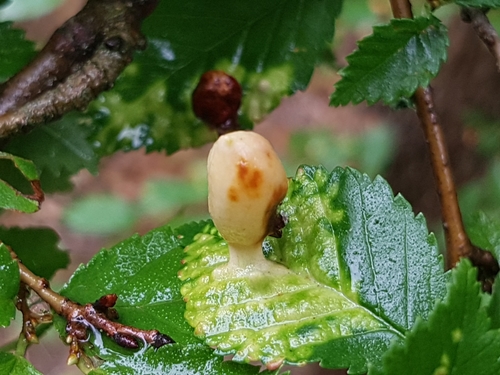
The gall looks like a smooth, stalked pouch 7 to 15 mm tall on elm leaves. Early galls appear as pale yellow patches with irregular lumpy bumps on the leaf surface.
Source: Wikipedia
Size
Adults are 2 to 3 mm long and colored pink, orange, or purple, with a thin waxy coating.
Source: Wikipedia
Is it a pest in the house?
The aphid creates abnormal growths (galls) on elm trees, which can be unsightly in gardens and landscapes.
Source: Wikipedia
Where it lives
They live on elm trees in Asia, Europe, and North America and also feed on grass roots.
Source: Wikipedia
Life cycle
In summer, wingless females leave the galls and lay eggs on grass roots; in autumn, winged forms fly back to elms and produce new generations.
Source: Wikipedia
When you see it
Females exit the galls in summer to lay eggs on grass roots, and new nymphs hatch in spring on elm leaves.
Source: Wikipedia
Where it comes from
Their range includes Asia, Europe, and North America.
Source: Wikipedia
Where it is found in the US
Recorded in 8 of 51 states and DC. Most records: Montana, Illinois, Minnesota, Indiana, Kentucky, Pennsylvania, Washington, California.
Darker = more records. Counts are museum and citizen-science records, not population size.
Source: GBIF
Status: native in North America; native in Canada. Source: iNaturalist
Months it is reported in the US
Source: GBIF
More photos
Questions people ask
What do the galls look like?
They are smooth, club-shaped pouches 7 to 15 mm tall on elm leaves, starting as pale yellow patches with lumpy tops.
Source: Wikipedia
When do the aphids leave the galls?
Mature females leave the galls in summer to lay eggs on grass roots.
Source: Wikipedia
How do they reproduce?
Winged forms fly to elms in autumn, give birth to wingless offspring, and the cycle repeats each spring.
Source: Wikipedia
Same family (Aphididae)
 Melon AphidAphis gossypiiDamages trees, gardens or crops
 Oleander AphidAphis neriiDamages trees, gardens or crops
 Witch-hazel Cone Gall AphidHormaphis hamamelidis
 Beech Blight AphidGrylloprociphilus imbricatorDamages trees, gardens or crops
 Rice Root AphidTetraneura akinire
 Manzanita Leafgall AphidTamalia coweni
Sources
- Wikipedia: https://en.wikipedia.org/wiki/Tetraneura_ulmi
Look it up elsewhere: GBIF · iNaturalist · BugGuide · Wikipedia
Text written 2026-10-23 from the sources above and checked sentence by sentence against them. Data fetched 2026-10-22.