 Bug FAQ
Elder Aphid
Aphis sambuci · Order: Hemiptera · Family: Aphididae
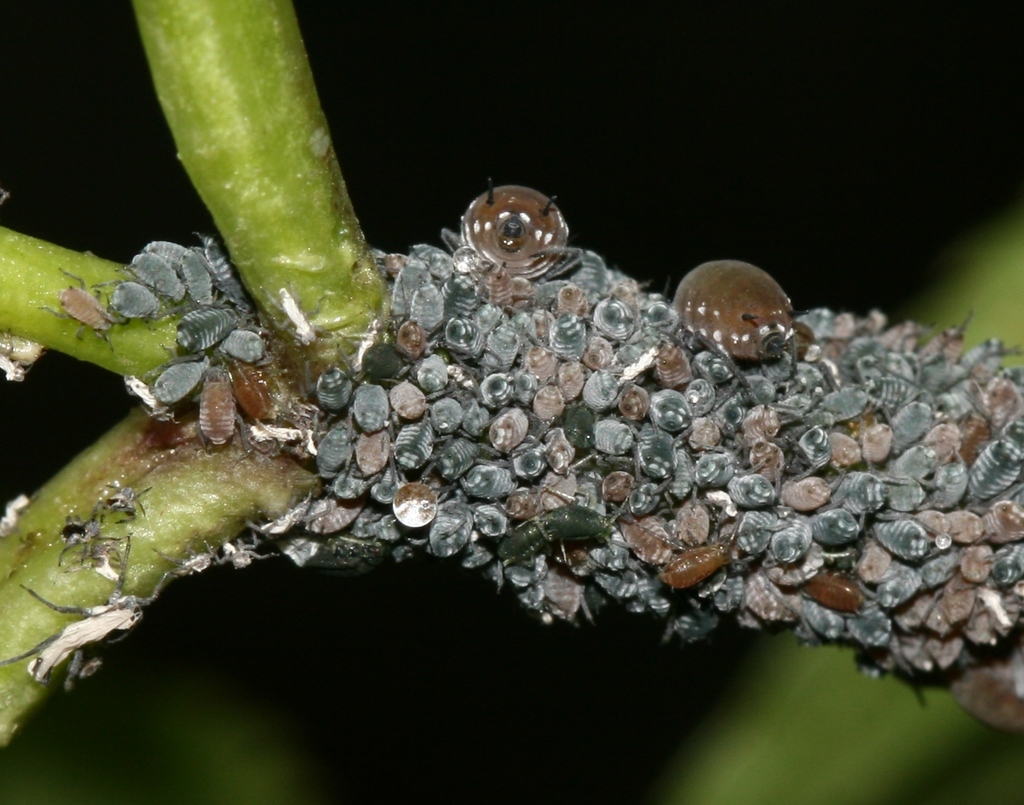
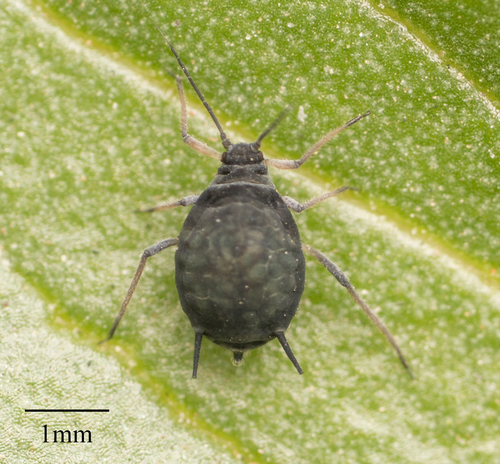
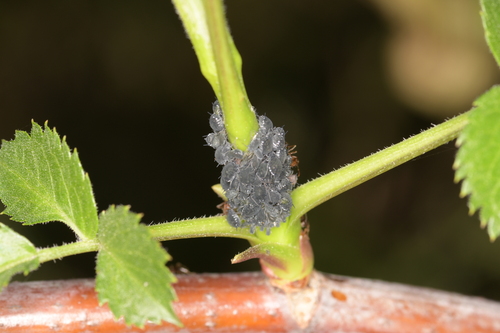
Elder aphids have a cross-shaped marking on their backs and range in colour from blackish to greenish, with short black siphunculi and sometimes white stripes on the belly or margins on the top. They mainly live on elderberry plants (Sambucus species), especially the Eurasian black elderberry and the North American red elderberry, and are found throughout the Holarctic region except Japan and Korea.
Source: Wikipedia
How to recognize it
The back shows a cross pattern and the body colour varies from blackish to greenish. Siphunculi are short and black; the belly may have a white stripe and the top may have white margins.
Source: Wikipedia
Where it lives
Its main hosts are plants in the Sambucus genus.
Source: Wikipedia
What it eats
It feeds on elderberry species, especially the Eurasian black elderberry and the North American red elderberry.
Source: Wikipedia
Where it comes from
It occurs across all Holarctic regions except Japan and Korea.
Source: Wikipedia
Where it is found in the US
Recorded in 30 of 51 states and DC. Most records: California, Illinois, New York, Wisconsin, New Jersey, Washington, Indiana, Iowa.
Darker = more records. Counts are museum and citizen-science records, not population size.
Source: GBIF
Status: introduced in Canada. Source: iNaturalist
Months it is reported in the US
Source: GBIF
More photos
Questions people ask
What plants does the elder aphid live on?
It mainly lives on elderberry plants (Sambucus species), including both black and red elderberry.
Source: Wikipedia
Where is the elder aphid found?
It is distributed throughout the Holarctic region, but not in Japan or Korea.
Source: Wikipedia
Same family (Aphididae)
 Melon AphidAphis gossypiiDamages trees, gardens or crops
 Oleander AphidAphis neriiDamages trees, gardens or crops
 Witch-hazel Cone Gall AphidHormaphis hamamelidis
 Beech Blight AphidGrylloprociphilus imbricatorDamages trees, gardens or crops
 Rice Root AphidTetraneura nigriabdominalis
 Rose AphidMacrosiphum rosaeDamages trees, gardens or crops
Sources
- Wikipedia: https://en.wikipedia.org/wiki/Aphis_sambuci
Look it up elsewhere: GBIF · iNaturalist · BugGuide · Wikipedia
Text written 2026-10-25 from the sources above and checked sentence by sentence against them. Data fetched 2026-10-25.