 Bug FAQ
Dogwood Borer Moth
Synanthedon scitula · Order: Lepidoptera · Family: Sesiidae
Also called: Dogwood Borer
Source: Wikipedia
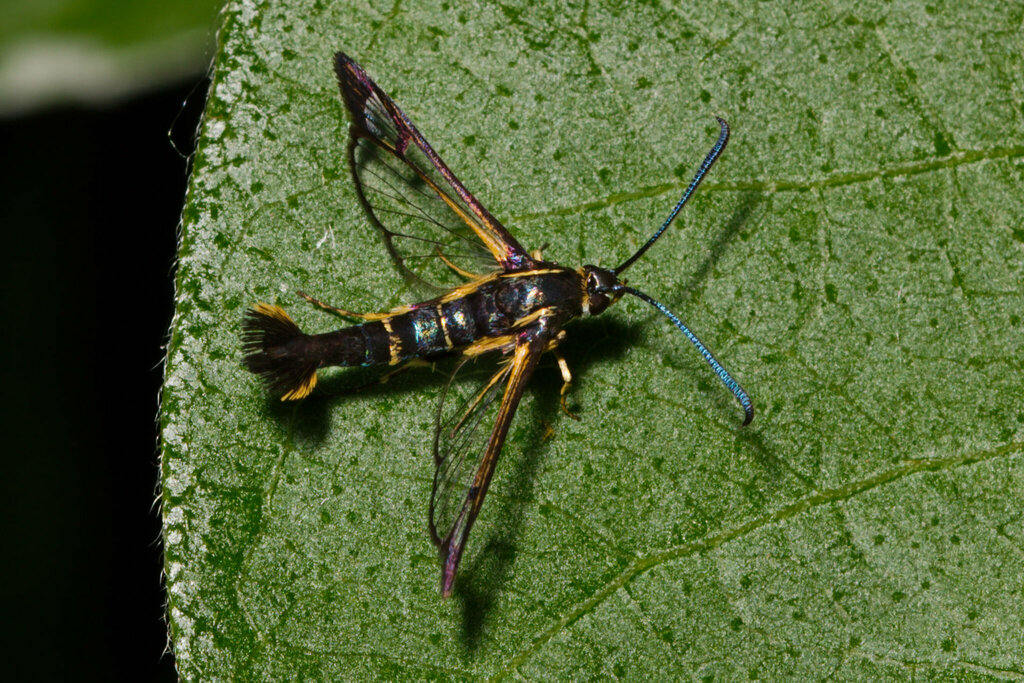
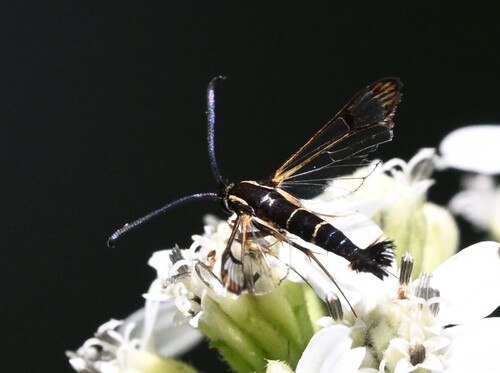
Adults are small clearwing moths with a 18-22 mm wingspan and navy-blue bodies marked with yellow. Larvae tunnel inside host trees, pupating in a silken cocoon with frass for 8-20 days before emerging as adults in summer.
Source: Wikipedia
How to recognize it
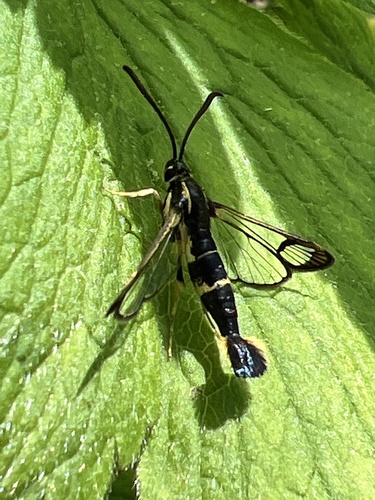
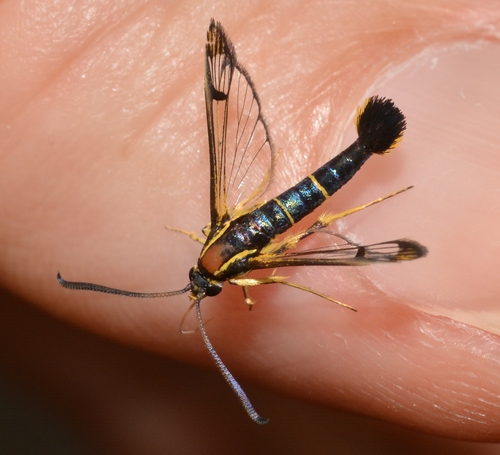
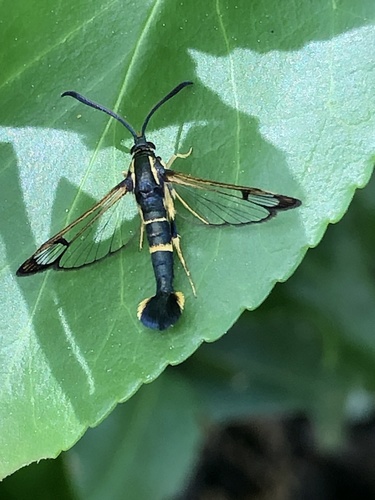
Females have an entirely yellow fourth abdominal segment; males have a black segment with a narrow yellow ring.
Source: Wikipedia
Size
The average adult wing span ranges from 18 to 22 millimetres.
Source: Wikipedia
Is it a pest in the house?
The dogwood borer is a pest of many plants, notably dogwood and pecan trees.
Source: Wikipedia
How to get rid of it
The most recommended control method is to prevent the development of burrknots on host trees.
Source: Wikipedia
Where it lives
It is notorious because of the severe damage it can cause and its widespread distribution.
Source: Wikipedia
Life cycle
Larvae pupate inside their feeding tunnel inside the host, building a tough silken cocoon that incorporates bits of frass. Pupation lasts between 8 and 20 days, depending on temperature and other factors.
Source: Wikipedia
When you see it
In the Northeast, adults emerge from early June through early September, with a peak in mid-July. Further south, adult emergence starts earlier in the season.
Source: Wikipedia
Where it is found in the US
Recorded in 42 of 51 states and DC. Most records: Texas, Michigan, New York, Louisiana, Colorado, Missouri, Pennsylvania, Minnesota.
Darker = more records. Counts are museum and citizen-science records, not population size.
Source: GBIF
Months it is reported in the US
Source: GBIF
More photos
Questions people ask
How can I control dogwood borer infestations?
Prevent burrknot formation on trees, as this is the primary recommended control method; biological agents like fungi and parasitoids exist but are not yet reliably effective.
Source: Wikipedia
When are adult dogwood borers active?
Adults appear from early June to early September in the Northeast, peaking in mid-July, and emerge earlier in more southern regions.
Source: Wikipedia
Same family (Sesiidae)
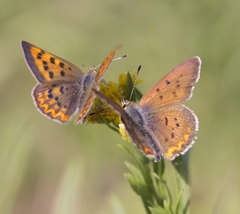 Purplish CopperLycaena helloides
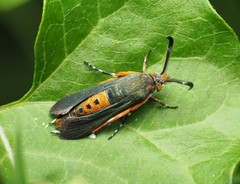 Squash Vine BorerEichlinia cucurbitaeDamages trees, gardens or crops
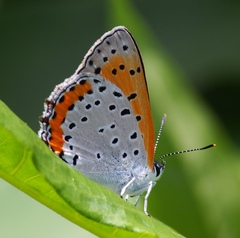 Bronze CopperLycaena hyllus
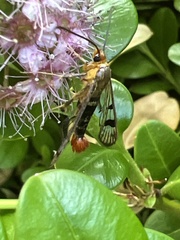 Maple Callus Borer MothSynanthedon acerniDamages trees, gardens or crops
 Southern Red RimBiblis hyperia
 Peachtree Borer MothSynanthedon exitiosaDamages trees, gardens or crops
Sources
- Wikipedia: https://en.wikipedia.org/wiki/Synanthedon_scitula
Look it up elsewhere: GBIF · iNaturalist · BugGuide · Wikipedia
Text written 2026-10-24 from the sources above and checked sentence by sentence against them. Data fetched 2026-10-24.