 Bug FAQ
Dock Aphid
Aphis rumicis · Order: Hemiptera · Family: Aphididae
Also called: Aphid, rumex aphid
Source: Wikipedia
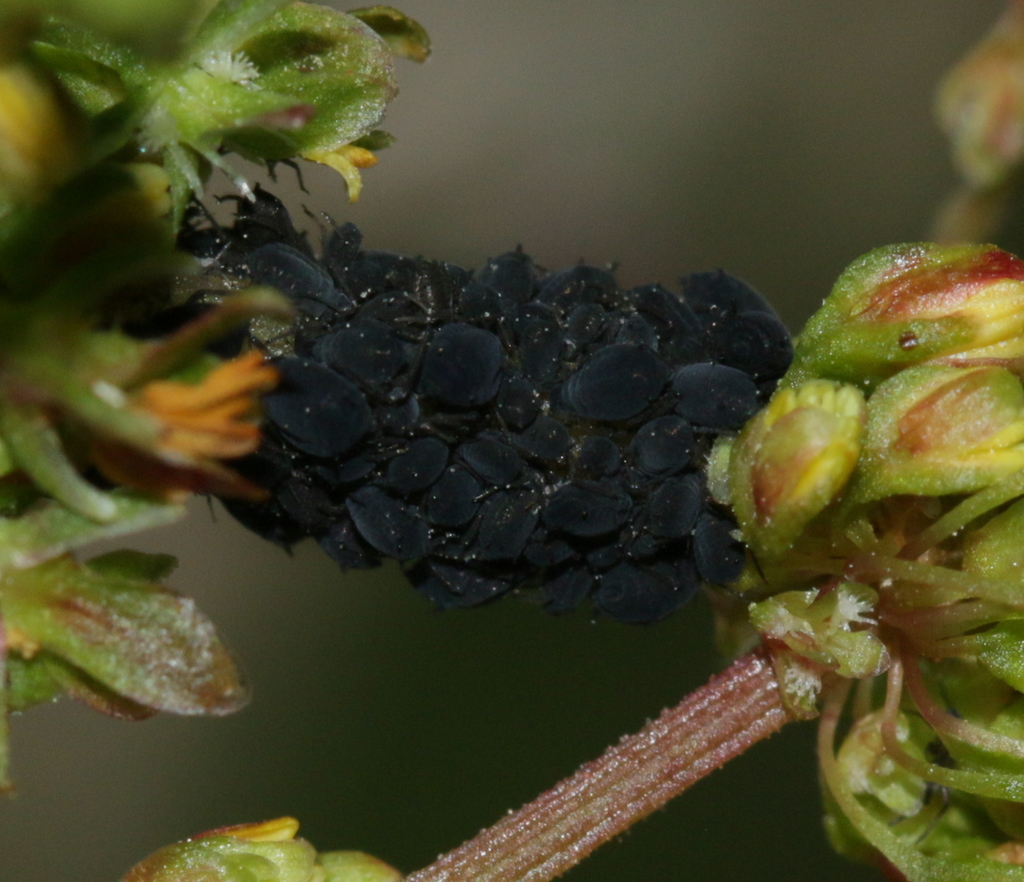
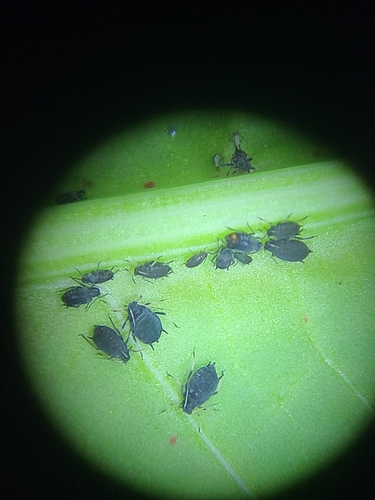
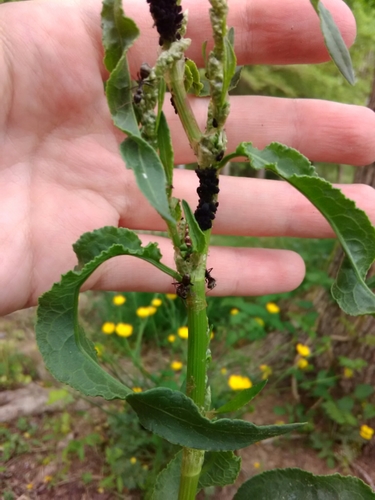
The dock aphid is a small aphid with an oval to elongate body; fundatrices are about 1.4 × 1.8 mm and apterous females about 2.5 × 1.6 mm. It lives in temperate regions of the Northern Hemisphere, is native there, and has been introduced to many parts of North America. It feeds on the undersides of Swiss chard leaves and can cause heavy infestations that impair plant growth and produce honeydew.
Source: Wikipedia
How to recognize it
The prothorax bears a pair of noticeable lateral tubercles.
Source: Wikipedia
Size
Fundatrices are oval to elongate, averaging about 1.4 mm long and 1.8 mm wide. Apterous viviparous females are elongate-oval, about 2.5 mm long and 1.6 mm wide.
Source: Wikipedia
Is it a pest in the house?
It is an important pest of Swiss chard in Turkey and the Mediterranean, where infestations can damage the crop.
Source: Wikipedia
What it eats
It commonly feeds on the undersides of mature Swiss chard leaves. Heavy infestations on Swiss chard can impair growth and lead to honeydew buildup.
Source: Wikipedia
Life cycle
The species has a heteroecious holocyclic cycle, overwintering on Euonymus europaeus and moving to herbaceous summer hosts such as broad bean. Eggs hatch in early spring (March to April), producing fundatrices that quickly give rise to several parthenogenetic viviparous generations.
Source: Wikipedia
Where it comes from
In its native range it occurs across most of Europe and parts of Asia. In North America it is considered an introduced species and is now established in many U.S. and Canadian regions.
Source: Wikipedia
Lookalikes
Male-producing sexuparae are wingless and look much like apterous viviparous females. Female-producing sexuparae are winged and resemble winged viviparous females but are generally larger.
Source: Wikipedia
Where it is found in the US
Recorded in 22 of 51 states and DC. Most records: Illinois, California, Colorado, Oregon, Iowa, Michigan, Tennessee, Utah.
Darker = more records. Counts are museum and citizen-science records, not population size.
Source: GBIF
Status: introduced in Canada; native in Canada. Source: iNaturalist
Months it is reported in the US
Source: GBIF
More photos
Questions people ask
What plants does the dock aphid damage?
It feeds on Swiss chard leaves and heavy infestations can impair the plant’s growth and leave honeydew on the foliage.
Source: Wikipedia
When do dock aphids appear each year?
Eggs hatch in early spring (March to April) and later in the season winged forms appear in late summer and autumn to return to the winter host.
Source: Wikipedia
How can I tell a male-producing sexuparae from other aphids?
Male-producing sexuparae are wingless and look very similar to the apterous viviparous female.
Source: Wikipedia
Is the dock aphid native to North America?
No, it is an introduced species that has become established in many parts of the United States and Canada.
Source: Wikipedia
Same family (Aphididae)
 Melon AphidAphis gossypiiDamages trees, gardens or crops
 Oleander AphidAphis neriiDamages trees, gardens or crops
 Witch-hazel Cone Gall AphidHormaphis hamamelidis
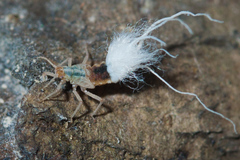 Beech Blight AphidGrylloprociphilus imbricatorDamages trees, gardens or crops
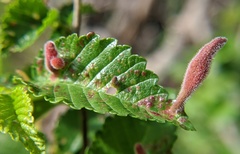 Rice Root AphidTetraneura nigriabdominalis
 Rose AphidMacrosiphum rosaeDamages trees, gardens or crops
Sources
- Wikipedia: https://en.wikipedia.org/wiki/Aphis_rumicis
Look it up elsewhere: GBIF · iNaturalist · BugGuide · Wikipedia
Text written 2026-10-28 from the sources above and checked sentence by sentence against them. Data fetched 2026-10-28.