 Bug FAQ
Dicogaster coronada
Dicogaster coronada · Order: Lepidoptera · Family: Lasiocampidae
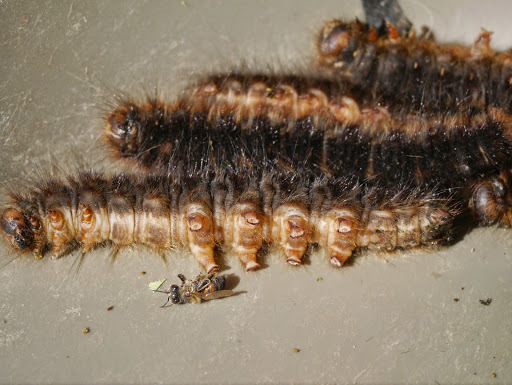
The adult wingspan ranges from about 70 to 130 mm. Adults are active from June through August. Larvae have been raised on the oaks Quercus oblongifolia and Quercus emoryi.
Source: Wikipedia
Size
Adults have a wingspan between 70 and 130 mm.
Source: Wikipedia
Where it lives
It occurs in Arizona.
Source: Wikipedia
What it eats
Larvae feed on Quercus oblongifolia and Quercus emoryi.
Source: Wikipedia
When you see it
Adults are on the wing from June to August.
Source: Wikipedia
Where it comes from
Its known range includes Arizona.
Source: Wikipedia
Where it is found in the US
Recorded in 2 of 51 states and DC. Most records: Arizona, New Mexico.
Darker = more records. Counts are museum and citizen-science records, not population size.
Source: GBIF
Months it is reported in the US
Source: GBIF
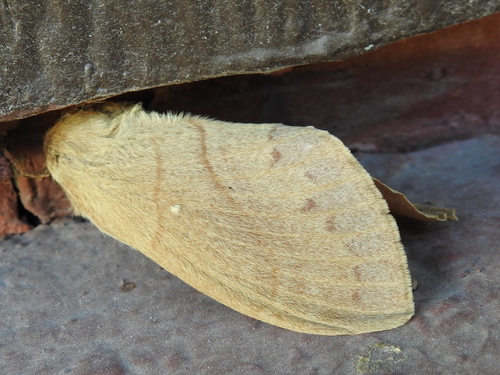
More photos
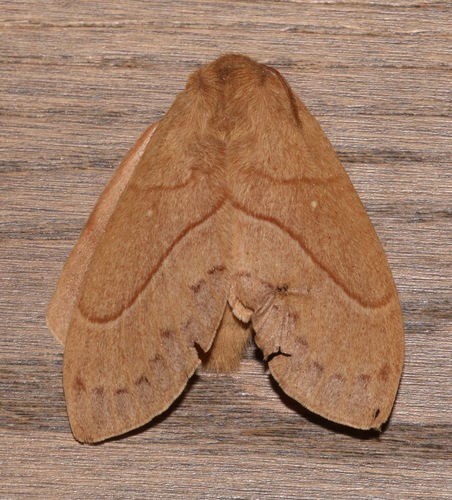
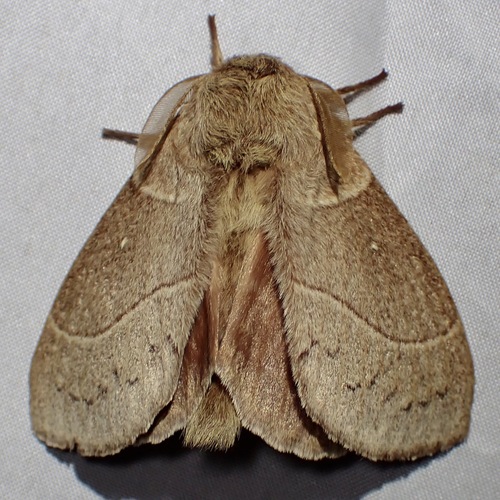
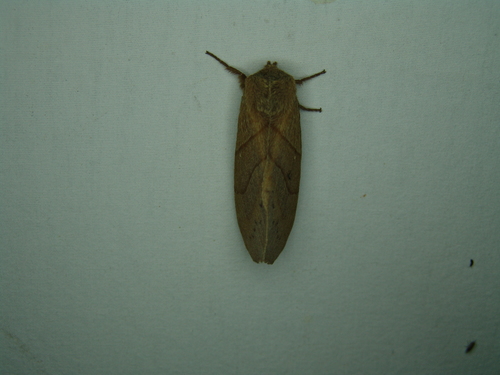
Questions people ask
When are Dicogaster coronada adults active?
Adults are active from June through August.
Source: Wikipedia
What do the larvae eat?
The larvae feed on the oak species Quercus oblongifolia and Quercus emoryi.
Source: Wikipedia
Same family (Lasiocampidae)
 Eastern Tent Caterpillar MothMalacosoma americanaDamages trees, gardens or crops
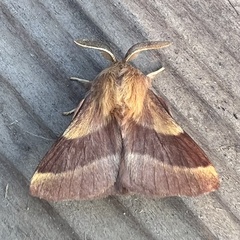 Forest Tent Caterpillar MothMalacosoma disstriaDamages trees, gardens or crops
 Fox MothMacrothylacia rubi
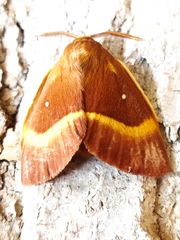 Oak EggarLasiocampa quercus
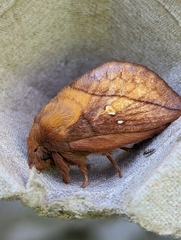 Drinker MothEuthrix potatoria
 Western Tent Caterpillar MothMalacosoma californicaDamages trees, gardens or crops
Sources
- Wikipedia: https://en.wikipedia.org/wiki/Dicogaster
Look it up elsewhere: GBIF · iNaturalist · BugGuide · Wikipedia
Text written 2026-10-26 from the sources above and checked sentence by sentence against them. Data fetched 2026-10-26.