 Bug FAQ
Cyrtolobus dixianus
Cyrtolobus dixianus · Order: Hemiptera · Family: Membracidae
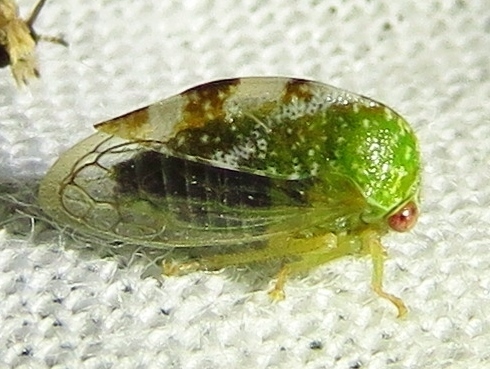
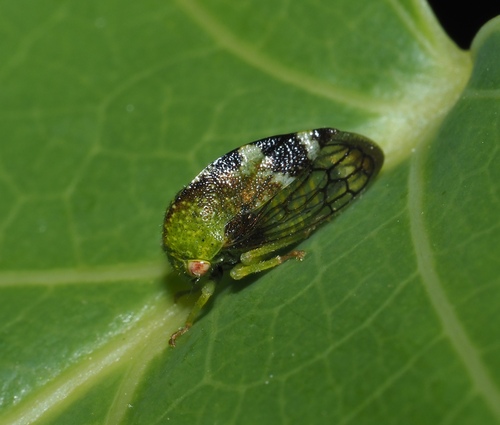
Adult males are about 6.5 mm long and dark brown on the pronotum with yellow spots, while females are about 7 mm and green-colored. They live in the Midwest-Southeastern United States and feed on several oak species such as white oak, southern red oak, pin oak and post oak. Adults are most commonly seen in April and May.
Source: Wikipedia
How to recognize it
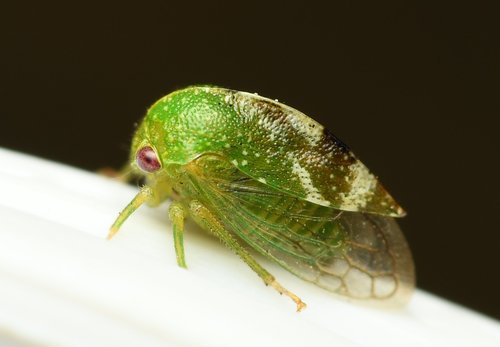
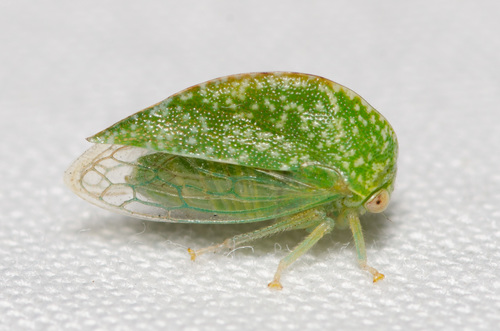
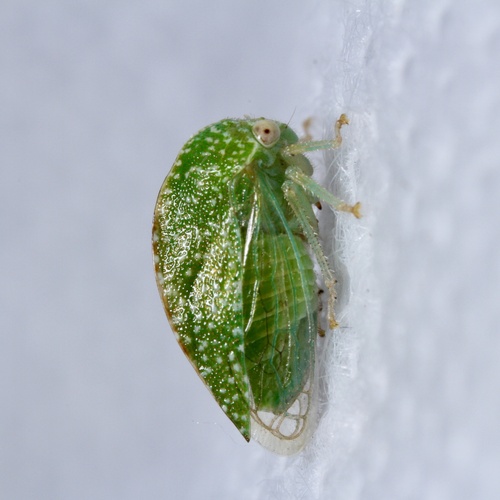
Male pronotums are dark brown with yellow spots; female pronotums are green. Male heads are yellow-green, while female heads are pale brown.
Source: Wikipedia
Size
Males average about 6.5 mm (0.26 in) in length. Females average about 7 mm (0.28 in) in length.
Source: Wikipedia
Where it lives
It is found in the Midwest-Southeastern region of the United States.
Source: Wikipedia
What it eats
It feeds on several oak species, including white oak, southern red oak, pin oak and post oak.
Source: Wikipedia
When you see it
Adults are typically observed in April and May.
Source: Wikipedia
Where it comes from
Its native range is the Midwest-Southeastern United States.
Source: Wikipedia
Where it is found in the US
Recorded in 21 of 51 states and DC. Most records: Texas, North Carolina, Florida, Missouri, Louisiana, Delaware, Pennsylvania, Alabama.
Darker = more records. Counts are museum and citizen-science records, not population size.
Source: GBIF
Status: native in North America; native in Canada. Source: iNaturalist
Months it is reported in the US
Source: GBIF
More photos
Questions people ask
When are adult Cyrtolobus dixianus most likely to be seen?
Adults are most commonly observed in April and May.
Source: Wikipedia
What do Cyrtolobus dixianus feed on?
They feed on a variety of oak trees such as white oak, southern red oak, pin oak and post oak.
Source: Wikipedia
Same family (Membracidae)

Sources
- Wikipedia: https://en.wikipedia.org/wiki/Cyrtolobus_dixianus
Look it up elsewhere: GBIF · iNaturalist · BugGuide · Wikipedia
Text written 2026-10-26 from the sources above and checked sentence by sentence against them. Data fetched 2026-10-26.