 Bug FAQ
Currant Clearwing Moth
Synanthedon tipuliformis · Order: Lepidoptera · Family: Sesiidae
Also called: Currant Clearwing, Currant borer
Source: Wikipedia
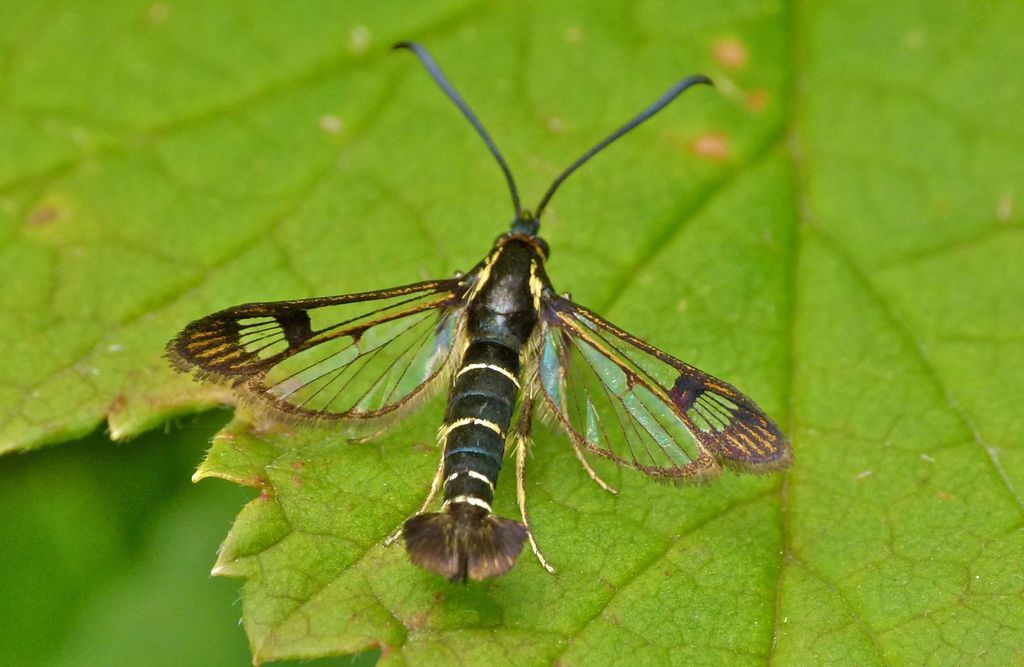
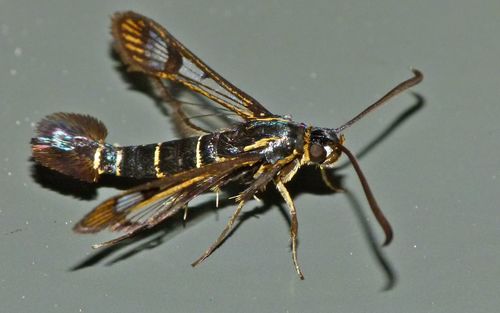
The Currant Clearwing Moth has a wingspan of about 17 to 20 mm and transparent wings that are only scaled on the veins, discal spot and edges, with a blue-black sheen. Its larvae feed inside the stems of various Ribes species, such as blackcurrant, redcurrant and gooseberry, which can harm those garden plants.
Source: Wikipedia
How to recognize it
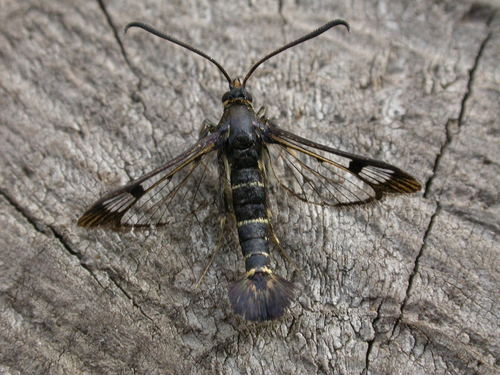
The wings are clear except for scales on the veins, discal spot and edges, and those scales shine in blue-black shades.
Source: Wikipedia
Size
The adult’s wingspan ranges from 17 to 20 mm.
Source: Wikipedia
Where it lives
It is native to the Palearctic region but has become invasive in North America and Australasia.
Source: Wikipedia
What it eats
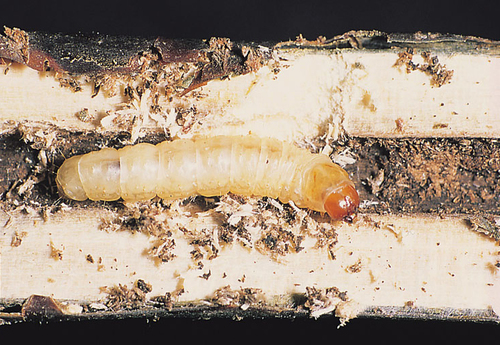
Larvae feed on currant and gooseberry plants (Ribes nigrum, Ribes rubrum, Ribes uva-crispa). They bore into the stems of these plants while feeding.
Source: Wikipedia
Life cycle
Adults are on the wing from April through July, depending on location.
Source: Wikipedia
When you see it
The flight period spans April to July, varying with region.
Source: Wikipedia
Where it comes from
Its original range is the Palearctic realm, while it now also occurs as an invasive species in the Nearctic and Australasian realms.
Source: Wikipedia
Where it is found in the US
Recorded in 22 of 51 states and DC. Most records: Minnesota, Oregon, Idaho, Michigan, Washington, Colorado, Montana, Wisconsin.
Darker = more records. Counts are museum and citizen-science records, not population size.
Source: GBIF
Months it is reported in the US
Source: GBIF
More photos
Questions people ask
What plants do the larvae feed on?
The larvae feed on Ribes species such as blackcurrant, redcurrant and gooseberry, boring into their stems.
Source: Wikipedia
When are adult Currant Clearwing Moths active?
Adults fly from April to July, with the exact timing depending on the local area.
Source: Wikipedia
Same family (Sesiidae)
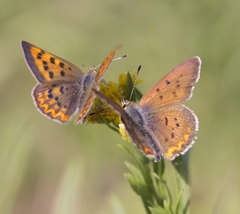 Purplish CopperLycaena helloides
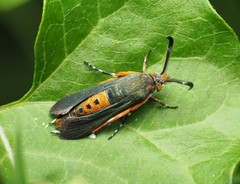 Squash Vine BorerEichlinia cucurbitaeDamages trees, gardens or crops
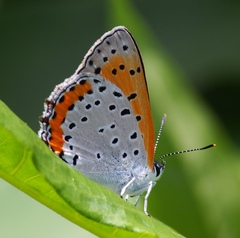 Bronze CopperLycaena hyllus
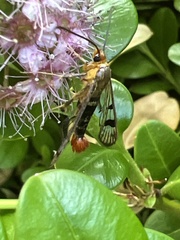 Maple Callus Borer MothSynanthedon acerniDamages trees, gardens or crops
 Southern Red RimBiblis hyperia
 Peachtree Borer MothSynanthedon exitiosaDamages trees, gardens or crops
Sources
- Wikipedia: https://en.wikipedia.org/wiki/Synanthedon_tipuliformis
Look it up elsewhere: GBIF · iNaturalist · BugGuide · Wikipedia
Text written 2026-10-27 from the sources above and checked sentence by sentence against them. Data fetched 2026-10-27.