 Bug FAQ
Crescent-marked Lily Aphid
Neomyzus circumflexus · Order: Hemiptera · Family: Aphididae
Also called: Mottled Arum Aphid, crescentmarked lily aphid
Source: Wikipedia
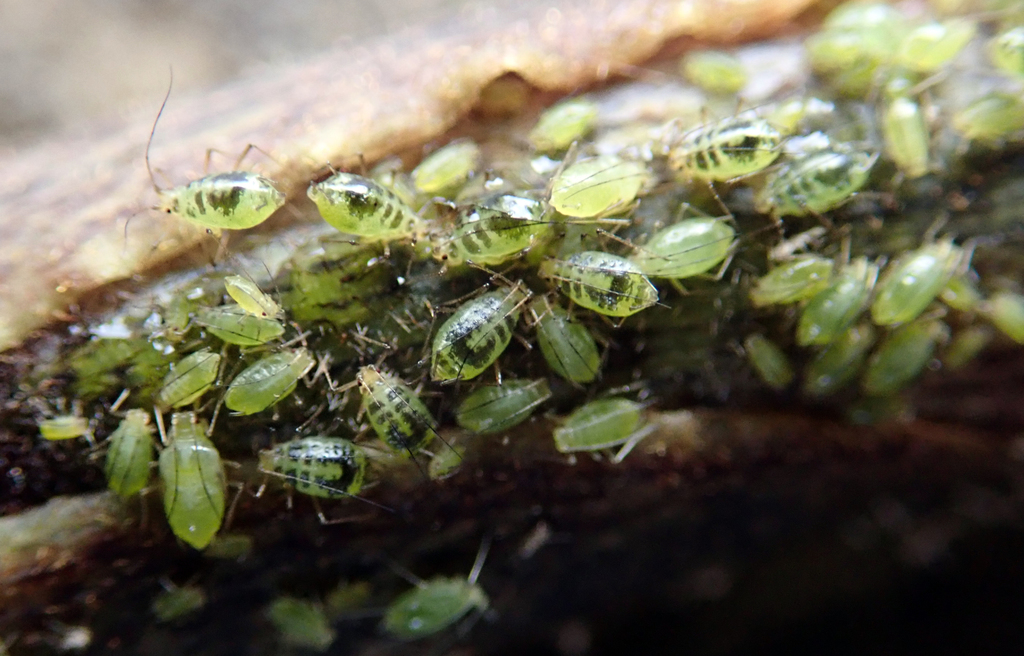
The crescent-marked lily aphid is Neomyzus circumflexus, also called Aulacorthum circumflexum. It feeds by sucking sap from plants and is a major pest on asparagus, begonia and fuchsia, also spreading plant viruses.
Source: Wikipedia
How to recognize it
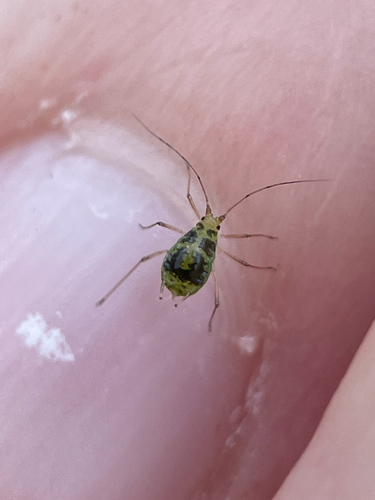
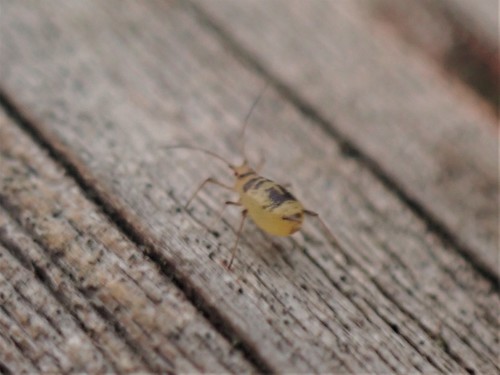
Scientific name Neomyzus circumflexus; also known as the crescent-marked lily aphid, mottled arum aphid, or Aulacorthum circumflexum.
Source: Wikipedia
Is it a pest in the house?
It is a major pest on asparagus, begonia and fuchsia. It can transmit plant viruses.
Source: Wikipedia
Where it lives
It is a true bug that feeds by sucking plant sap.
Source: Wikipedia
What it eats
Its diet consists of plant sap.
Source: Wikipedia
Lookalikes
It is also known by the synonym Aulacorthum circumflexum.
Source: Wikipedia
Where it is found in the US
Recorded in 7 of 51 states and DC. Most records: California, Washington, Hawaii, Oregon, Colorado, North Carolina, Illinois.
Darker = more records. Counts are museum and citizen-science records, not population size.
Source: GBIF
Months it is reported in the US
Source: GBIF
More photos
Questions people ask
What plants does the crescent-marked lily aphid damage?
It commonly damages asparagus, begonia and fuchsia by sucking their sap.
Source: Wikipedia
Does this aphid spread disease?
Yes, it can transmit plant viruses to its host plants.
Source: Wikipedia
Same family (Aphididae)
 Melon AphidAphis gossypiiDamages trees, gardens or crops
 Oleander AphidAphis neriiDamages trees, gardens or crops
 Witch-hazel Cone Gall AphidHormaphis hamamelidis
 Beech Blight AphidGrylloprociphilus imbricatorDamages trees, gardens or crops
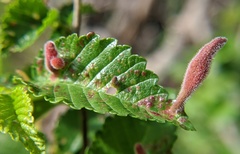 Rice Root AphidTetraneura nigriabdominalis
 Rose AphidMacrosiphum rosaeDamages trees, gardens or crops
Sources
- Wikipedia: https://en.wikipedia.org/wiki/Neomyzus_circumflexus
Look it up elsewhere: GBIF · iNaturalist · BugGuide · Wikipedia
Text written 2026-10-28 from the sources above and checked sentence by sentence against them. Data fetched 2026-10-28.