 Bug FAQ
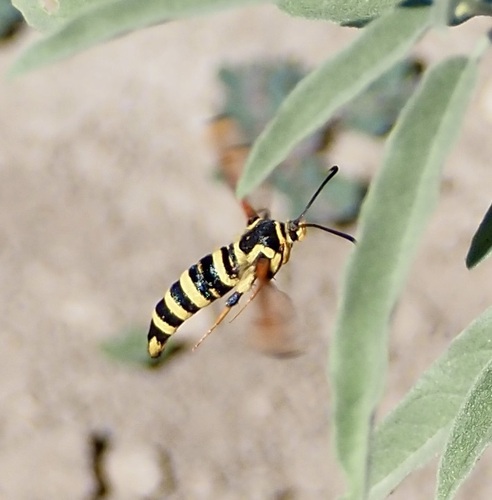
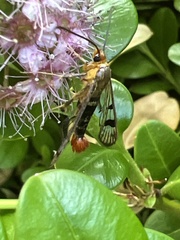
Coronopus Borer Moth
Carmenta mimuli · Order: Lepidoptera · Family: Sesiidae
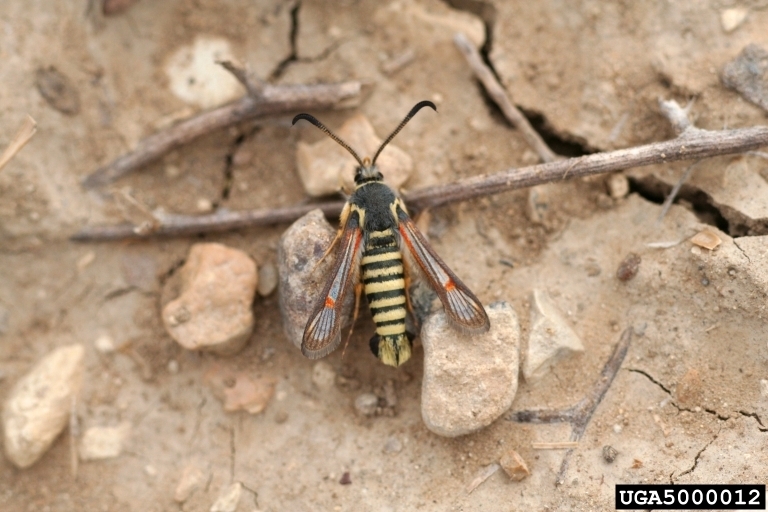
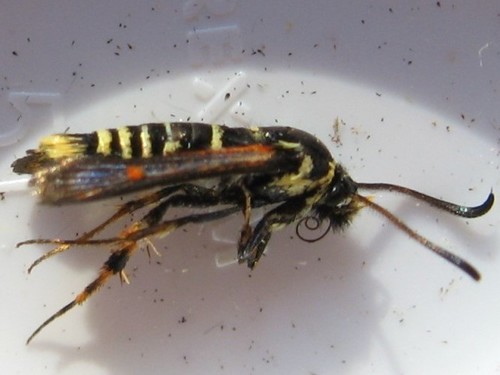
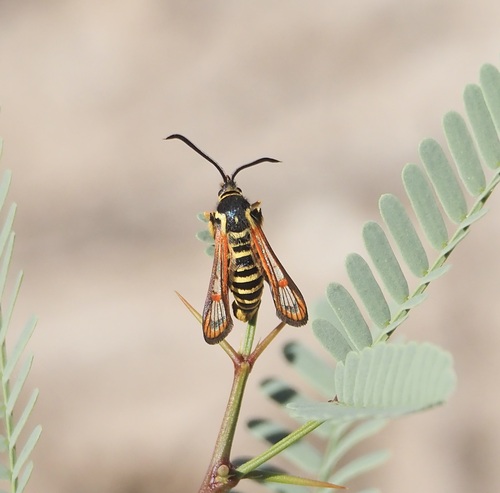
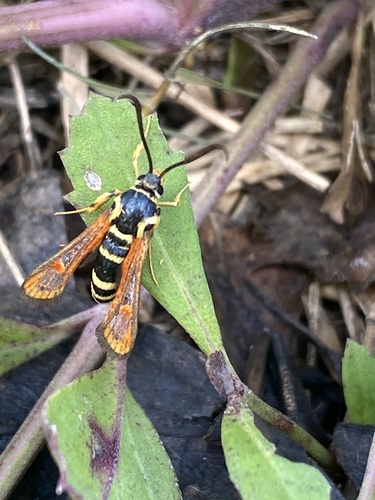
Carmenta mimuli has a dark typical form found in Arizona and a whitish non-typical form that ranges from Kansas to Arizona. Adults fly from late April through November in southeastern Arizona, while the larvae feed on perennial Solanaceae plants.
Source: Wikipedia
How to recognize it
The dark form is the typical one and occurs in Arizona.
Source: Wikipedia
Where it lives
The typical dark form lives in Arizona. The non-typical whitish form inhabits the southwestern United States, from Kansas to Arizona.
Source: Wikipedia
What it eats
Larvae feed on perennial plants in the Solanaceae family.
Source: Wikipedia
Life cycle
Adults are on the wing from late April to November in southeastern Arizona.
Source: Wikipedia
When you see it
The flight period extends from late April through November in southeastern Arizona.
Source: Wikipedia
Where it comes from
The species is native to Arizona. It also occurs across the southwestern United States, from Kansas to Arizona.
Source: Wikipedia
Where it is found in the US
Recorded in 11 of 51 states and DC. Most records: Arizona, New Mexico, Texas, Kansas, Oklahoma, Iowa, Colorado, Louisiana.
Darker = more records. Counts are museum and citizen-science records, not population size.
Source: GBIF
Months it is reported in the US
Source: GBIF
More photos
Questions people ask
When are Carmenta mimuli adults active?
Adults are on the wing from late April to November in southeastern Arizona.
Source: Wikipedia
Same family (Sesiidae)
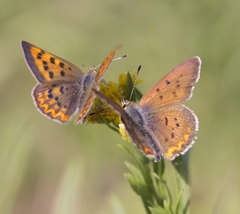 Purplish CopperLycaena helloides
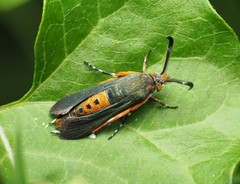 Squash Vine BorerEichlinia cucurbitaeDamages trees, gardens or crops
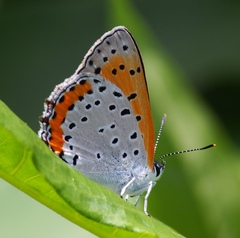 Bronze CopperLycaena hyllus
 Maple Callus Borer MothSynanthedon acerniDamages trees, gardens or crops
 Southern Red RimBiblis hyperia
 Peachtree Borer MothSynanthedon exitiosaDamages trees, gardens or crops
Sources
- Wikipedia: https://en.wikipedia.org/wiki/Carmenta_mimuli
Look it up elsewhere: GBIF · iNaturalist · BugGuide · Wikipedia
Text written 2026-10-28 from the sources above and checked sentence by sentence against them. Data fetched 2026-10-28.