 Bug FAQ
Corn Leaf Aphid
Rhopalosiphum maidis · Order: Hemiptera · Family: Aphididae
Also called: Puceron vert du mais (Leclant 2000)
Source: Wikipedia
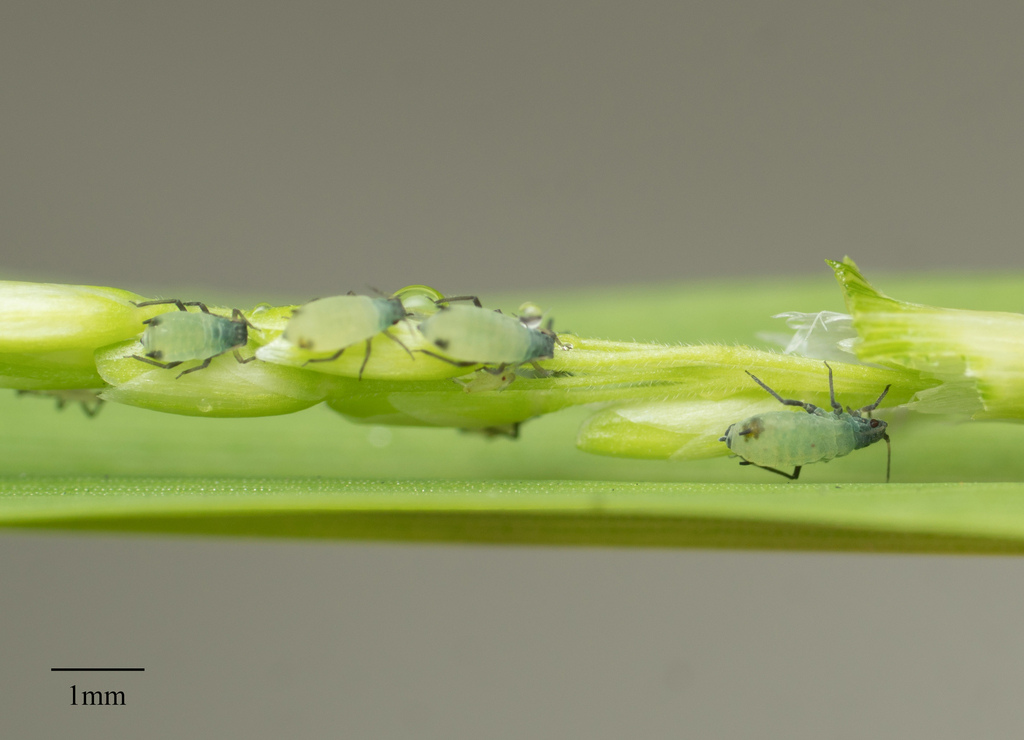
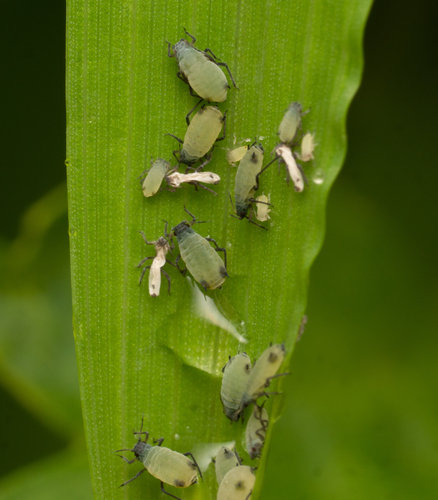
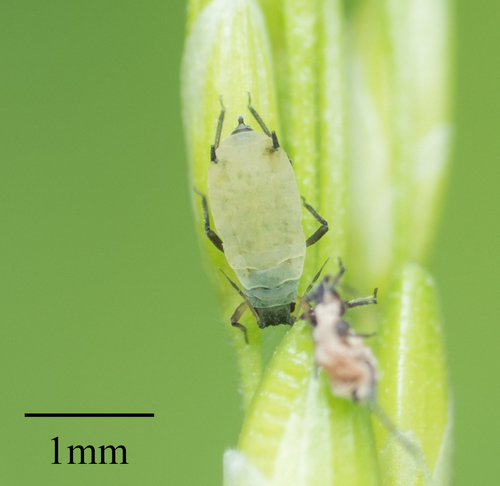
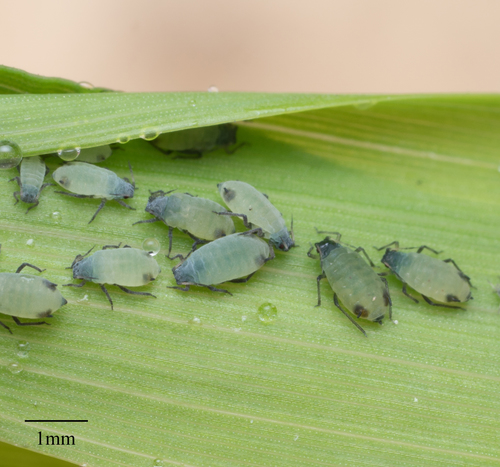
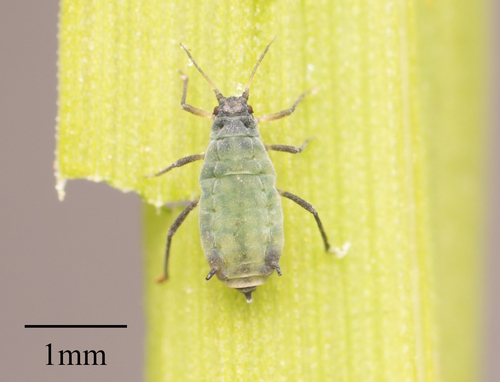
Wingless females are green or whitish-green and have antennae shorter than half their body length. The species reproduces asexually, can produce up to twelve generations a year, and peaks in late summer. It feeds on many cultivated grasses, especially maize, where dense colonies can harm the plant.
Source: Wikipedia
How to recognize it
Wingless females have black-brown heads, antennae, legs, cornicles, tail and abdominal bands. Winged females show black-brown heads and thorax, and their cornicles are shorter than in wingless forms.
Source: Wikipedia
Is it a pest in the house?
Dense populations on maize can cause direct damage by removing photosynthates.
Source: Wikipedia
How to get rid of it
- Resistance to this aphid varies among maize inbred lines.
- In lab tests, it is repelled by volatiles released from damaged maize plants.
Source: Wikipedia
Where it lives
In winter, winged parthenogenetic females and larvae live on wild monocots and move to fields in spring.
Source: Wikipedia
What it eats
Maize is also a major host for this aphid.
Source: Wikipedia
Life cycle
Most populations reproduce entirely by parthenogenesis (anholocyclic).
Source: Wikipedia
When you see it
Fields become populated gradually, starting at the edges and moving inward. Aphid numbers reach their maximum late in the summer.
Source: Wikipedia
Where it comes from
It has a nearly worldwide distribution.
Source: Wikipedia
Lookalikes
Compared with other maize-feeding aphids, it tolerates benzoxazinoids better.
Source: Wikipedia
Where it is found in the US
Recorded in 25 of 51 states and DC. Most records: Illinois, California, Minnesota, Mississippi, North Carolina, Indiana, Louisiana, Michigan.
Darker = more records. Counts are museum and citizen-science records, not population size.
Source: GBIF
Status: native in North America; native in Canada. Source: iNaturalist
Months it is reported in the US
Source: GBIF
More photos
Questions people ask
What plants does the corn leaf aphid feed on?
It feeds on many cultivated grasses, especially wheat, barley, oat, rye, sorghum, sugarcane, rice and maize.
Source: Wikipedia
How many generations can it produce each year?
It can produce up to twelve generations per year.
Source: Wikipedia
How does it damage crops?
Dense colonies on maize remove photosynthates, directly harming the plant.
Source: Wikipedia
Same family (Aphididae)
 Melon AphidAphis gossypiiDamages trees, gardens or crops
 Oleander AphidAphis neriiDamages trees, gardens or crops
 Witch-hazel Cone Gall AphidHormaphis hamamelidis
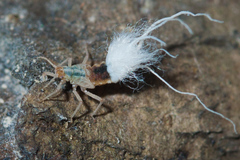 Beech Blight AphidGrylloprociphilus imbricatorDamages trees, gardens or crops
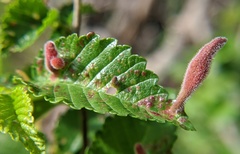 Rice Root AphidTetraneura nigriabdominalis
 Rose AphidMacrosiphum rosaeDamages trees, gardens or crops
Sources
- Wikipedia: https://en.wikipedia.org/wiki/Rhopalosiphum_maidis
Look it up elsewhere: GBIF · iNaturalist · BugGuide · ITIS · Wikipedia
Text written 2026-10-26 from the sources above and checked sentence by sentence against them. Data fetched 2026-10-26.