 Bug FAQ
Columbine sawfly
Pristiphora rufipes · Order: Hymenoptera · Family: Tenthredinidae
Also called: Sawfly
Source: Wikipedia
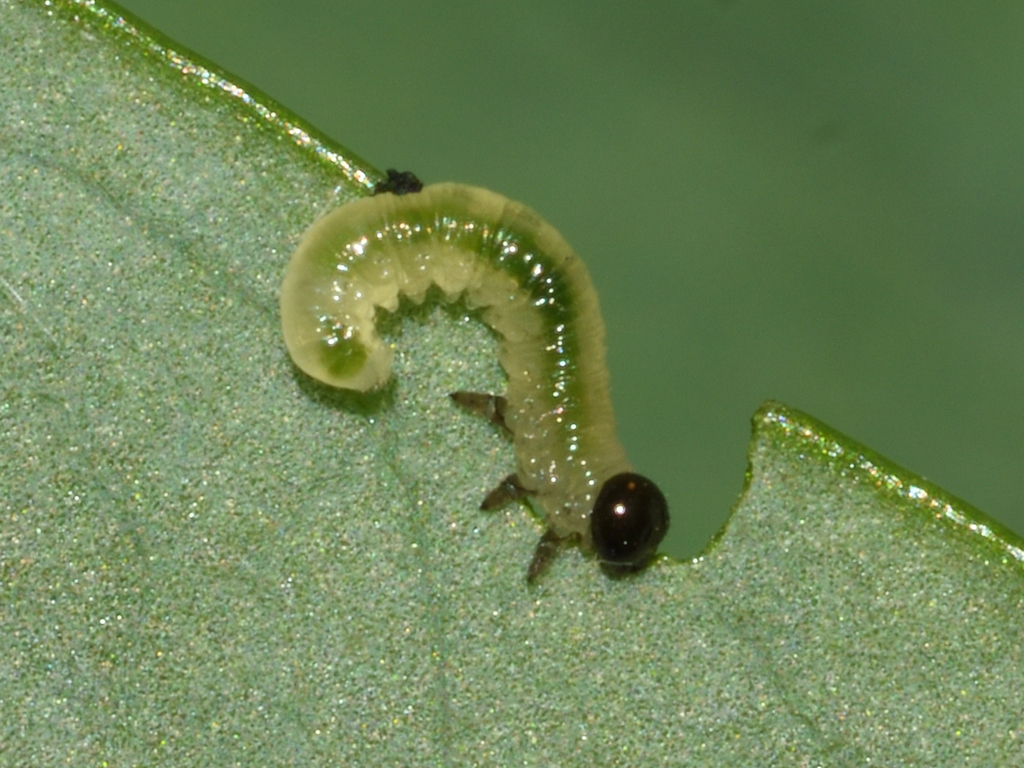
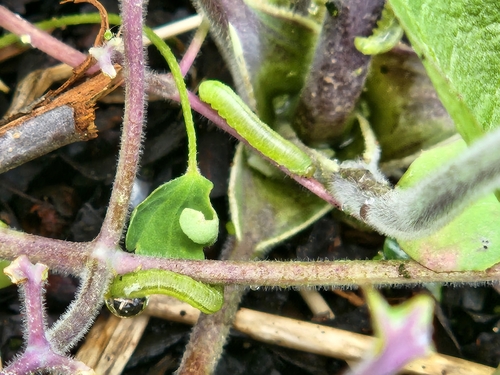
Mature larvae are 4.5 to 5.5 mm long and have a yellow-green head with a green body marked by a dark translucent vein and white-striped fat pads. In England, Wales and Scotland the adults fly from May to September, and the larvae feed on columbine leaves from May, finishing their single generation by June.
Source: Wikipedia
How to recognize it
Larvae are small, green and lack the solid black heads of columbine duskywing caterpillars. Members of the rufipes group have completely black abdomens. Unlike Pristiphora sareptana, this species does not have black basal rings at the base of thoracic setae.
Source: Wikipedia
Size
Adults reach 4.5 mm to 5.5 mm in length when fully grown.
Source: Wikipedia
Is it a pest in the house?
Because it eats cultivated columbines, it is considered a garden pest. It does not act as a pollinator for columbine plants.
Source: Wikipedia
How to get rid of it
- Small infestations can be hand-picked and the larvae killed in soapy water.
- For larger numbers, insecticidal soap or spinosad applied directly are effective low-impact treatments.
Source: Wikipedia
Where it lives
It prefers moderately moist vegetation in forests, parks and gardens. Eggs are laid on the edges of columbine leaves.
Source: Wikipedia
What it eats
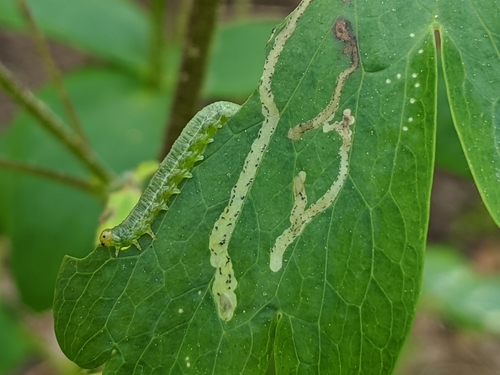
Larvae feed on wild and cultivated columbine (Aquilegia) leaves, eating from the outer edge inward and can strip leaves down to the main veins.
Source: Wikipedia
Life cycle
In North America the larvae start feeding in May and finish their single seasonal generation by June. The larval stage lasts several weeks.
Source: Wikipedia
When you see it
In the British Isles the adult flight period runs from May through September.
Source: Wikipedia
Lookalikes
It resembles columbine duskywing caterpillars but can be told apart by the lack of a solid black head.
Source: Wikipedia
Where it is found in the US
Recorded in 25 of 51 states and DC. Most records: Ohio, Illinois, Michigan, New York, Pennsylvania, Virginia, Idaho, Utah.
Darker = more records. Counts are museum and citizen-science records, not population size.
Source: GBIF
Status: introduced in Canada. Source: iNaturalist
Months it is reported in the US
Source: GBIF
More photos
Questions people ask
How can I get rid of columbine sawfly larvae?
Pick them off by hand and drop them into soapy water, or treat the plants with insecticidal soap or spinosad for bigger outbreaks.
Source: Wikipedia
When do columbine sawflies appear?
Adults are on the wing from May to September, and larvae start feeding in May, completing their generation by June.
Source: Wikipedia
What plants do they damage?
The larvae feed on both wild and garden columbine (Aquilegia) leaves, often stripping them down to the main veins.
Source: Wikipedia
Same family (Tenthredinidae)


Sources
- Wikipedia: https://en.wikipedia.org/wiki/Columbine_sawfly
Look it up elsewhere: GBIF · iNaturalist · BugGuide · Wikipedia
Text written 2026-10-27 from the sources above and checked sentence by sentence against them. Data fetched 2026-10-27.