 Bug FAQ
Carinate Armored-Resin bee
Heriades carinata · Order: Hymenoptera · Family: Megachilidae
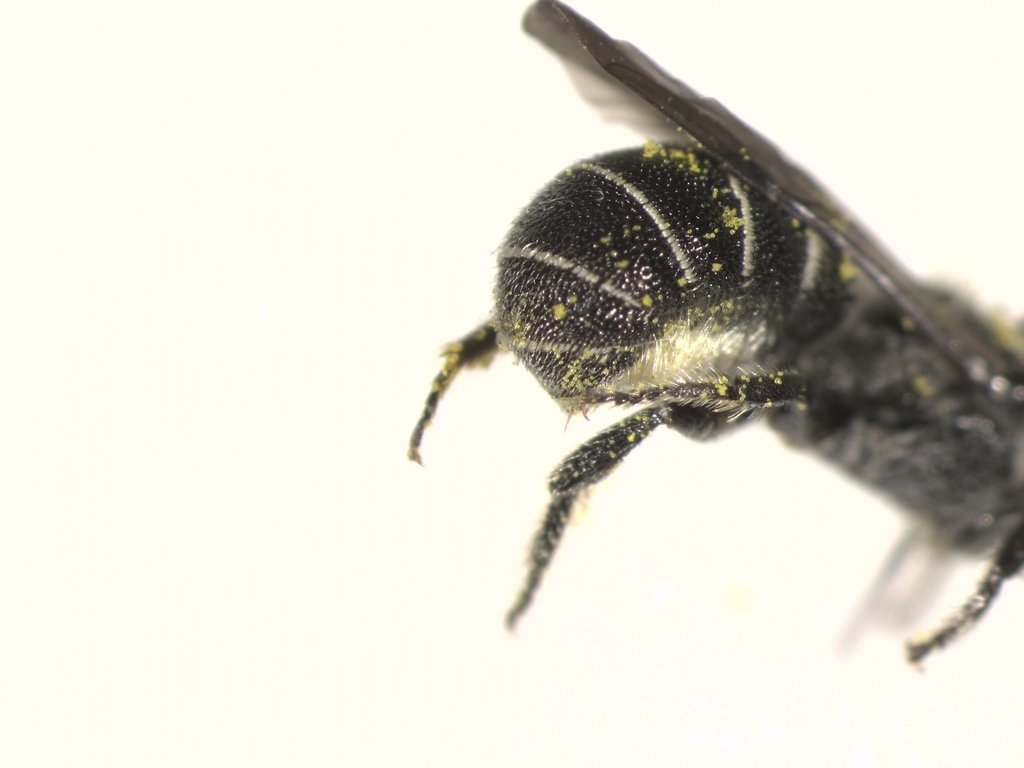
It is the first recorded gynandromorph in its genus. It nests in twigs, preferring openings about 1/8 inch wide. It is found in the United States and southern Canada.
Source: Wikipedia
How to recognize it
It is the first recorded gynandromorph in its genus.
Source: Wikipedia
Where it lives
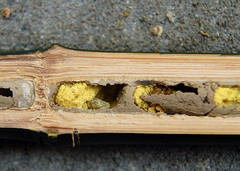
It nests in twigs, using holes about 0.125 inch in diameter.
Source: Wikipedia
What it eats
The female adds pollen to each cell before laying an egg and sealing it.
Source: Wikipedia
Life cycle
Inside the nest she builds consecutive resin-lined cells, each stocked with pollen before an egg is deposited.
Source: Wikipedia
Where it comes from
It occurs in the United States and southern Canada.
Source: Wikipedia
Where it is found in the US
Recorded in 44 of 51 states and DC. Most records: Minnesota, Utah, Michigan, Oregon, New York, Pennsylvania, Washington, Arizona.
Darker = more records. Counts are museum and citizen-science records, not population size.
Source: GBIF
Status: native in North America; native in Canada; native in United States. Source: iNaturalist
Months it is reported in the US
Source: GBIF
More photos
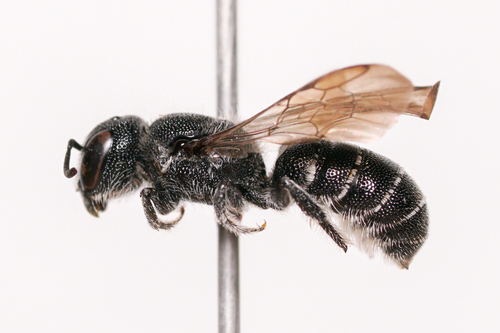
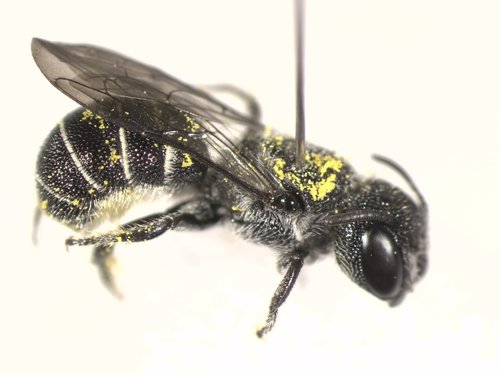
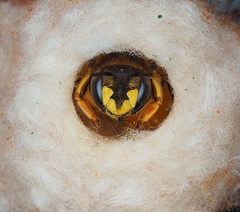
Same family (Megachilidae)

Sources
- Wikipedia: https://en.wikipedia.org/wiki/Heriades_carinata
Look it up elsewhere: GBIF · iNaturalist · BugGuide · ITIS · Wikipedia
Text written 2026-10-23 from the sources above and checked sentence by sentence against them. Data fetched 2026-10-23.