 Bug FAQ
Cape Lappet
Eutricha capensis · Order: Lepidoptera · Family: Lasiocampidae
Source: Wikipedia
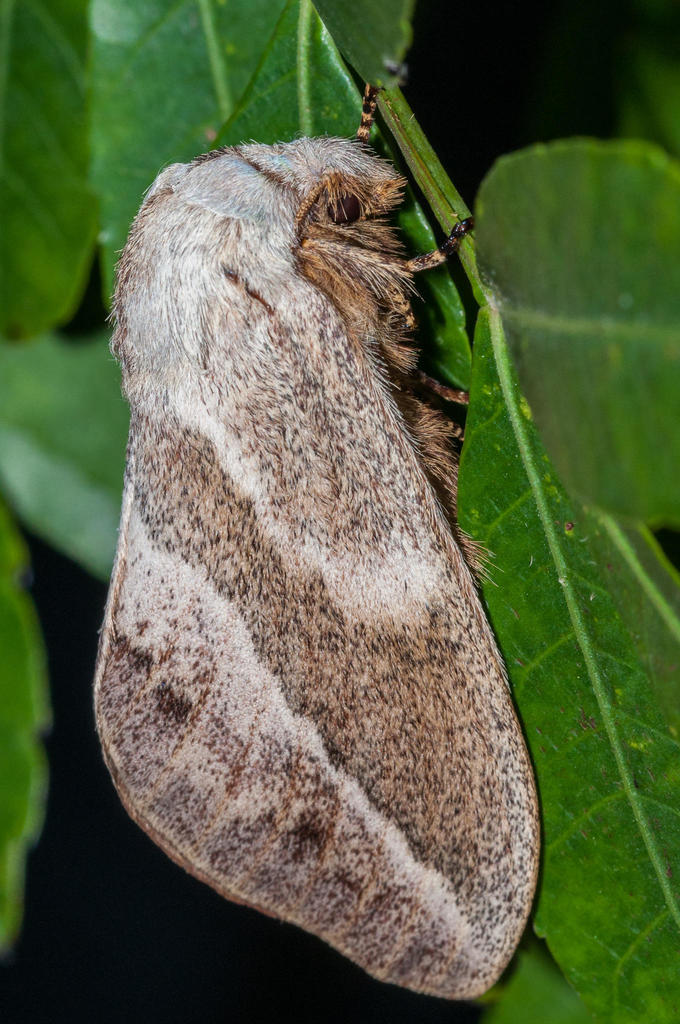
Adults have a wingspan of about 70 mm and are brown with yellow flecks and three white wavy stripes on the forewings. The larvae feed on many garden and forest plants, so they can strip leaves and harm shrubs and trees. Moths emerge in early summer and do not feed as adults.
Source: Wikipedia
How to recognize it
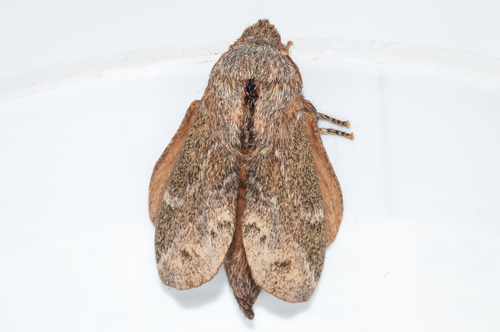
Both pairs of wings are reddish-brown; the forewings have yellow flecks and three wavy white stripes.
Source: Wikipedia
Size
Adults are large and stocky with a wingspan of roughly 70 mm (2.8 in).
Source: Wikipedia
Is it a pest in the house?
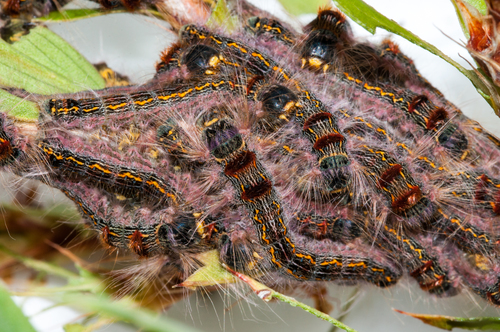
Caterpillars often gather in gardens and can damage a variety of African plants. The larvae are brightly coloured and very hairy, while the adult moths are mostly brown and less striking.
Source: Wikipedia
Does it bite or sting?
Adults are non-aggressive when disturbed.
Source: Wikipedia
What it eats
Larvae feed on a wide range of plants including Acacia, Bauhinia, Eucalyptus, mango, pine, poplar, peach, rose and many others.
Source: Wikipedia
Life cycle
Adults emerge in early summer. Adult moths lack developed mouthparts and do not feed.
Source: Wikipedia
When you see it
The adult flight period is early summer.
Source: Wikipedia
Where it comes from
The species is primarily found in South Africa, with some reports from Malawi, Mozambique and Tanzania.
Source: Wikipedia
More photos
Questions people ask
What plants do Cape lappet caterpillars eat?
They feed on many garden and forest plants such as Acacia, eucalyptus, mango, pine, peach, rose and others.
Source: Wikipedia
When do adult Cape lappet moths appear?
Adults emerge in early summer and do not feed as they lack mouthparts.
Source: Wikipedia
Do the caterpillars damage garden plants?
Yes, the larvae can strip leaves and harm a wide range of garden and tree species.
Source: Wikipedia
Same family (Lasiocampidae)
 Eastern Tent Caterpillar MothMalacosoma americanaDamages trees, gardens or crops
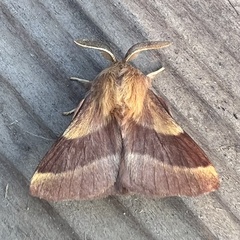 Forest Tent Caterpillar MothMalacosoma disstriaDamages trees, gardens or crops
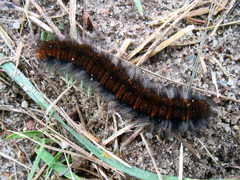 Fox MothMacrothylacia rubi
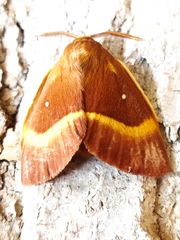 Oak EggarLasiocampa quercus
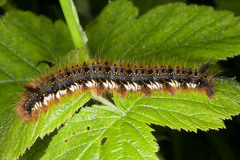 Drinker MothEuthrix potatoria
 Western Tent Caterpillar MothMalacosoma californicaDamages trees, gardens or crops
Sources
- Wikipedia: https://en.wikipedia.org/wiki/Eutricha_capensis
Look it up elsewhere: GBIF · iNaturalist · BugGuide · Wikipedia
Text written 2026-10-23 from the sources above and checked sentence by sentence against them. Data fetched 2026-10-22.