 Bug FAQ
Butternut Woollyworm Sawfly
Eriocampa juglandis · Order: Hymenoptera · Family: Tenthredinidae
Source: Wikipedia
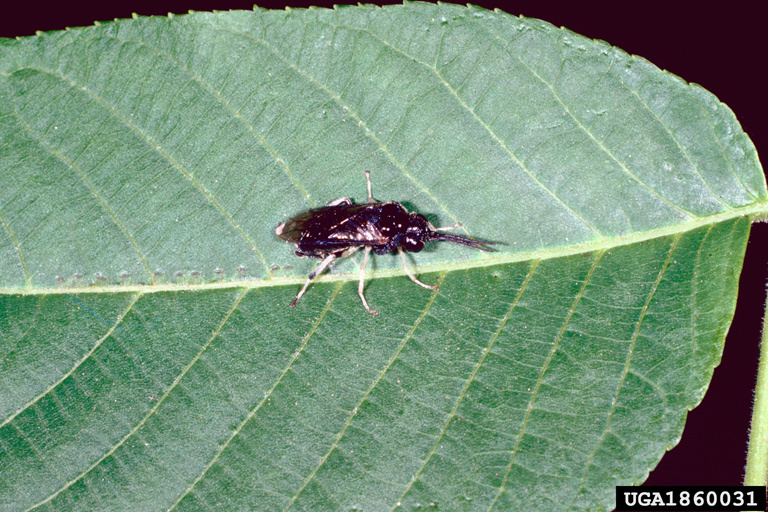
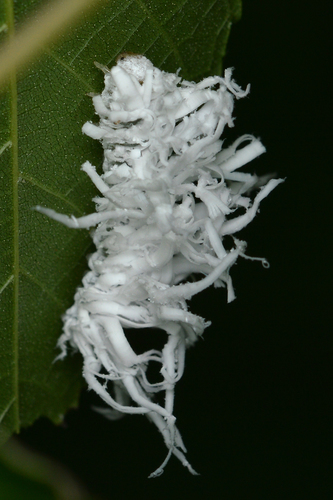
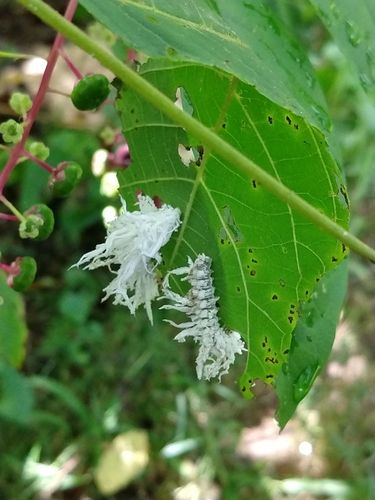
Larvae are covered in white wool and have a pair of legs on every body segment, unlike caterpillars. They feed on the leaves of butternut and related trees, sometimes removing whole leaf sections, which looks unsightly but is limited to one generation per year.
Source: Wikipedia
How to recognize it
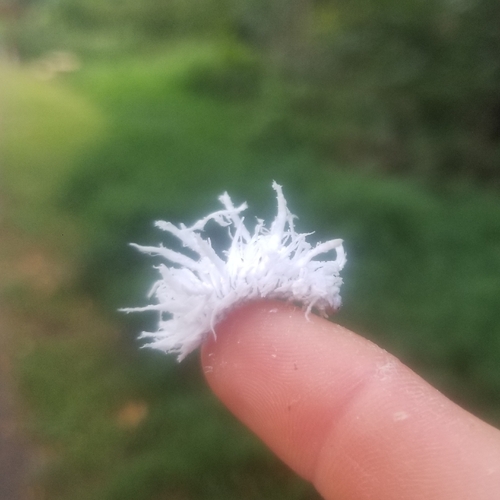
Young larvae are wrapped in white wool that likely deters predators.
Source: Wikipedia
Size
Full-grown larvae reach about 0.87 inches (22 mm) and adults are roughly 0.47 inches (12 mm) long.
Source: Wikipedia
Is it a pest in the house?
The damage they cause to trees is only cosmetic and limited because they appear after leaves are fully expanded and have just one generation each year. Pest control is generally not needed.
Source: Wikipedia
Where it lives
A small population exists around Milwaukee.
Source: Wikipedia
What it eats
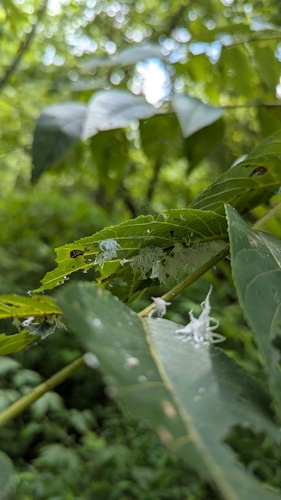
Larvae chew random holes in leaves when small and may eat entire leaf sections as they grow, leaving only larger veins.
Source: Wikipedia
Life cycle
When fully grown, larvae drop to the soil, pupate through winter, and emerge as adults in spring to mate.
Source: Wikipedia
When you see it
Adults appear in mid-summer, and population numbers can vary widely from year to year.
Source: Wikipedia
Where it comes from
It is native to the northeastern United States and eastern Canada, including states such as Maryland, Michigan, North Carolina, Wisconsin, and nearby Canadian provinces.
Source: Wikipedia
Lookalikes
Although they look like caterpillars, sawfly larvae have legs on every segment, while caterpillars have gaps between leg pairs. When disturbed, sawfly larvae often curl up.
Source: Wikipedia
Where it is found in the US
Recorded in 30 of 51 states and DC. Most records: Ohio, Maryland, North Carolina, Virginia, Tennessee, Pennsylvania, Texas, Indiana.
Darker = more records. Counts are museum and citizen-science records, not population size.
Source: GBIF
Status: native in North America; native in Canada. Source: iNaturalist
Months it is reported in the US
Source: GBIF
More photos
Questions people ask
Do I need to treat them to protect my trees?
Pest control is generally not needed because the damage is only cosmetic and limited to one generation per year.
Source: Wikipedia
When do these insects appear?
Adults show up in mid-summer, and their numbers can change a lot from year to year.
Source: Wikipedia
Where are butternut woollyworms found?
They are native to the northeastern US and eastern Canada, with a small presence around Milwaukee.
Source: Wikipedia
Same family (Tenthredinidae)


Sources
- Wikipedia: https://en.wikipedia.org/wiki/Eriocampa_juglandis
Look it up elsewhere: GBIF · iNaturalist · BugGuide · Wikipedia
Text written 2026-10-24 from the sources above and checked sentence by sentence against them. Data fetched 2026-10-24.