 Bug FAQ
Blueberry Mason bee
Osmia ribifloris · Order: Hymenoptera · Family: Megachilidae

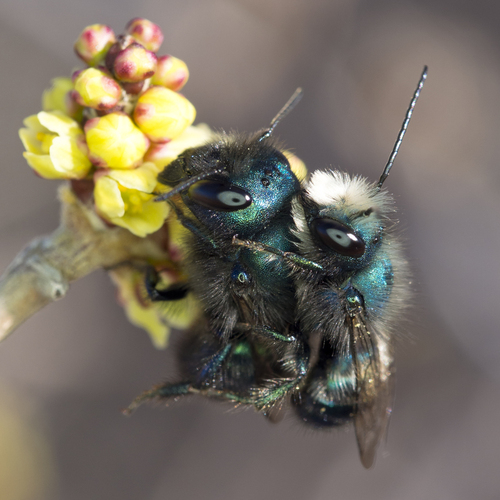
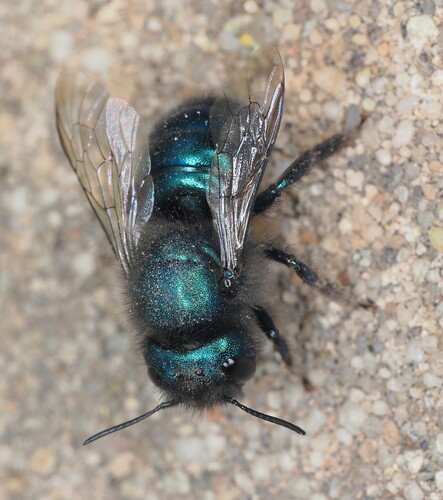
The blueberry mason bee lives where ericaceous plants grow, especially manzanita and Oregon grape. It gathers pollen from those same plants and is also used to pollinate blueberries.
Source: Wikipedia
Where it lives
Found in habitats with ericaceous shrubs such as manzanita, Arctostaphylos species, and Oregon grape.
Source: Wikipedia
What it eats
Collects pollen from ericaceous plants, preferring manzanita and Oregon grape. Can pollinate blueberries and is sometimes employed for commercial blueberry pollination.
Source: Wikipedia
Where it is found in the US
Recorded in 10 of 51 states and DC. Most records: Texas, Utah, California, Arizona, Oregon, Oklahoma, New Mexico, Colorado.
Darker = more records. Counts are museum and citizen-science records, not population size.
Source: GBIF
Status: native in North America; native in United States. Source: iNaturalist
Months it is reported in the US
Source: GBIF
More photos

Questions people ask
What plants does the blueberry mason bee visit?
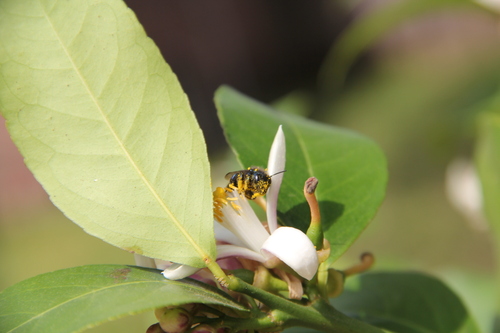
It gathers pollen from ericaceous shrubs like manzanita and Oregon grape and also visits blueberry flowers.
Source: Wikipedia
Is the blueberry mason bee used for pollinating crops?
Yes, it is sometimes used commercially to pollinate blueberries.
Source: Wikipedia
Same family (Megachilidae)

Sources
- Wikipedia: https://en.wikipedia.org/wiki/Osmia_ribifloris
Look it up elsewhere: GBIF · iNaturalist · BugGuide · ITIS · Wikipedia
Text written 2026-10-23 from the sources above and checked sentence by sentence against them. Data fetched 2026-10-23.