 Bug FAQ
Blue Orchard Bee
Osmia lignaria · Order: Hymenoptera · Family: Megachilidae
Also called: Orchard Mason Bee
Source: Wikipedia
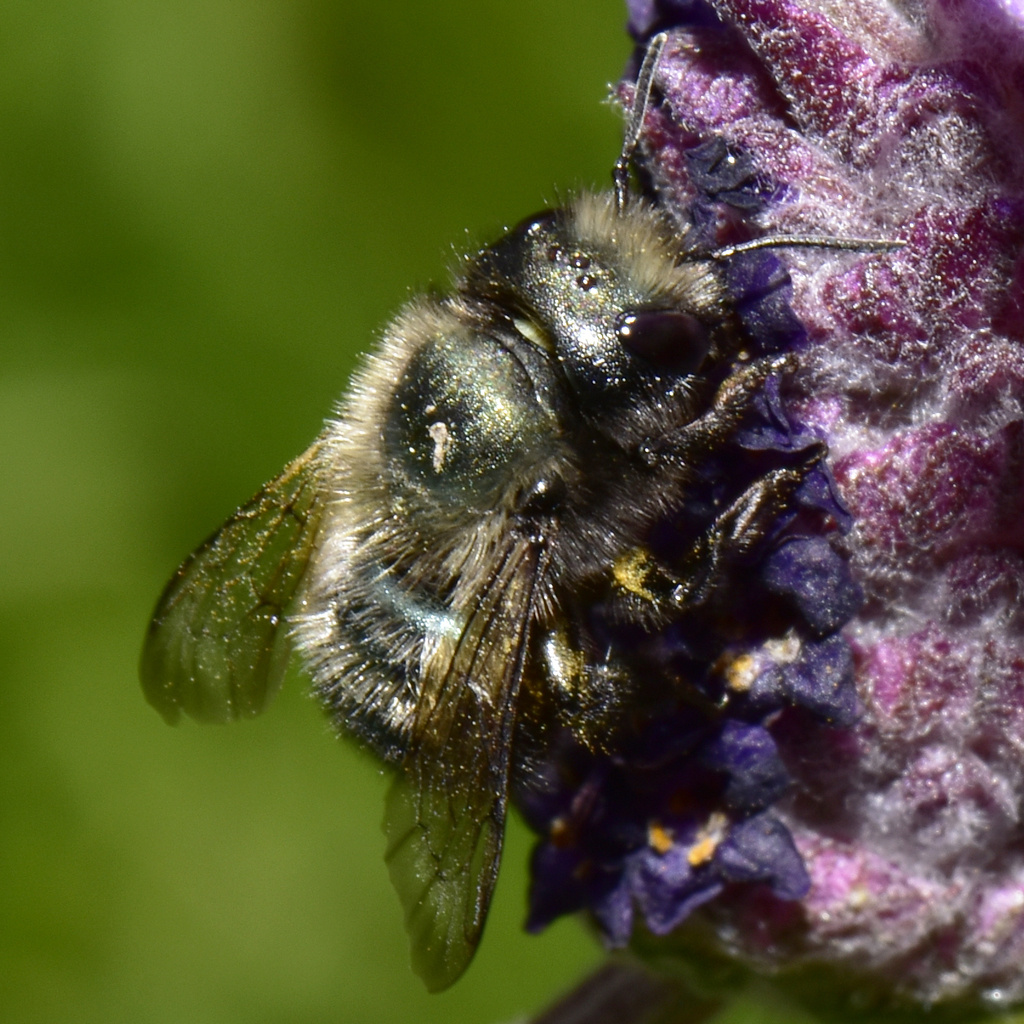
Blue orchard bees are small, weighing about 33 mg as adults. Females build individual brood cells in narrow holes or tubes, sealing them with mud partitions. They emerge in spring when daytime temperatures reach about 14 °C (57 °F).
Source: Wikipedia
How to recognize it
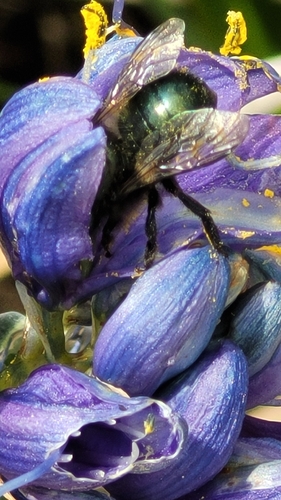
They are known as orchard mason bees and make mud-divided cells in natural holes or reeds.
Source: Wikipedia
Size
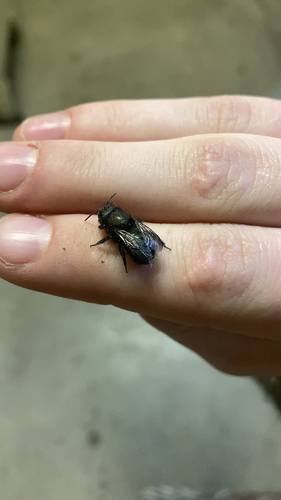
An adult weighs roughly 33.5 mg, give or take a milligram.
Source: Wikipedia
Does it bite or sting?
They are very shy and will only sting if they perceive a serious threat. Their stinger functions mainly as an egg-laying guide.
Source: Wikipedia
Where it lives
They are commonly used for early-spring pollination of fruit trees in the U.S. and Canada. Females nest in narrow cavities such as reeds, cedar shakes, or even keyholes.
Source: Wikipedia
What it eats
Females forage for pollen and nectar on the nearest flowers to their nest. They work throughout daylight hours and stop only after sunset.
Source: Wikipedia
Life cycle
Bees break out of their cocoons in spring once daytime temperatures reach about 14 °C.
Source: Wikipedia
When you see it
Spring emergence is triggered when daytime temperatures hit roughly 57 °F.
Source: Wikipedia
Where it comes from
They are native to North America, with eastern and western subspecies divided by the Rockies.
Source: Wikipedia
Lookalikes
Unlike carpenter bees, they cannot bore holes in wood.
Source: Wikipedia
Where it is found in the US
Recorded in 48 of 51 states and DC. Most records: California, Washington, Utah, Oregon, Colorado, New York, Arizona, North Carolina.
Darker = more records. Counts are museum and citizen-science records, not population size.
Source: GBIF
Status: native in North America; native in Canada; native in United States. Source: iNaturalist
Months it is reported in the US
Source: GBIF
More photos
Questions people ask
Do blue orchard bees sting people?
They are shy and will only sting if they feel seriously threatened.
Source: Wikipedia
Where do they build their nests?
Females nest in narrow holes, reeds, cedar shakes, or even keyholes, separating brood cells with mud walls.
Source: Wikipedia
When do they become active each year?
Adults emerge in spring once daytime temperatures reach about 14 °C (57 °F).
Source: Wikipedia
Are they native to my area?
Yes, they are native to North America, with eastern and western subspecies split by the Rocky Mountains.
Source: Wikipedia
Same family (Megachilidae)

Sources
- Wikipedia: https://en.wikipedia.org/wiki/Osmia_lignaria
Look it up elsewhere: GBIF · iNaturalist · BugGuide · ITIS · Wikipedia
Text written 2026-10-23 from the sources above and checked sentence by sentence against them. Data fetched 2026-10-23.