 Bug FAQ
Blue Mason Bee
Osmia caerulescens · Order: Hymenoptera · Family: Megachilidae
Also called: Mason Bee, Cerulean Mason
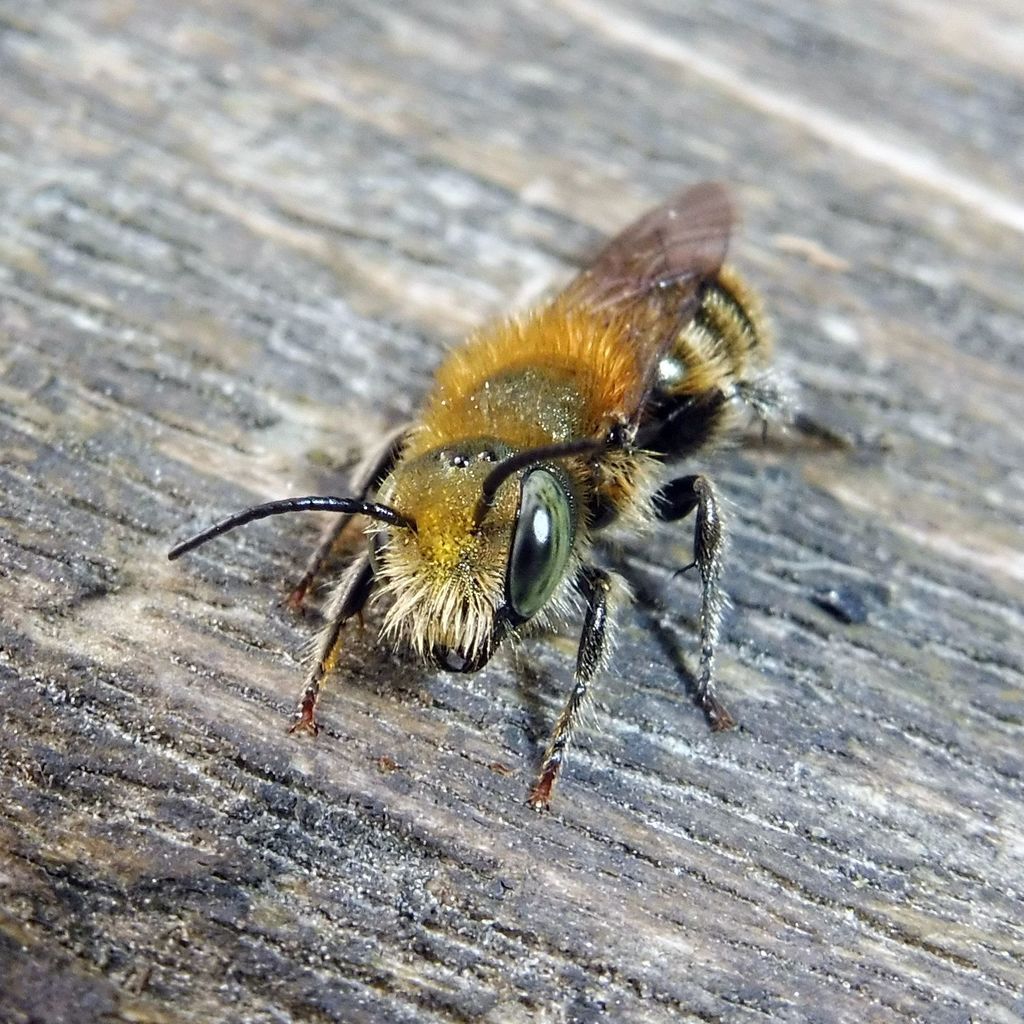
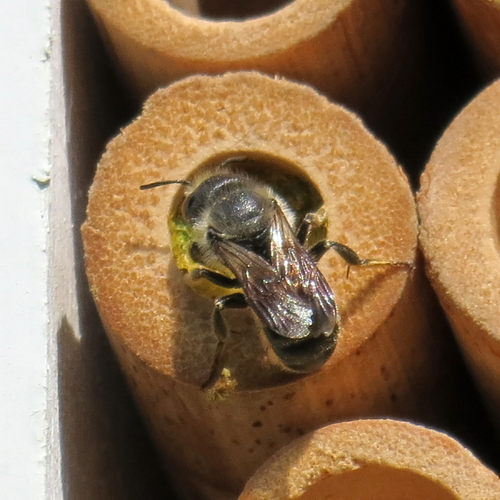
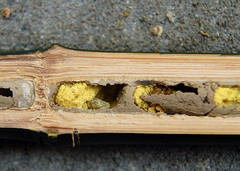
Female blue mason bees are about 10 to 11 mm long and males are slightly smaller at around 9 mm, both with a metallic sheen. They live in woodlands and gardens and nest in many existing cavities such as dead wood, hollow stems, wall cracks and even glass tubes. Adults collect pollen from a range of legumes and other flowering families, including Coronilla, Trifolium, Lamiaceae and Asteraceae.
Source: Wikipedia
Size
Females measure 10 to 11 mm in length. Males are about 9 mm long and more slender.
Source: Wikipedia
Life cycle
Adults overwinter as diapausing individuals inside their intact cocoons. In Great Britain and France the bee is bivoltine, and it is partially bivoltine in the Netherlands.
Source: Wikipedia
When you see it
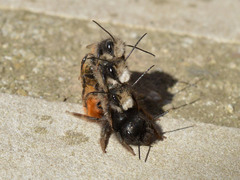
Males emerge first, patrol the nests looking for females, and remain active for about three weeks.
Source: Wikipedia
Where it comes from
Its presence in North America is probably the result of human introduction.
Source: Wikipedia
Where it is found in the US
Recorded in 24 of 51 states and DC. Most records: Oregon, New York, Washington, Virginia, Pennsylvania, Massachusetts, Michigan, Indiana.
Darker = more records. Counts are museum and citizen-science records, not population size.
Source: GBIF
Status: introduced in Canada. Source: iNaturalist
Months it is reported in the US
Source: GBIF
More photos
Questions people ask
What plants does the blue mason bee visit?
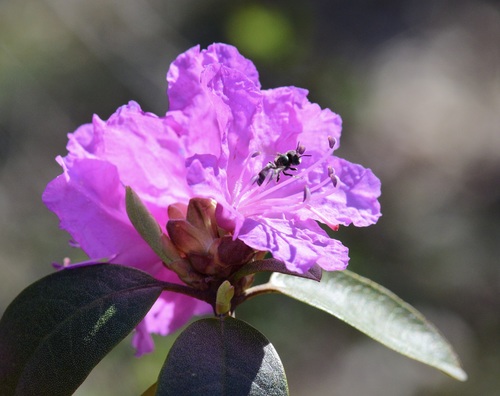
It gathers pollen from many legumes such as Coronilla, Trifolium and Vicia, as well as from plants in the Lamiaceae, Asteraceae, Brassicaceae, Hypericaceae and Ranunculaceae families.
Source: Wikipedia
When are blue mason bees active?
In Great Britain they fly from mid-April or May until late July, then again in August; males appear first and are active for about three weeks.
Source: Wikipedia
Same family (Megachilidae)

Sources
- Wikipedia: https://en.wikipedia.org/wiki/Osmia_caerulescens
Look it up elsewhere: GBIF · iNaturalist · BugGuide · ITIS · Wikipedia
Text written 2026-10-25 from the sources above and checked sentence by sentence against them. Data fetched 2026-10-25.