 Bug FAQ
Bicyrtes viduatus
Bicyrtes viduatus · Order: Hymenoptera · Family: Crabronidae
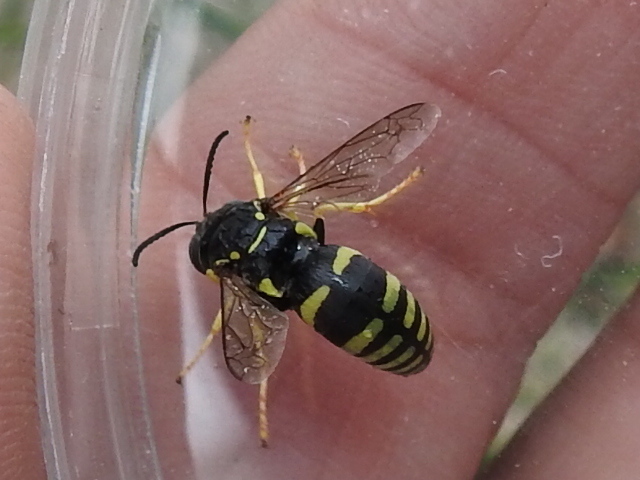
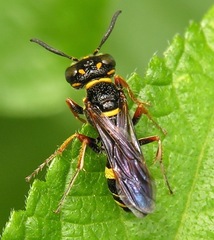
Bicyrtes viduatus is a pale-yellow wasp lacking the thoracic “smiley-face” pattern seen in its close relatives. Its wings are mostly clear while the submarginal cell is clouded. The species occurs in Central America.
Source: Wikipedia
How to recognize it
The body is pale yellow and does not have the thoracic “smiley-face” marking that other yellow Bicyrtes species have. The submarginal cell of the wing is clouded, but the rest of the wing is largely clear.
Source: Wikipedia
Where it comes from
Bicyrtes viduatus is found in Central America.
Source: Wikipedia
Lookalikes
It can be confused with Bicyrtes capnopterus and Bicyrtes ventralis, which are also yellow, but those species have a distinct thoracic “smiley-face” pattern that B. viduatus lacks.
Source: Wikipedia
Where it is found in the US
Recorded in 6 of 51 states and DC. Most records: Arizona, Texas, New Mexico, California, Utah, Colorado.
Darker = more records. Counts are museum and citizen-science records, not population size.
Source: GBIF
Status: native in North America; native in United States. Source: iNaturalist
Months it is reported in the US
Source: GBIF
More photos
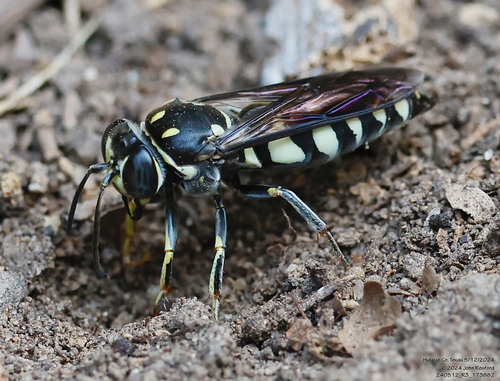
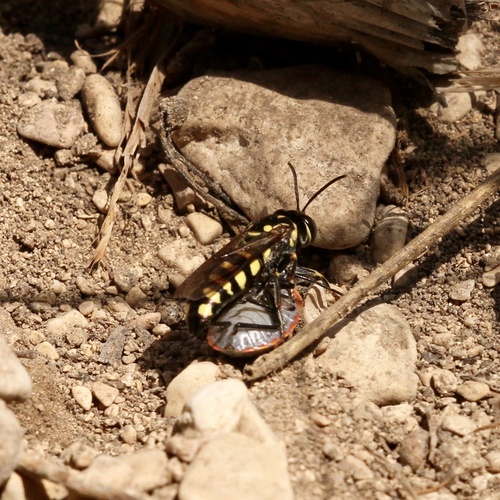
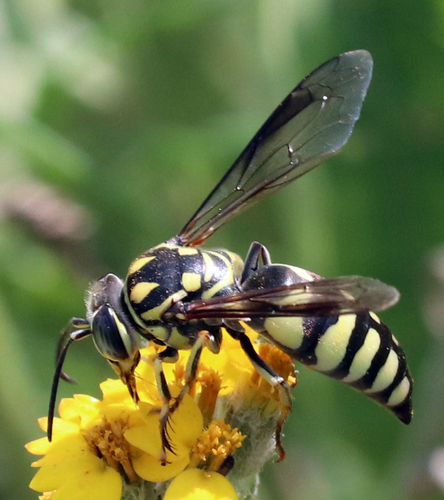
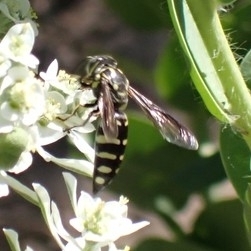
Same family (Crabronidae)

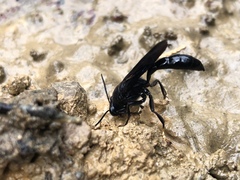
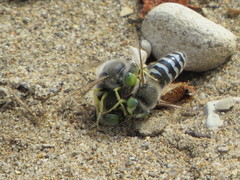
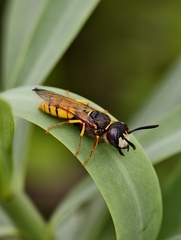
Sources
- Wikipedia: https://en.wikipedia.org/wiki/Bicyrtes_viduatus
Look it up elsewhere: GBIF · iNaturalist · BugGuide · ITIS · Wikipedia
Text written 2026-10-28 from the sources above and checked sentence by sentence against them. Data fetched 2026-10-28.