 Bug FAQ
Bellflower Resin Bee
Megachile campanulae · Order: Hymenoptera · Family: Megachilidae
Source: Wikipedia
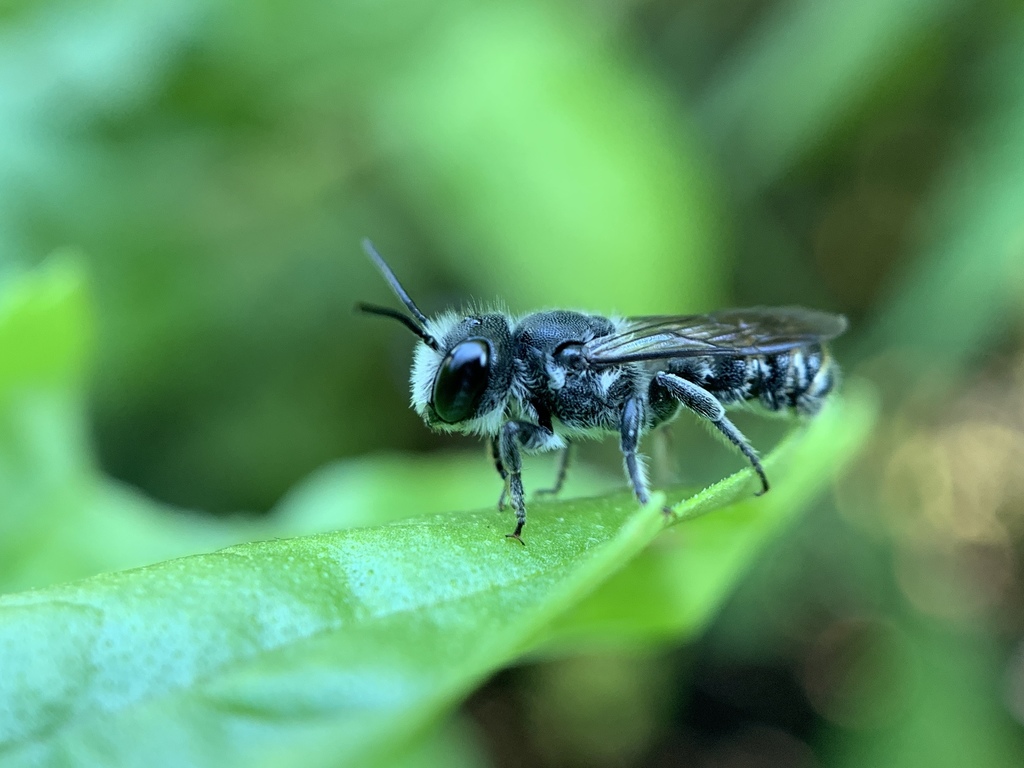
Bellflower resin bees are solitary pollinators native to eastern North America. Females build nests with individual cells, lay eggs, and the larvae overwinter as pupae.
Source: Wikipedia
How to recognize it
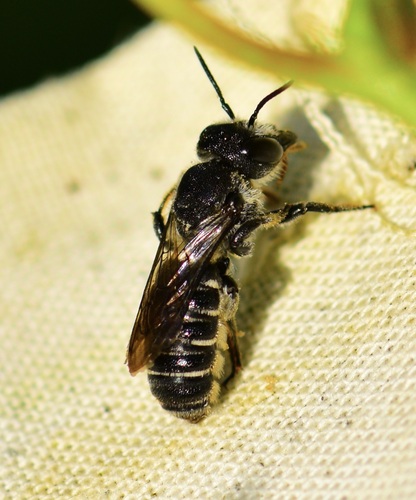
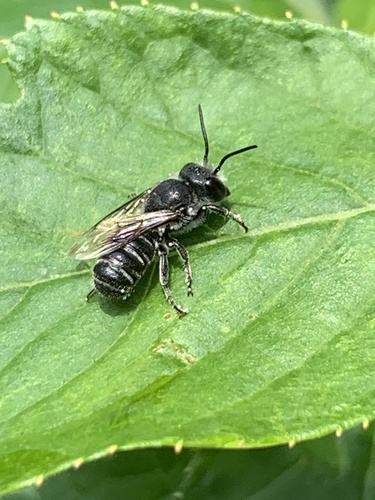
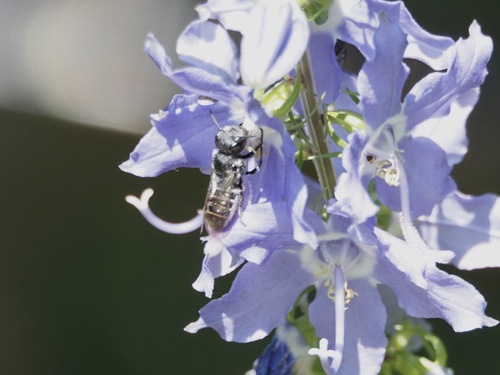
Females are larger than males, and both sexes have fine short hairs covering their bodies.
Source: Wikipedia
Size
They are medium-sized bees, with females generally larger than males.
Source: Wikipedia
Does it bite or sting?
They can sting, but the sting is mild and they are not aggressive.
Source: Wikipedia
Where it lives
They are important pollinators of many native plants throughout their range.
Source: Wikipedia
What it eats
Adults collect pollen and sometimes nectar, which they provision in nest cells to feed the larvae.
Source: Wikipedia
Life cycle
Females construct nests with separate cells for each egg, and the developing larvae later overwinter as pupae.
Source: Wikipedia
When you see it
Adults are active from April through September, with flight extending to October in cooler areas.
Source: Wikipedia
Where it comes from
These bees are native to eastern North America.
Source: Wikipedia
Lookalikes
Although many related bees are called leafcutters, this species lacks cutting mandibles and uses mud or resin for its nests.
Source: Wikipedia
Where it is found in the US
Recorded in 43 of 51 states and DC. Most records: Minnesota, Michigan, New York, Massachusetts, Pennsylvania, Illinois, Maryland, Florida.
Darker = more records. Counts are museum and citizen-science records, not population size.
Source: GBIF
Status: native in North America; native in Canada; native in United States. Source: iNaturalist
Months it is reported in the US
Source: GBIF
More photos
Questions people ask
Do they sting people?
Yes, they can deliver a mild sting, but they are not aggressive.
Source: Wikipedia
When are they active?
Adults are on the wing from April to September, sometimes into October in cooler regions.
Source: Wikipedia
Same family (Megachilidae)

Sources
- Wikipedia: https://en.wikipedia.org/wiki/Megachile_campanulae
Look it up elsewhere: GBIF · iNaturalist · BugGuide · ITIS · Wikipedia
Text written 2026-10-23 from the sources above and checked sentence by sentence against them. Data fetched 2026-10-23.