 Bug FAQ
Baccharis Borer
Hellinsia balanotes · Order: Lepidoptera · Family: Pterophoridae
Also called: Groundsel Plume Moth
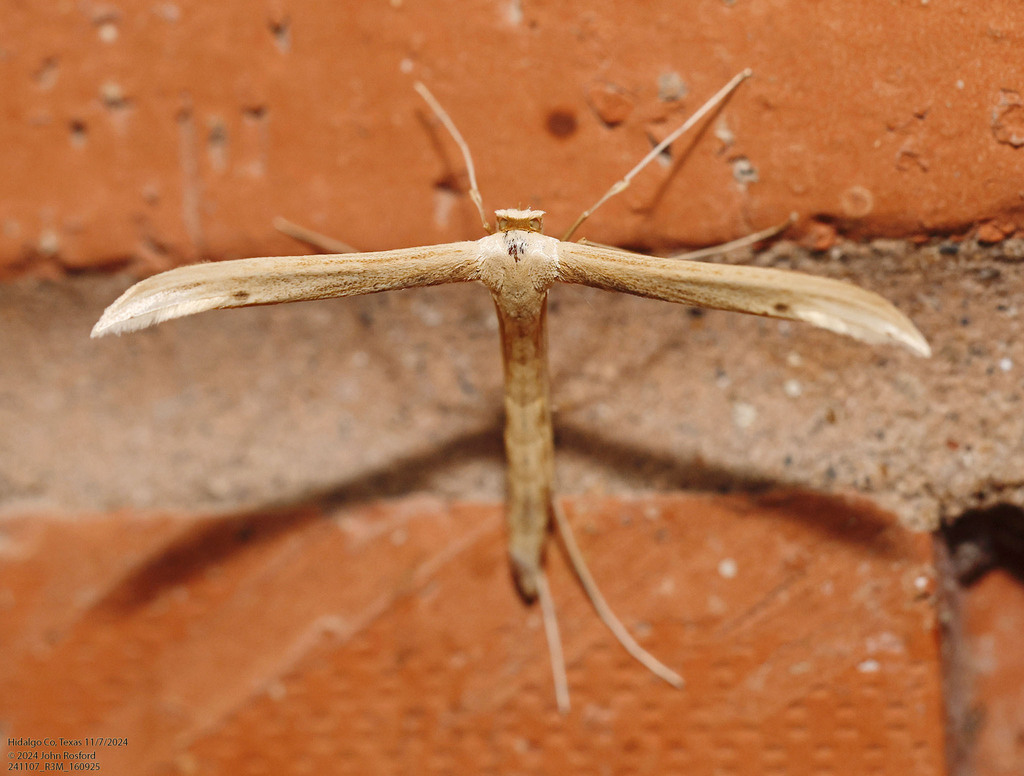
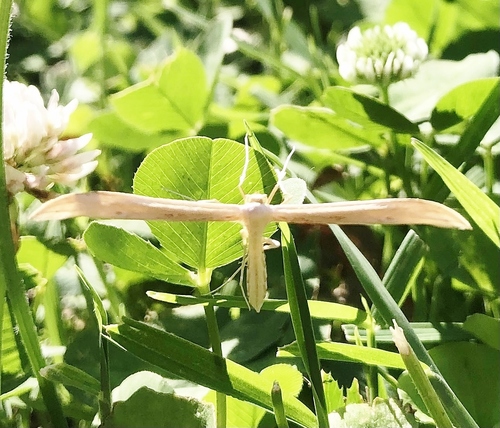
The Baccharis borer has a wingspan of about 31 to 42 mm. Adults can be seen flying at any time of year. Its caterpillars eat several Baccharis species and Pluchea sericea.
Source: Wikipedia
How to recognize it
Adults are on the wing throughout the year.
Source: Wikipedia
Size
The wingspan ranges from 31 mm to 42 mm (about 1.2 to 1.7 in).
Source: Wikipedia
What it eats
Larvae feed on Baccharis plants, including B. halimifolia, B. salicina, B. neglecta and B. angustifolia, as well as on Pluchea sericea.
Source: Wikipedia
Life cycle
Adults are present and active all year round.
Source: Wikipedia
When you see it
Adults can be observed flying in every season.
Source: Wikipedia
Where it comes from
It is native to Guatemala, northern Mexico, and several U.S. states including Arizona and Texas.
Source: Wikipedia
Where it is found in the US
Recorded in 20 of 51 states and DC. Most records: Texas, North Carolina, New Jersey, Florida, Alabama, New York, Louisiana, South Carolina.
Darker = more records. Counts are museum and citizen-science records, not population size.
Source: GBIF
Months it is reported in the US
Source: GBIF
More photos
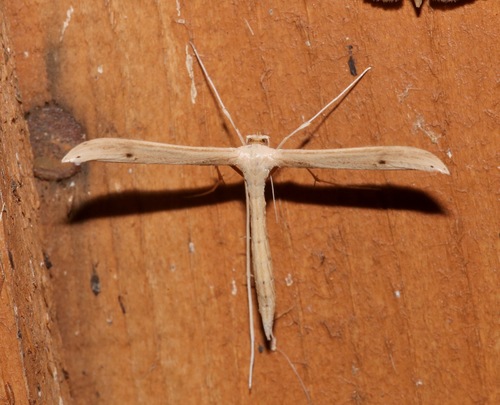
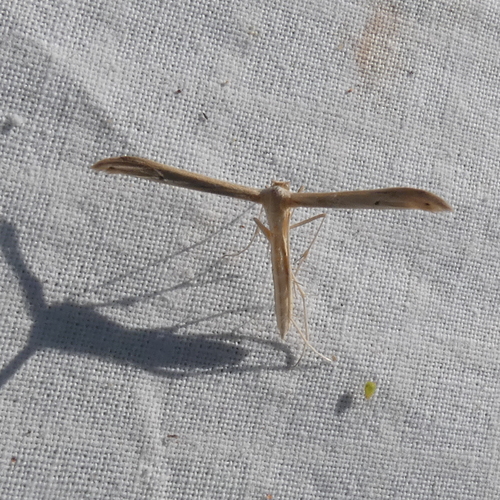
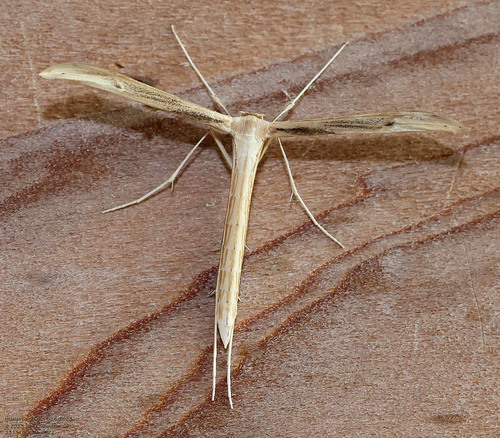
Questions people ask
When can I see adult Baccharis borers?
Adults are on the wing year round, so they can be seen any month.
Source: Wikipedia
What plants do the larvae eat?
The caterpillars feed on several Baccharis species and on Pluchea sericea.
Source: Wikipedia
Same family (Pterophoridae)
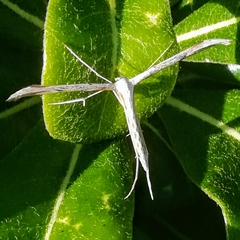 Morning-glory Plume MothEmmelina monodactyla
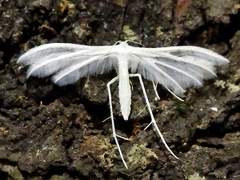 White Plume MothPterophorus pentadactylaDamages trees, gardens or crops
 Brown Silver-linePetrophora chlorosata
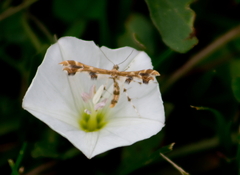 Grape and Sheppard's Plume MothsGeina periscelidactylusDamages trees, gardens or crops
 Yarrow Plume MothGillmeria pallidactylaDamages trees, gardens or crops
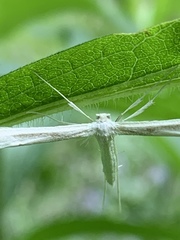 Plain, Elliott's, and Habeck's Plume MothsHellinsia homodactylus
Sources
- Wikipedia: https://en.wikipedia.org/wiki/Hellinsia_balanotes
Look it up elsewhere: GBIF · iNaturalist · BugGuide · Wikipedia
Text written 2026-10-27 from the sources above and checked sentence by sentence against them. Data fetched 2026-10-27.