 Bug FAQ
Amber-marked Birch Leaf-miner Sawfly
Profenusa thomsoni · Order: Hymenoptera · Family: Tenthredinidae
Also called: Amber-marked Birch Leaf Miner, Amber-marked birch leafminer
Source: Wikipedia
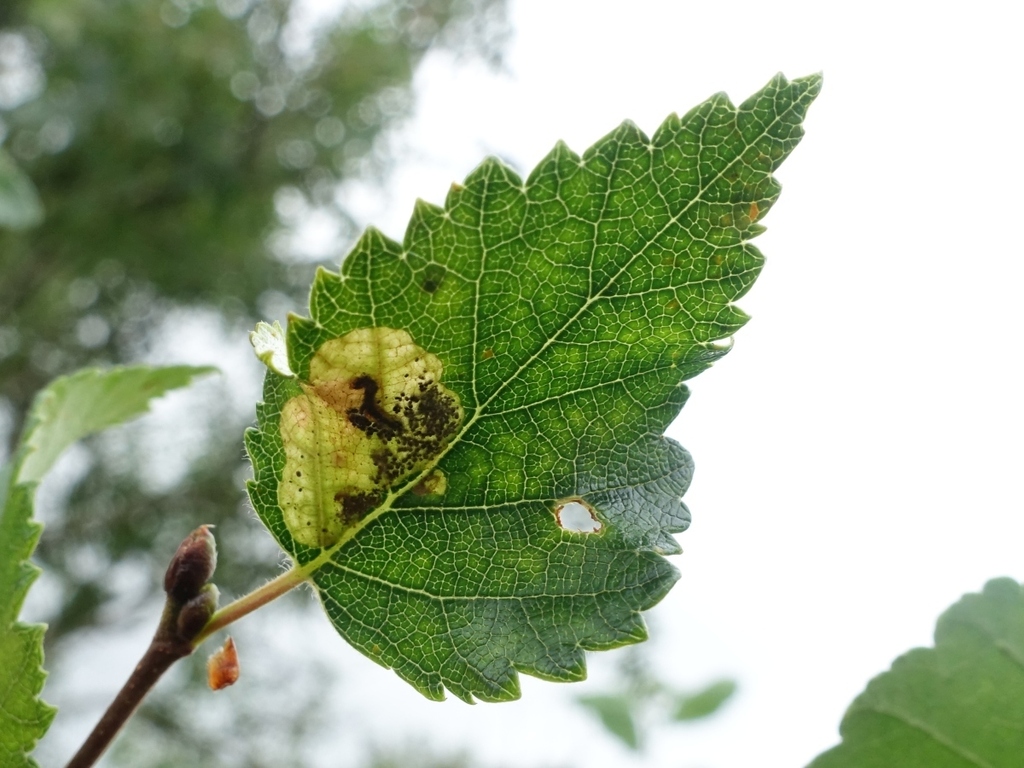
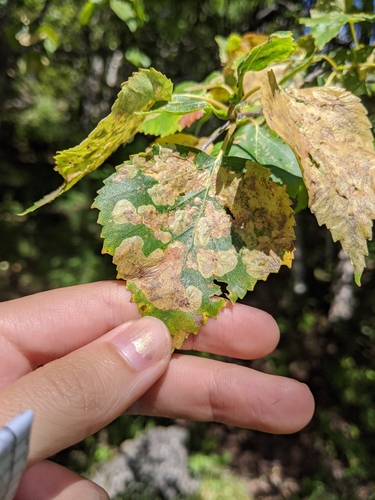
The amber-marked birch leaf-miner sawfly is a tiny black adult about 3 mm long and the larva has short legs with dark marks and black spots on its thorax segments. Larvae live inside birch leaves, eating the mesophyll and can cause heavy defoliation when numbers are high. All individuals are female and reproduce without mating; one generation appears each year, overwintering as larvae and emerging as adults in July-August.
Source: Wikipedia
How to recognize it
Adults are black and about 3 mm long.
Source: Wikipedia
Size
The adult measures roughly 3 mm (0.12 in) in length.
Source: Wikipedia
Is it a pest in the house?
Heavy infestations may cause extensive defoliation.
Source: Wikipedia
Where it lives
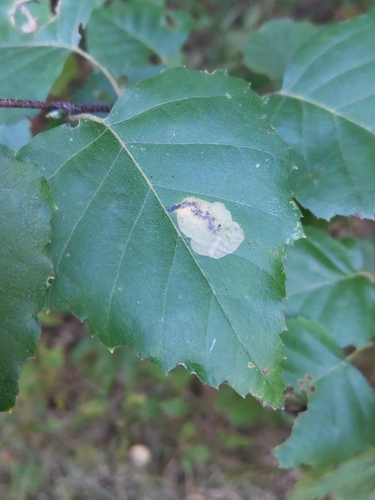
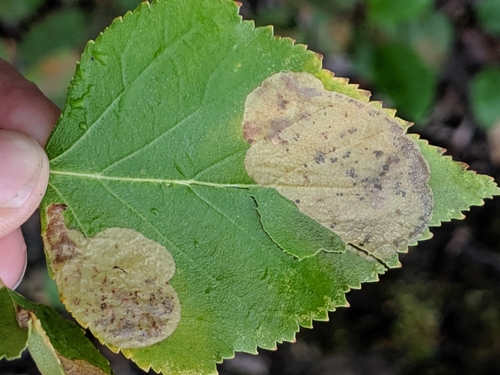
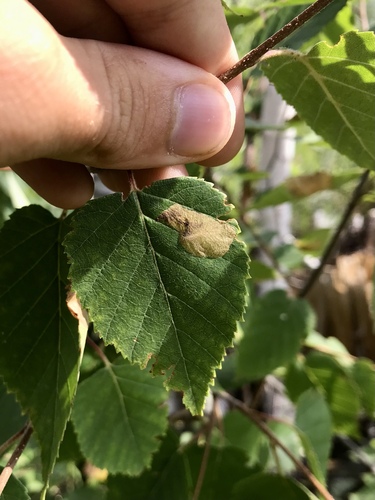
Eggs are laid near the leaf midrib and the larva creates a blotch-shaped cavity inside the leaf blade. The larvae feed on several birch species and other Betulaceae members.
Source: Wikipedia
What it eats
Larvae eat the foliage of birch trees. They consume the mesophyll tissue inside the leaf.
Source: Wikipedia
Life cycle
All individuals are female and reproduce by parthenogenesis. There is one generation per year.
Source: Wikipedia
When you see it
Larvae overwinter and adults emerge in July and August.
Source: Wikipedia
Where it comes from
It is native to the Palearctic region but has spread to North America.
Source: Wikipedia
Lookalikes
Fenusa pumila also mines birch leaves but prefers young, expanding leaves and makes the leaf blade crinkle, whereas P. thomsoni attacks mature leaves that stay flat.
Source: Wikipedia
Where it is found in the US
Recorded in 14 of 51 states and DC. Most records: Alaska, Minnesota, Ohio, Vermont, Massachusetts, Pennsylvania, Maine, Illinois.
Darker = more records. Counts are museum and citizen-science records, not population size.
Source: GBIF
Status: introduced in Canada. Source: iNaturalist
Months it is reported in the US
Source: GBIF
More photos
Questions people ask
How can I tell this sawfly apart from similar leaf-miners?
Fenusa pumila mines young birch leaves and causes the leaf to crinkle, while Profenusa thomsoni mines mature leaves that remain flat.
Source: Wikipedia
What damage does it cause?
Large numbers of larvae can lead to extensive defoliation of birch trees.
Source: Wikipedia
When do the adults appear?
Adults emerge from overwintering larvae in July and August.
Source: Wikipedia
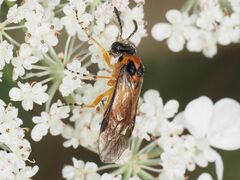
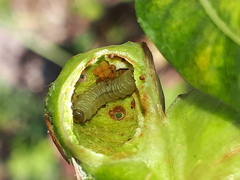
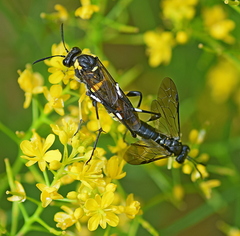
Same family (Tenthredinidae)


Sources
- Wikipedia: https://en.wikipedia.org/wiki/Profenusa_thomsoni
Look it up elsewhere: GBIF · iNaturalist · BugGuide · Wikipedia
Text written 2026-10-27 from the sources above and checked sentence by sentence against them. Data fetched 2026-10-27.