 Bug FAQ
Alfalfa Leafcutter Bee
Megachile rotundata · Order: Hymenoptera · Family: Megachilidae
Also called: Alfalfa Leaf-cutter Bee, Alfalfa Leafcutting Bee, Lucerne Leafcutter Bee
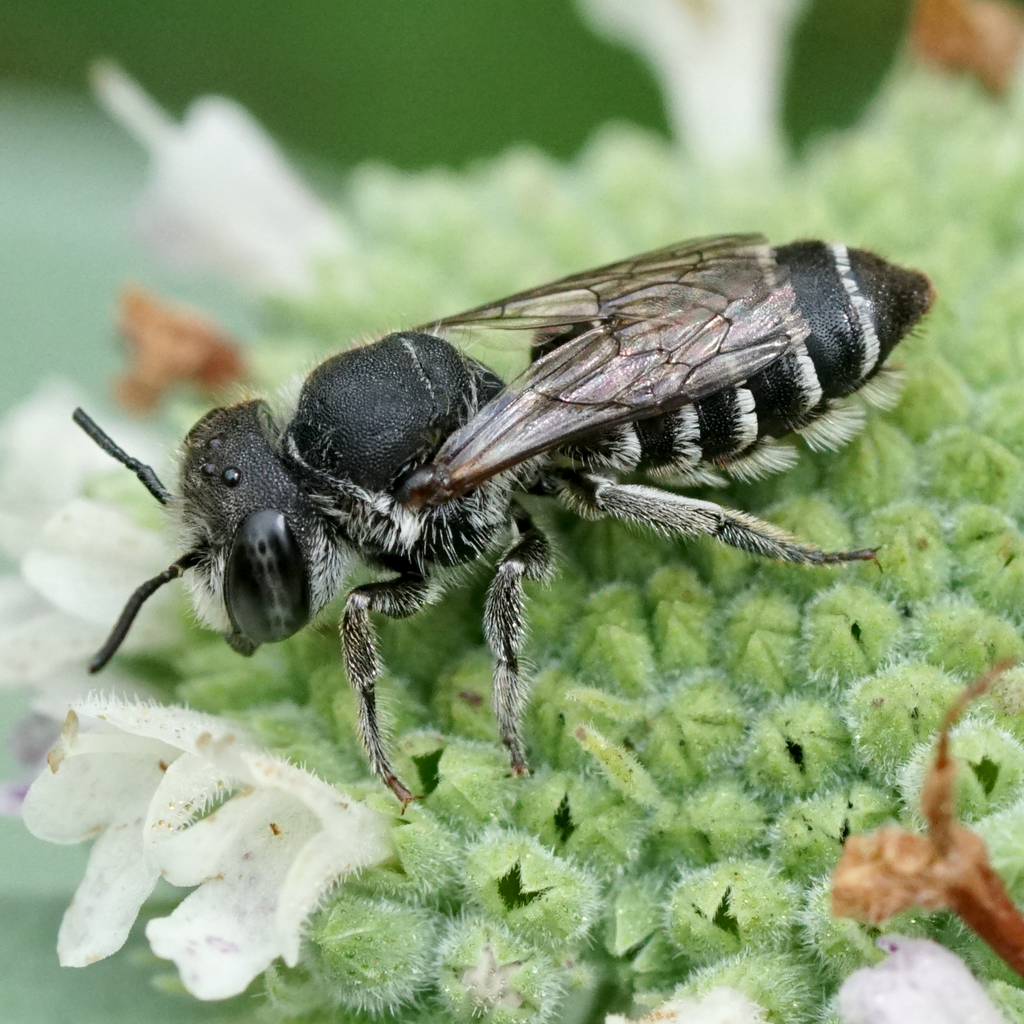
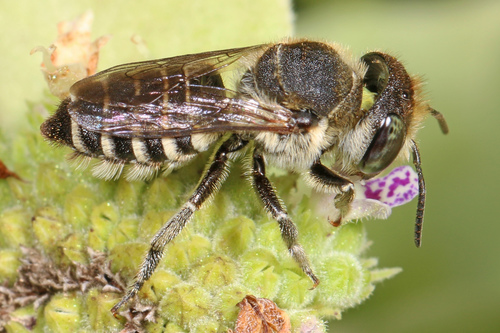
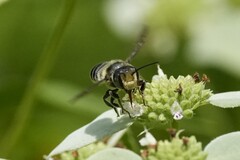
Alfalfa leafcutter bees are small (6 to 9 mm) dark-grey insects; females are covered in white hairs while males have white and yellow spots on the abdomen (1,2). Females build nests in old tree or log tunnels, provisioning each with pollen and nectar for their larvae (3,6,7). They are found on every continent except Antarctica and were introduced worldwide from Europe (4,5).
Source: Wikipedia
Size
Adults measure about 6 to 9 mm in length.
Source: Wikipedia
How to get rid of it
Chalkbrood can be managed by decontaminating nest materials with household bleach. Current control methods include paraformaldehyde fumigation.
Source: Wikipedia
Where it lives
Each female makes her own nest in old trees or log tunnels.
Source: Wikipedia
What it eats
Adults feed on pollen and nectar. Larvae eat the pollen ball the mother provides.
Source: Wikipedia
Life cycle
The species is haplodiploid like other Hymenoptera. Larvae pass through four instar stages before becoming adults.
Source: Wikipedia
When you see it
Adults emerge by late summer via one of two developmental pathways. When fully developed, they chew their way out of the cocoon.
Source: Wikipedia
Where it comes from
Originally European, this bee has been introduced to many regions worldwide. It now occurs on all continents except Antarctica.
Source: Wikipedia
Where it is found in the US
Recorded in 45 of 51 states and DC. Most records: Colorado, Oregon, Washington, New York, Maryland, California, Pennsylvania, Utah.
Darker = more records. Counts are museum and citizen-science records, not population size.
Source: GBIF
Status: introduced in North America; introduced in Canada; introduced in United States. Source: iNaturalist
Months it is reported in the US
Source: GBIF
More photos

Questions people ask
Can alfalfa leafcutter bees sting me?
Yes, they can sting, but the pain is roughly half that of a honey bee sting.
Source: Wikipedia
What do they eat?
Adults feed on pollen and nectar, and their larvae consume the pollen balls the mother provides.
Source: Wikipedia
How can I control a chalkbrood outbreak in their nests?
Cleaning nest cells with household bleach and using paraformaldehyde fumigation are effective methods.
Source: Wikipedia
Same family (Megachilidae)

Sources
- Wikipedia: https://en.wikipedia.org/wiki/Megachile_rotundata
Look it up elsewhere: GBIF · iNaturalist · BugGuide · ITIS · Wikipedia
Text written 2026-10-23 from the sources above and checked sentence by sentence against them. Data fetched 2026-10-23.