 Bug FAQ
Zorion guttigerum
Zorion guttigerum · Order: Coleoptera · Family: Cerambycidae
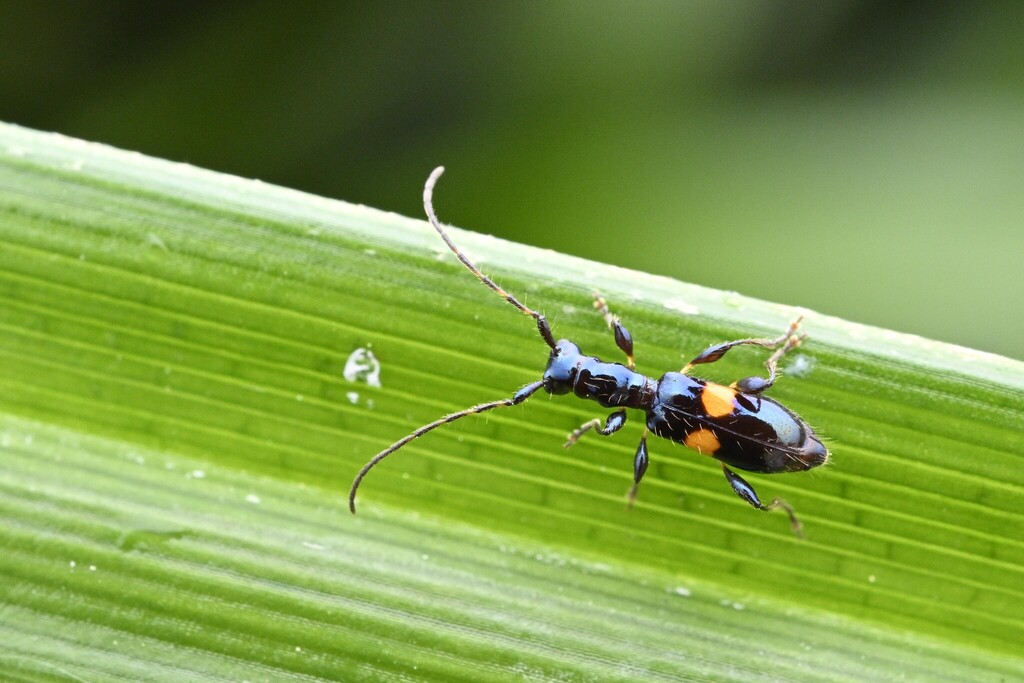
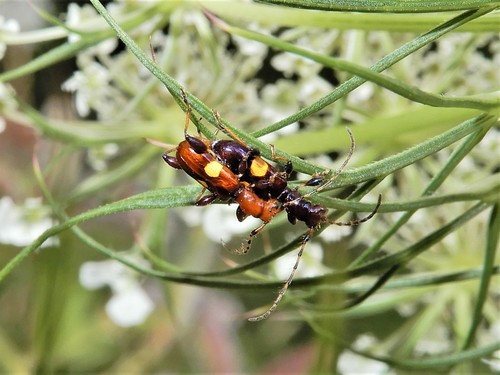
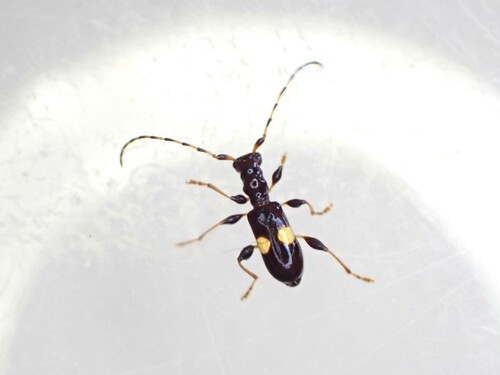
Adults measure between 3 and 7 mm long and show a dark purple-brown body with a bright golden spot on each wing cover. They are commonly seen in large numbers on the flowers of many native and exotic plants across both the North and South Islands of New Zealand. Adults feed on nectar and pollen, while larvae live inside bark and woody material, developing in freshly cut or broken branches.
Source: Wikipedia
Size
Adults range from 3 to 7 mm in length.
Source: Wikipedia
Where it lives
Large numbers are often seen near flowers.
Source: Wikipedia
What it eats
Adults feed on nectar and pollen from flowers. Larvae feed internally on bark and woody material.
Source: Wikipedia
Life cycle
Females lay eggs in freshly cut or broken branches of native and exotic plants. The larvae develop by feeding inside bark and woody material.
Source: Wikipedia
Where it comes from
It is widespread throughout both the North Island and South Island of New Zealand.
Source: Wikipedia
More photos
Questions people ask
Where can I find these beetles?
They are commonly seen in large numbers on the flowers of many plants across both islands of New Zealand.
Source: Wikipedia
What do they eat?
Adults feed on nectar and pollen, while the larvae live inside bark and woody material.
Source: Wikipedia
How do they reproduce?
Females lay eggs in freshly cut or broken branches, and the larvae develop by feeding inside the wood.
Source: Wikipedia
Same family (Cerambycidae)
 House LonghornHylotrupes bajulusCan damage your home
 Asian Longhorned BeetleAnoplophora glabripennisDamages trees, gardens or crops
 Red Milkweed BeetleTetraopes tetrophthalmus
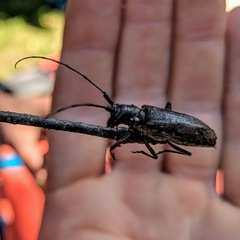 White-spotted SawyerMonochamus scutellatusCan damage your home
 Red Pine Longhorn BeetleStictoleptura rubra
 Spotted Longhorn BeetleRutpela maculataDamages trees, gardens or crops
Sources
- Wikipedia: https://en.wikipedia.org/wiki/Zorion_guttigerum
Look it up elsewhere: GBIF · iNaturalist · BugGuide · Wikipedia
Text written 2026-10-23 from the sources above and checked sentence by sentence against them. Data fetched 2026-10-23.