 Bug FAQ
White-spotted Sawyer
Monochamus scutellatus · Order: Coleoptera · Family: Cerambycidae
Also called: whitespotted sawyer, White-spotted Sawyer Beetle
Source: Wikipedia
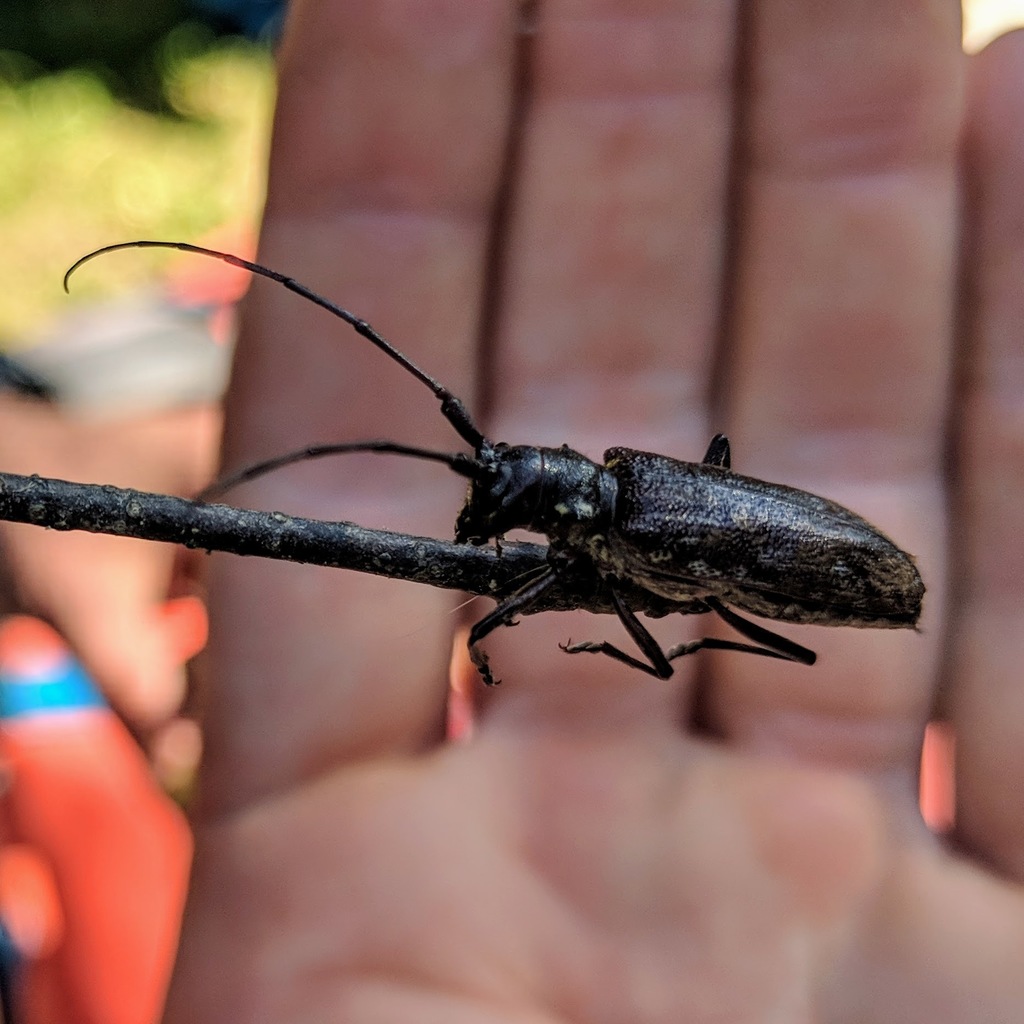
Adults are large black beetles with very long antennae; males can have antennae up to twice their body length while females have slightly longer antennae than their bodies. They live in dead or dying wood in North American boreal forests, feed on pine and spruce for about a week after emerging in mid-June to mid-August, and their larvae tunnel in the phloem and cambium for 1 to 4 years before emerging as adults.
Source: Wikipedia
Size
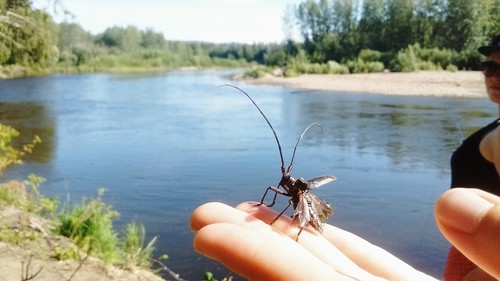
Adults are large, black, and have very long antennae; males can have antennae up to twice their body length, while females have antennae only slightly longer than their bodies.
Source: Wikipedia
Is it a pest in the house?
Wood-boring adults create holes that mar the appearance of wood and can introduce fungi or nematodes that cause structural damage.
Source: Wikipedia
How to get rid of it
Delaying forest-management practices for three to four years allows the beetles to complete a full life cycle and supports their persistence. Clear-felling or other actions that disrupt natural succession can create habitat gaps that may lead to local extinction of the species.
Source: Wikipedia
Where it lives
The species depends on dead or dying wood for at least part of its life cycle.
Source: Wikipedia
What it eats
Adult beetles feed mainly on pine and spruce for up to seven days after they emerge between mid-June and mid-August. Larvae hatch and burrow into the phloem and cambium, where they continue feeding until they are ready to emerge as adults.
Source: Wikipedia
Life cycle
Depending on location and habitat, the life cycle can last from one to four years. About a week after pupating, adults chew out of the bark of their larval log and emerge.
Source: Wikipedia
When you see it
Adults are active from mid-June to mid-August.
Source: Wikipedia
Where it comes from
It is native to North America.
Source: Wikipedia
Lookalikes
Research comparing this species with the eastern pine sawyer (M. notatus) has examined their behavior in asymmetric contests.
Source: Wikipedia
Where it is found in the US
Recorded in 40 of 51 states and DC. Most records: California, Colorado, Michigan, Minnesota, Washington, Wisconsin, Maine, New York.
Darker = more records. Counts are museum and citizen-science records, not population size.
Source: GBIF
Status: native in North America; native in Canada; native in United States. Source: iNaturalist
Months it is reported in the US
Source: GBIF
More photos
Questions people ask
Do white-spotted sawyers damage my house?
Yes, they bore into wood and can spread fungi or nematodes that weaken structural integrity.
Source: Wikipedia
Same family (Cerambycidae)
 House LonghornHylotrupes bajulusCan damage your home
 Asian Longhorned BeetleAnoplophora glabripennisDamages trees, gardens or crops
 Red Milkweed BeetleTetraopes tetrophthalmus
 Red Pine Longhorn BeetleStictoleptura rubra
 Spotted Longhorn BeetleRutpela maculataDamages trees, gardens or crops
 Locust BorerMegacyllene robiniae
Sources
- Wikipedia: https://en.wikipedia.org/wiki/Monochamus_scutellatus
Look it up elsewhere: GBIF · iNaturalist · BugGuide · ITIS · Wikipedia
Text written 2026-10-22 from the sources above and checked sentence by sentence against them. Data fetched 2026-10-22.